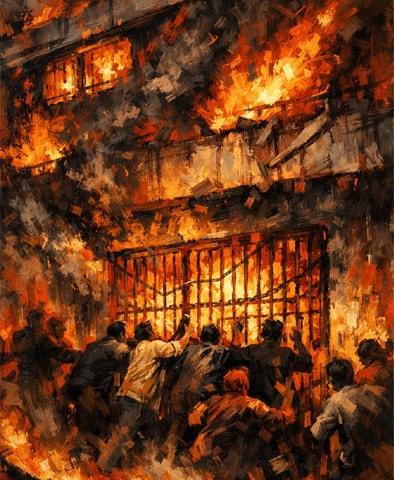
THE Gul Plaza fire was more than just a tragic headline. It was a stark reminder of how quickly life can change when fire meets poor preparation. Behind the smoke, the flames and the sirens lies a lesson we cannot ignore. Fire does not warn in words. It warns in signs we often overlook — blocked exits, overcrowded shops, flammable decorations, silent alarms and a lack of training. When we ignore these warnings, fire speaks loudly, and its language is destruction.
Portable fire extinguishers are naturally not designed to fight large fires. They are meant for very small, early-stage flames. In markets and plazas where artificial flowers, plastics, fabrics and decorations are stored in large quantities, a fire can get out of control within minutes. Expecting a handheld extinguisher to save lives in such conditions is unrealistic.
The Gul Plaza fire, as per early reports, started in a ground-floor shop selling artificial decorations. This made the situation even more dangerous. Fires on the ground floor can quickly block escape routes while thick, poisonous smoke rises to trap people on the upper floors. In many fires, smoke — not the flames — claims lives.
There has been talk of ‘multiple exits’ and ‘ventilation’, but safety is not about numbers or claims. An exit filled with smoke, locked doors, poor lighting or stored goods is not an exit; it is a trap. Unplanned ventilation can also feed the flames and spread smoke faster, making matters worse.
What truly saves lives is preparation. Early fire detection systems, automatic sprinklers, clear escape routes and strong building management form the backbone of fire safety. Equally important is training. Pakistan Civil Defence plays a critical role here. Trained personnel can identify risks before a fire starts, guide people calmly during emergencies, and coordinate effectively with fire brigades and rescue teams. Untrained individuals, by contrast, panic, make mistakes, and unintentionally put others in danger.
Fire safety is not the responsibility of the relevant authorities alone. Building-owners must ensure safe designs and functioning systems. Shopkeepers need to control combustible materials and keep exits clear. The public must follow instructions and avoid risky behaviour. Most importantly, frequent and regular drills and trainings must become a habit, not an afterthought.
The Gul Plaza fire should not fade from memory. It must remain a lesson written in smoke and loss. Fire does not judge intentions or explanations. It only tests whether or not we are prepared.
If we listen carefully, the fire is telling us something quite simple, but powerful: prevention, training and preparedness save lives. Everything else is mere regret.
Mudassar Nawaz
Assistant Director
Directorate-General Civil Defence
Islamabad
Published in Dawn, January 25th, 2026