Pakistan, 7 Muslim countries announce decision to join Trump’s Board of Peace
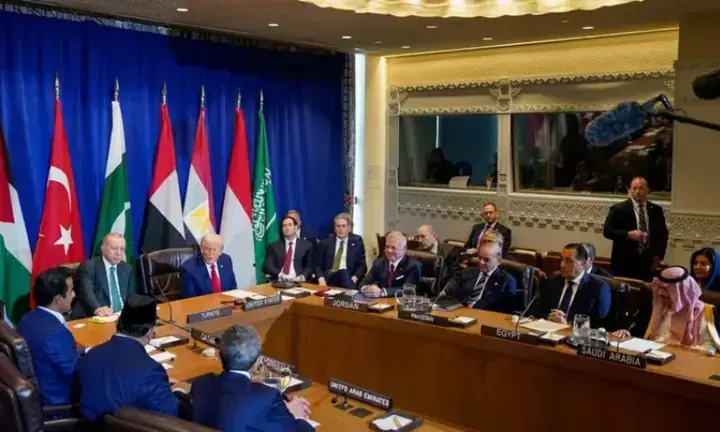
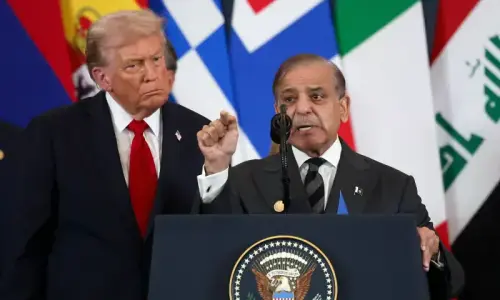
Pakistan and seven other Muslim-majority countries on Wednesday released a statement announcing their decision to join US President Donald Trump’s so-called ‘Board of Peace’.
In a joint statement, the foreign ministers of Pakistan, Egypt, Jordan, the United Arab Emirates, Turkiye, Saudi Arabia and Qatar welcomed the invitation “extended to their leaders” by Trump.
“The ministers announce their countries’ shared decision to join the Board of Peace. Each country will sign the joining documents according to its respective relevant legal and other necessary procedures, including Egypt, Pakistan, and the UAE, that have already announced to join,” the joint statement said.
It should be noted that all eight countries had worked with Trump in October last year on a plan to end Israel’s genocide and invasion in Gaza. The UAE had announced its decision to join the board on Tuesday while Pakistan and Egypt had separately announced it on Wednesday.
“The ministers reiterate their countries’ support for the peace efforts led by President Trump, and reaffirm their countries’ commitment to supporting the implementation of the mission of the Board of Peace as a transitional administration, as set out in the Comprehensive Plan to end the Gaza Conflict and endorsed by United Nations Security Council Resolution 2803, aimed at consolidating a permanent ceasefire, supporting the reconstruction of Gaza, and advancing a just and lasting peace grounded in the Palestinian right to self-determination and statehood in accordance with international law, thereby paving the way for security and stability for all countries and peoples of the region,” the statement said.
Meanwhile, Deputy Prime Minister and Foreign Minister Ishaq Dar reaffirmed Pakistan’s commitment to working with regional partners for peace in Gaza.
“Pakistan has been and will continue to work with our brotherly Arab- Islamic countries for lasting peace in Gaza and for ensuring the right to self-determination of our Palestinian brothers and sisters,” he said on X.
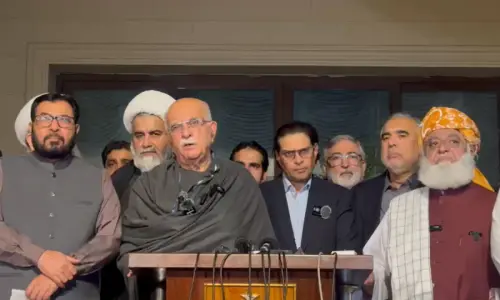
The development came hours after a separate announcement by the Foreign Office (FO) said Pakistan had accepted US President Donald Trump’s invitation to join the so-called “Board of Peace” with the view to “achieving lasting peace in Gaza”. The invitation for Pakistan to join the Board of Peace was extended last week.
“In response to the invitation extended to Prime Minister Muhammad Shehbaz Sharif by President of the United States Donald J. Trump, Pakistan would like to announce its decision to join the Board of Peace as part of its ongoing efforts to support the implementation of the Gaza peace plan under the framework of the United Nations Security Council Resolution 2803,” the FO said in a statement.
The statement added that Pakistan was hopeful that with the creation of this framework, “concrete steps will be taken towards the implementation of a permanent ceasefire, further scaling up of humanitarian aid for the Palestinians, as well as reconstruction of Gaza”.
“Pakistan also hopes that these efforts will lead to the realisation of the right to self-determination of the people of Palestine, through a credible, time-bound political process, consistent with international legitimacy and relevant UN resolutions, resulting in the establishment of an independent, sovereign, and contiguous State of Palestine, based on the pre-1967 borders with Al Quds Al Sharif as its capital,” the statement read.
The FO concluded the statement, saying: “Pakistan looks forward to continuing to play a constructive role as part of the Board of Peace for the achievement of these goals as well as to end the suffering of our Palestinian brothers and sisters.”
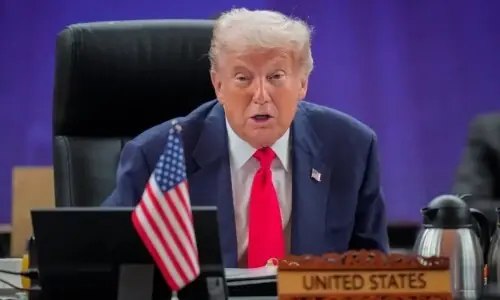
Trump had originally proposed establishing the board when he announced his plan last September to end the conflict in Gaza. But an invitation sent to world leaders last week outlined a broad role for the body in ending conflicts globally.
A draft charter sent to about 60 countries by the US administration calls for members to contribute $1 billion in cash if they want their membership to last more than three years, according to the document seen by Reuters.
The inclusion of a ‘charter’ in the invitation letter triggered concerns among some European governments that it could undermine the work of the United Nations, which Trump has accused of not supporting his efforts to end conflicts around the world.
Meanwhile, Financial Times has reported that the Trump administration plans to expand its Board of Peace into a permanent global entity to rival the UN.
According to the charter sent to prospective members, the board is designed to be a “more nimble and effective international peace-building body” chaired by Donald Trump himself.
The board would start by addressing the Gaza conflict and then be expanded to deal with other conflicts, according to the charter’s copy seen by Reuters.
The draft charter grants broad executive authority to Trump and allows him to serve as chairman indefinitely, subject only to voluntary resignation or removal due to incapacity confirmed by a unanimous board vote.
The document gives the chairman the authority to appoint and remove member states — decisions that would require a two-thirds majority vote to overturn. According to the text, Trump would hold effective veto power over board decisions. The charter states rulings will be “made by a majority of the member states present and voting, subject to the approval of the chairman”.
It also grants him the “exclusive authority to create, modify, or dissolve subsidiary entities” to fulfill the board’s mission.
The charter critiques current international structures and advocates for pragmatic judgement, common sense, and courage to abandon often ineffective methods and institutions for lasting peace.
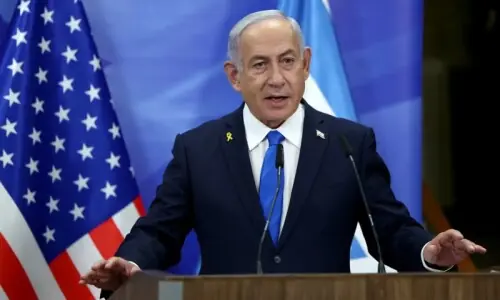
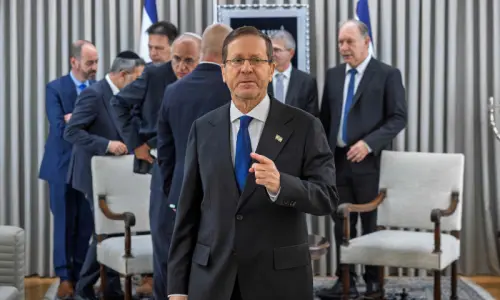
Only a few, including Hungary, Israel and the United Arab Emirates have so far accepted the invitation to join the board without reservations.
Additional input from Reuters