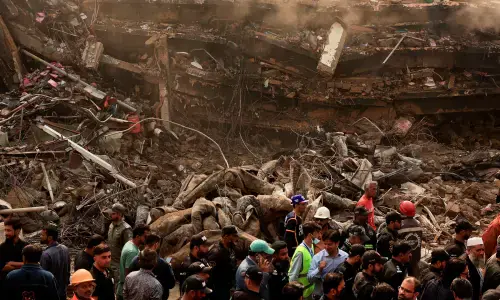
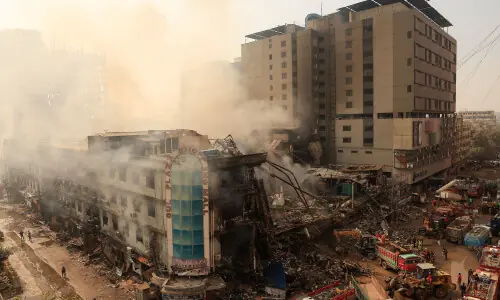
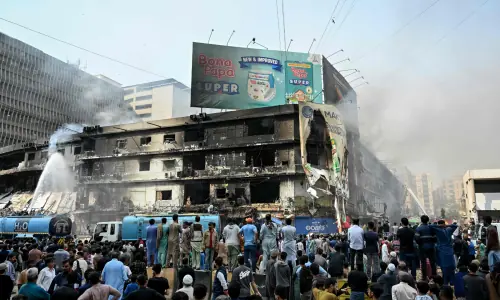
OVER 20 people have died after a fire tore through Gul Plaza on Karachi’s M.A. Jinnah Road on Saturday night. This tragedy did not come out of nowhere.
It grew out of years of regulatory neglect and inaction. And now, compensation announcements and inquiry committees will do little to address the failures that turned a commercial building into a death trap. Gul Plaza was an ageing, densely packed structure with more than 1,000 shops squeezed into narrow corridors, basements and upper floors.
Like many older markets in Karachi, it reportedly lacked adequate emergency exits, fire alarms and ventilation. Combustible materials, substandard wiring and overcrowding formed the perfect recipe for disaster. That such a building continued to operate in the heart of the city points to a system where safety rules exist largely on paper. The official response has been troubling.
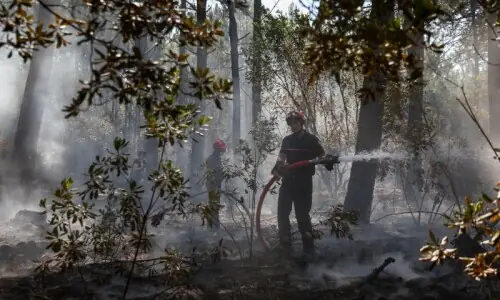
Firefighting efforts were hampered by water shortage, access problems and crowd mismanagement. Residents and traders insist that a faster, better-resourced response could have saved lives in the crucial first hours. With a fire station only minutes away, these claims cannot be dismissed. When flames reignite days later and bodies are recovered in fragments, the cost of delay becomes clear.
The Sindh government has announced Rs10m in compensation for each victim’s family and promised inquiries, forensic reports and traders’ rehabilitation. These steps matter, but they follow a familiar script.
Similar assurances after past market fires led to little change. Inquiries rarely result in prosecutions, and rebuilding often ignores the flaws that caused the disaster. The central question is not what sparked the fire, but why such a building was allowed to operate for decades without corrective action.
Regulators tasked with enforcing building and fire codes have been weakened by political interference, leadership changes and tolerance of illegal alterations. Karachi has seen this before: factories without exits, markets without safety plans, high-rises without oversight. Each time, lives are lost, grief is expressed and compensation paid.
If the Gul Plaza tragedy is to mean anything, it must trigger more than condolences and cheques. It demands strict enforcement of safety codes, accountability beyond junior officials, and sustained investment in emergency services.
Without that, this will not be the last fire to show how governance failures can be as deadly as the flames.
Published in Dawn, January 20th, 2026