INTRODUCTION
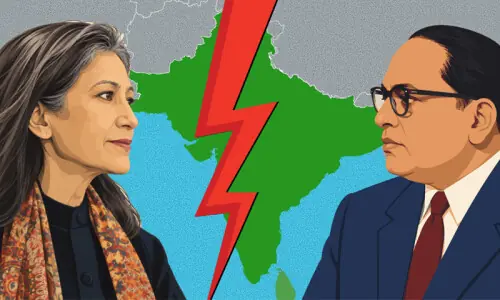
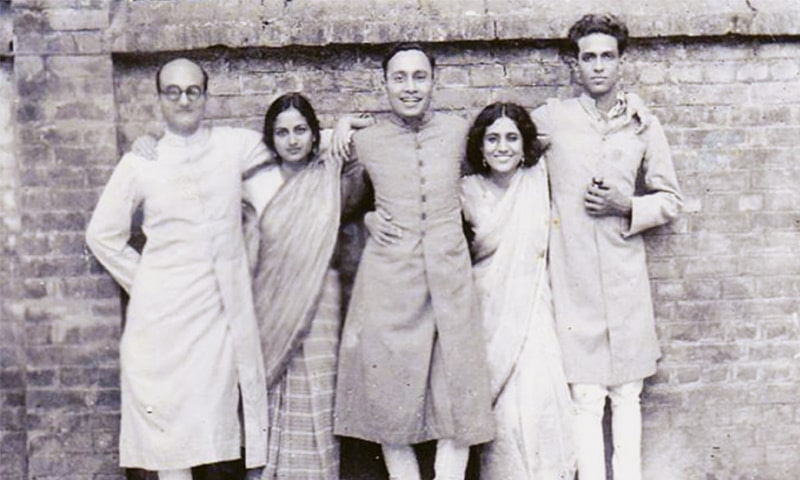
Dr Rashid Jahan (1905-1952), a prominent Indian literary figure, was an early 20th century writer and social activist. She was an active member of the Progressive Writers’ Movement, a communist and is often considered one of the first feminists in the Subcontinent. Her writings, titled ‘Dilli Ki Sair’ [A Trip to Delhi] and ‘Parday Ke Peechhay’ [Behind the Curtain], published in the seminal anthology Angaaray [Embers, 1932], caused a major uproar among the public.
Despite this, Jahan continued to write plays and short stories alongside other activities that included political activism and her career as a gynaecologist. Over the course of her short life, she taught at the Lucknow Nursing College and, later, established a nursing home for women in Lucknow. Her contributions as one of the few educated Muslim women were remarkable, especially considering her short lifespan. She died at the young age of 47.
Originally written in Urdu, the following short story titled ‘Mujrim Kaun?’ [Who is the Criminal?] was published posthumously in the anthology Shola-i-Jawalla, a collection of Jahan’s works edited by Dr Hameeda Saeeduz Zafar. Set during British colonial rule in India, the story explores the theme of justice through a parallel narrative, one that highlights the ironic disparity in how law and justice functioned for colonisers versus the colonised.
WHO IS THE CRIMINAL?
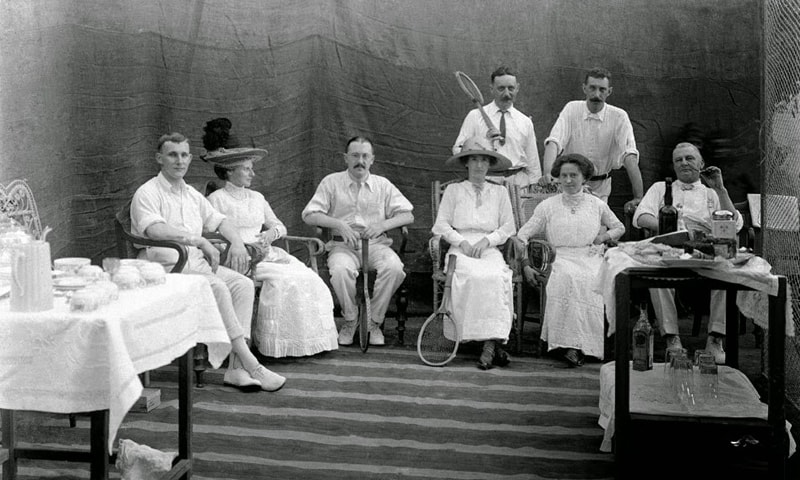
It is evening and the British Club is crowded today. The road is lined with cars as far as the eye can see. Blue tennis curtains fastened tightly to the wall are trying to conceal the club’s day-to-day operations from the filthy and unclean Hindustani eyes. Nevertheless, the Hindustanis occasionally catch a glimpse of a mem sahiba, or a sahib, or some Hindustani officer.
A hockey ground stretches out before the club and it is already crowded with our Hindustani brothers. They move in slow, deliberate steps, but they are all facing the club.
The early 20th century Urdu writer Dr Rashid Jahan’s works were often at the centre of public fury due to their unapologetically confrontational nature. Her skill as a writer is captured in her short story ‘Mujrim Kaun?’ [Who is the Criminal?] — a poignantly tragic tale that offers powerful commentary and insight into the inequality and contradictions of the colonial legal system. Eos presents its first-ever English translation…
Who knows why they’ve gathered? Perhaps the high walls, the drawn curtains, the very secrecy of the place and the constant flow of cars have sparked a longing, a search, as if they have gathered to wait for a spectacle.
“Yaar, that’s the officer from the electricity department.”
“And whose wife, the white lady, is he holding in his arms?”
Laughter breaks out.
“You people are quite something. What if she is just some white lady?”
“If you aspire to be a gentleman like that, perhaps you might introduce us to your wife, our sister-in-law, rather than keeping her out of the way. We’d be honoured to make her acquaintance.”
“We have heard that she is blind in one eye and is also flat-nosed.”
Everyone begins to laugh.
“Look, who are those, the dark ones? How did they manage to pass through?”
“He looks like a crow straining to strut like a flamingo.”
At this, a roar of laughter breaks out.
“Oh, see, that’s the one who signs the hanging orders.”
“I can see, yes, that the judge is stepping out of that car.”
“This one judge truly distinguishes right from wrong, as clearly as one separates milk from water. I can testify, when Fato and I fought, he weighed the matter fairly before setting me free.”
“Oh you jerk, just keep your mouth shut! This discussion requires Fato’s testimony.”
Today is Judge Robinson’s farewell party. He is headed overseas on an eight-month break to get married. A towering jurist, he was the club’s darling, the heart of the city’s English circles. He would even pat the senior Hindustani officers on the back and occasionally invite them for lunch or tea. Thus, they also held him in great esteem. The broader native population was deeply awed by him, even fearful of him. Some trembled before him even more than the formidable public figure, Collector Sahib.
His reputation was unblemished, especially since he was among the rare judges who spurned bribes. Not only that, his grasp of British law surpassed all around him. In simple words, he, perhaps more than anyone else, was the perfect embodiment of the British legal system they had created for the slaves. He took pride in this, in his unerring fairness; the scales balanced, always.
But the truth is that these sahibs, while they carefully guard their private lives from the brown natives, cannot always conceal them. Three years ago, when Judge Robinson was spending part of his leave in Simla, he met Mrs Black. Mrs Black was a striking woman of 21 or 22, newly wed to Colonel Black, and had recently arrived in India.
The colonel was deployed in Ferozepur. He shuttled back and forth to Simla. When Robinson went to Simla, he met Sylvia. Within two or three days, they became quite informal with each other and became good friends. Before long, their friendship evolved into deep love.
Robinson was a lucky Englishman who was sought after by many women. Wherever he went, he was the apple of their eye. He had fallen in love, not once, but many times, with married women, unmarried women and everything in between. But this madness was of a different kind. Mrs Black had become completely oblivious to the rest of the world.
Sylvia was an open book for the world to read and, upon every page, George Robinson’s name was written large. Even though Robinson attempted to counsel her, this was her only answer: “I am not afraid. If you are, then stay away from me.”
After all, there were also other women in the hotel where Sylvia and Robinson would meet. Many of them secretly pined for Robinson. Many were resentful of Sylvia’s beauty. Though such dalliances, flirtations and shared nights were commonplace, often all smoothed over with sophistication, Sylvia’s boldness and her public defiance as a married woman had certainly crossed a line.
It started with whispers, which soon turned into open talk. Pointed taunts were made. Upon returning, the colonel found that his wife’s demeanour had changed. He held it all in, but for how long? And then, one day, Sylvia disappeared from Simla. She surfaced briefly in Saharanpur before slipping from sight again. Prying eyes had quickly discovered her location, cutting her stay in Saharanpur short.
Robinson had spent a decade in India. He understood the intricacies of social standing. Yet he was powerless. The affair had spiralled beyond his control and had became the talk of the town.
Colonel Black, in fury, vowed revenge. He was consumed by the resolve to hold Robinson accountable for the crime of eloping with his wife. He began scouring legal circles, seeking any recourse that might bring the man to ruin. Robinson’s head began to swim as he realised the situation he was in. But the matter was now out of his hands.
When Robinson sought mediation through friends, the colonel remained firm. A public court battle between British officers would have tarnished the Raj’s prestige. Therefore, the matter was brought to the attention of the governor and the commander-in-chief. Under immense pressure, Colonel Black agreed to drop the criminal charges against Robinson under Section 496 [fraudulently faking a marriage] and settled on the decision to divorce his wife. Sylvia was immediately dispatched to England and told to stay there until the formal dissolution of her marriage was finalised.
During the course of the divorce proceedings, Robinson had travelled once by plane to meet his beloved. Now he was leaving for eight months, since every passing moment in India was hard to bear. Earlier, he had received a telegram from Sylvia: “I will meet you in Venice.” These words overwhelmed him. For a long time, he sat with his head bowed and thought of the woman. What a woman! What a magnificent woman!
Memories of the moonlit mountain trysts, meeting secretly in the hotel, the stolen meetings under countless watchful eyes, flooded back. Despite Colonel Black’s surveillance, she would still come to meet Robinson. Resting her head in his lap, she would murmur, “What can I do? I try, but, George, I cannot stop loving you.”
The mere recollection of those moments made his head spin — and then those hands, her neck and her body!
He remembered her first marked visit to his hotel. The onlookers had sneered as she entered. How simply in plain words she had announced: “George, I’ve arrived.” Now, as Robinson moved mechanically through his farewell party, his heart wasn’t in the celebration. Only one anxiety consumed him: would he, could he, ever make this extraordinary woman, his Sylvia, truly happy?
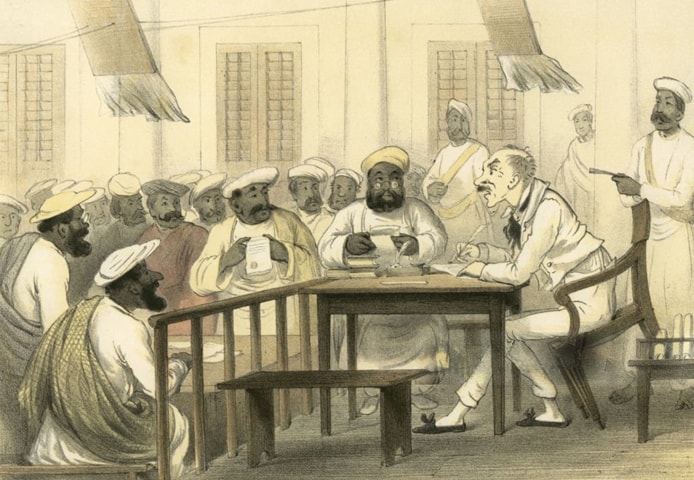
“Bhola! The Honorable Court finds you guilty on the charge of the repeated abduction of this woman, Gujarya. The court sentences you to three years’ penal servitude. Matro, you are handed back your woman, Gujarya.”
Just as Mr Robinson motioned for the constable to remove the convict, a wheat-skinned girl of 16 or 17 darted past the policemen and threw herself upon Bhola. Her wails pierced the courtroom; they sounded so frenzied and so haunting that pedestrians outside froze mid-step and soon the chamber swelled with curious onlookers.
Bhola, 20 and lean, stood motionless. His dark form and glinting cobra-black eyes betrayed no reaction to the girl’s anguish.
“Bhola, I won’t let you go!” she shrieked. “Oh, Judge, spare us this torment — send me with him! Let me share his sentence.”
“Make way, you stupid woman.”
“See her out, someone. Move her out of the way.”
Her brother and three policemen seized her in their grasp. As the constable delivered a sharp kick to Bhola’s shins, “Move, you bastard!”, they hauled him roughly from the courtroom. The girl writhed violently against her captors’ grip, but the four grown men held her fast. Collapsing to the ground, she thrashed like a fish flung upon dry land, her desperate screams split the air: “Bhola! Bhola! BHO-LA!”
“Escort her out immediately! The court cannot proceed with such disruptions,” the judge ordered.
“Someone call out the attendant.”
Bhola belonged to the shepherd caste. He was a lean, spirited man who tended flocks in the jungles of Phando. Though he lodged in a thatched hut with his brother and sister-in-law, his true home was the wilderness. The jungle pulsed in his veins. His joy sprang from its earth, its rivers, its whispering leaves.
Each dawn, as he bathed in the forest streams with his friends, his voice rippled through the air like water over stones. Stretched upon the carpet of fallen leaves, he’d sing: “Let us drown in each other’s eyes, my love”, melodies that made village girls’ hearts flutter.
Then the trees began to fall.
Timber merchants arrived with axes. Among them came Matro, who brought with him his young wife Gujarya. Though woodcutters seldom let women stray beyond their thresholds, Matro had kin here, and so the girl came along: 16 or 17-years-old, golden as wheat at harvest, her body plump with the careless charm of youth.
She joined the women at the waterhole; all around were giggles and mischief. The path wound past clearings where shepherds lounged with their herds, and soon taunts flew like pebbles:
“Ah, what a cruel sweetheart you are!” Gujarya’s sister-in-law would tease Bhola.
“Sing for us!” a girl would beg.
With a glint in his eyes, Bhola would wink and say, “What’s my reward?”
And the girl arcs a pebble through the air towards him that would spark laughter all around.
In ways strange and new, Gujarya’s arrival unravelled Bhola. His songs grew more frequent, his jokes sharper, laced with a wit that set the village girls giggling. He began waiting along familiar paths, with a hope to catch her sight.
Twice, by some twist of fate, he found himself alone with her on the road, but right at the moment, he felt his feet rooted to the earth and his tongue nailed shut. In her absence, he rehearsed a hundred words. In her presence, they disappeared like mist.
Then came the day his voice caught her unawares. As Gujarya passed with the other women, Bhola lay sprawled in the dust, eyes shut, he continued singing, as if his soul might escape through the notes. When he finally looked up, their gazes collided. She glanced down, but not before a smile escaped her lips.
The song clogged in his throat.
The other women moved on, but something lingered. Now their conversations unfolded in the silent parsing of glances: a held stare, the flash of a grin, an entire dialect spoken without words.
One afternoon, Gujarya found herself alone. Her water pot was empty and the jungle path stretched before her. There, beneath the dappled shade, Bhola appeared. Heart drumming, he dared to speak: “O fair one, why do you walk solitary today?”
Gujarya feigned irritation and tossed her head. Bhola faltered but pressed on, teasing until, against her will, she giggled.
He stepped closer and lifted her pitcher to the stream. Water gurgled and filled the silence between them. Gujarya’s pulse fluttered: the hour, the place, were now etched for future meetings.
Waiting in vain, Bhola had spent three nights in restless torment. When Gujarya finally appeared, she had discarded her bangles and had left her ornaments behind. She slipped behind the stacked timber. Her voice hushed with urgency.
“He hasn’t left my side these three nights,” she declared. “I couldn’t escape. Only now, with a lie about stomach pains and a walk to the jungle, could I come.” She had to rush back. This went on for some time — Bhola would stay up all night and she would sneak away to see him whenever she could.
Bhola forgot every woman, his own and the mistresses he had ever known. So overwhelmed, he even forgot the woman betrothed to him. Every time his brother pressed him about it, he replied in a murmuring tone and said, “Not now… I am not ready.”
But with Gujarya, the pendulum of passion swung wild and reckless. Consequences meant nothing. Life existed only in the spaces between their embraces. To breathe, to feel alive, that was possible only when they were entwined.
Amid the scattered heaps of cut wood, a group of men sat together while smoking a hookah. One squinted as a figure slipped toward the jungle and he saw a woman’s silhouette against the trees.
“Who’s that?”
“Who does that woman belong to?” another echoed, suspicion edged in his voice.
A pause. Then, low and knowing: “Looks like she is Matro’s.”
“What’s she doing out at this hour?”
The men watched as Bhola emerged moments later and followed the same path.
“Ah, so that’s how it is!”
“Strange, of all people, she chose this shepherd?”
In villages, gossip spreads like fire on dry grass. By dawn, everyone knew, yet no one dared to speak directly to Matro.
Finally, Kashi the carpenter exhaled a curl of hookah smoke and ventured: “Matro… your wife is quite pretty, no?”
Matro gave a stern look and said, “What’s it to you?”
“Nothing, brother. Only that keeping a beautiful woman in check is… tough. Isn’t that so, Baldiyu?”
Baldiyu nodded vaguely.
“Spit it out,” Matro growled.
“Well… last night, your woman was seen heading toward the jungle. And then… Bhola followed.”
“Which Bhola?”
“The shepherd.”
“Hmmph.”
“We saw nothing! Just thought you should know.”
The words pierced Matro like a knife. That evening, he returned home and unleashed his rage on Gujarya. Only after the blows fell did his temper cool, but his suspicion hardened. From then on, he kept her locked in his sight and assigned his aunt to watch her every move.
“See that she doesn’t wander alone again,” he said.
From then onwards, Gujarya’s life became a cycle of brutality, as Matro beat her mercilessly for the slightest offense. However, that didn’t deter her from meeting Bhola in secret, and she looked forward to stolen moments with him: the fleeting embraces, the brush of fingers against his skin. Over time, even the watchful aunt grew lax and Matro’s vigilance waned.
One night, Matro awoke to an empty bed. He searched the hut, then the yard, only to see Gujraya creeping home and Bhola’s shadow lingering behind her. Matro seized her wrist. Terror gripped her, but six months of secret love had hardened her nerves. She locked eyes with him without flinching.
“Where were you?”
“The jungle.”
“Who was with you?”
Silence.
The blows came, then slaps, punches and kicks. Usually, Gujarya wailed like the other village women when they were beaten, but tonight she stood in mute defiance. The sounds of the thrashing roused the aunt, who dragged Matro inside. To protect the family’s honour, they resolved to hush up the scandal and decided to send Gujarya back to her father.
The next morning, bruised and swollen, she was dispatched to her paternal home, eight miles away. Matro laid bare her transgressions. Her family, which included her father, stepmother, brother and sister-in-law, started to watch her closely at all times. Still, what is eight miles to a shepherd? Within days, the lovers reunited.
When her brother’s nephew spotted them, he told her brother. The brother beat Gujarya even more savagely than her husband had. During the night, she was put inside a shack. It was the month of June, and she roasted inside the small shack and emerged half-dead.
One evening, she vanished from the house.
The villagers scoured houses and the jungle alike. There was no trace. Matro’s men questioned Bhola’s kin — they said he too had disappeared. Police were alerted, warrants were issued for “Bhola’s abduction of a minor.”
Eight days later, they were caught and brought to court. Gujarya’s testimony was unwavering: “I left willingly with him. I love him.”
Bhola pleaded ignorance: “How was I to know her age? It’s not written on her face! I love her. She came to me of her own free will.”
But the law brooked no exceptions, least of all under Judge Robinson’s gavel. Three years’ imprisonment was the verdict. It was delivered without leniency.
The club buzzed with unusual energy that evening. Forty-odd British men and women, along with a handful of Hindustani officers, mingled over drinks. Judge Robinson, the guest of honour, found himself besieged by well-wishers. Though the British relished their privileged lives in India, the prospect of returning ‘home’ stirred in them the exhilaration of caged birds tasting freedom. It was only when retirement loomed that they truly valued the colony.
Tonight, however, Robinson’s joy was unmatched. He was sailing home to get married.
At a corner table, Tim Rogers and Mrs Fox chatted over gin.
“You’re quite right, these natives are as emotional as beasts,” Mrs Fox remarked, concurring with the previous discussion. “Just yesterday, the captain’s waiter stabbed a chowkidar [watchman] in the gut.”
“Never liked that fellow,” Rogers muttered. “No idea why the captain had him employed in the first place.”
“Thank God I’m leaving,” Robinson interjected. “Else I’d have to hang the wretch.”
“I don’t approve of capital punishment,” said Rogers, who had just arrived from Cambridge. Everything in India struck him as chaotic.
Mrs Fox’s glass clattered. “No capital punishment? Without that fear, these savages would slaughter us in our beds!”
“Mrs Fox, what barbaric notions!” Rogers laughed, his Oxbridge accent lilting.
“Though that waiter does deserve the noose. His wife’s wailing kept the entire compound awake last night.”
“And hanging him will silence her?” Rogers countered.
Robinson leaned in. “You’re new yet, Rogers. Mrs Fox speaks the truth — it’s the dread of the gallows that keeps order in this land. Our laws bring civilisation where none existed.”
“Ah, yes,” Rogers smirked. “The famed British justice, where wolf and lamb drink from the same stream?”
The officers rumbled. Rogers reddened.
“You imply we treat natives differently?” Robinson bristled. “The law makes no distinction — we hold all Hindustanis equal.”
Just then, Sosheel Gupta, an ICS [Indian Civil Service] officer, joined them.
“Gupta! You promised to accompany me,” Rogers chided.
“My family left at dawn, apologies. But I plan to return to Pahndoowa in three days.”
“Pahndoowa?” Mrs Fox perked up. “What happened there?”
“A girl doused herself in kerosene and burned her husband’s hut down,” Gupta said. “Robinson, you’re complicit.”
“Me?” the judge blinked.
“You imprisoned her lover. She set herself on fire.”
As Gupta narrated the tale, the woodcutter’s wife, the shepherd, the beatings, the doomed elopement, Mrs Fox gasped. “So people in Hindustan also fall in love?”
Tim and Gupta burst out laughing.
“The law is the law,” Robinson shrugged.
“Oh, Robinson!” Mrs Fox sighed theatrically. The judge flushed.
“Tell me,” Rogers pressed, ignorant of Robinson’s past, “If you ran off with Gupta’s wife, would you impose this same penalty?”
“Why drag me into this?” Gupta protested. “My wife sits right here! Talk about yourself.”
“Fine, let’s say it’s mine. Tell me honestly, Robinson. If I had been in his position, would you have sentenced me the same way? Or, if you were in his shoes, would you expect me to hand down the same punishment?”
“In response to your query…”
Mrs Fox abruptly stood, cutting off the conversation. Some matters weren’t for native ears.
The original Urdu texts of Dr Rashid Jahan’s work are now in the public domain
Ayesha Latif teaches poetry and translation studies at the Department of Humanities at COMSATS, Islamabad. She was a South Asia Speaks fellow in 2022 and collaborated with Arunava Sinha on the translation of Piro Preman’s works, a 19th-century Punjabi poet. She is currently working on her PhD research on Punjabi poets Bulleh Shah and Shah Hussain. She can be reached at ayesharamzan83@gmail.com
Published in Dawn, EOS, January 18th, 2026