U-19 World Cup: No handshake between India and Bangladesh at toss but players shake hands after game
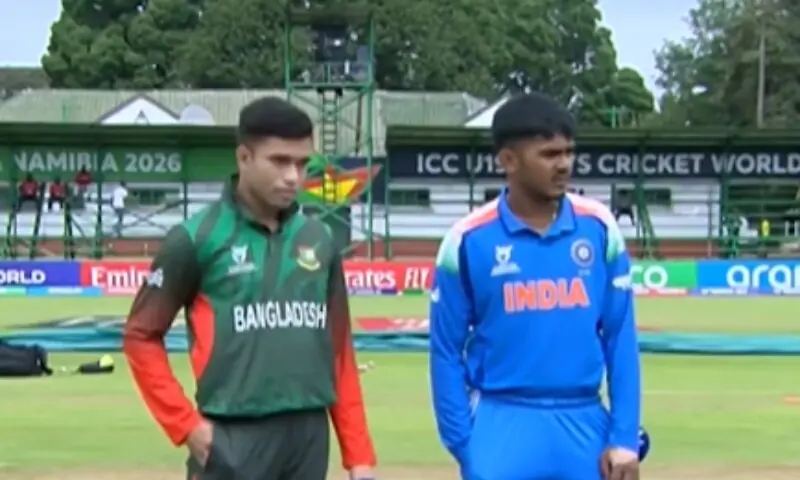
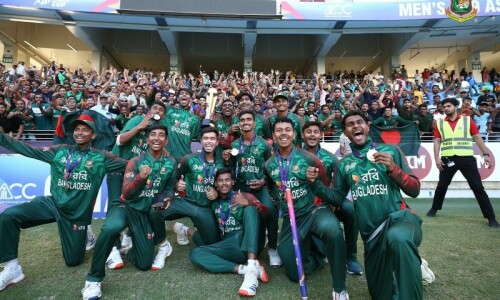
The captains of India and Bangladesh skipped the customary handshake during the toss of their U-19 World Cup match on Sunday but the two sides did shake hands at the end of the game, which the former won.
At the toss, Bangladesh’s acting captain Zawad Abrar and India’s captain Ayush Mhatre did not do the customary handshake at the pre-match toss, which the former won.
“There were, however, handshakes between the teams at the end of the game, which India won by 18 runs (DLS method),” ESPN Cricinfo reported.
The report also quoted a statement from the Bangladesh Cricket Board (BCB) as saying that the “absence of a handshake with the opposition captain was completely unintentional and resulted from a momentary lapse in concentration”.
“There was no intent whatsoever to show discourtesy or disregard towards the opposition,” the report quoted the BCB as saying in a statement.
“The board has viewed the matter with due seriousness, as upholding the spirit of cricket and respect for opponents is a fundamental prerequisite for representing Bangladesh at any level and immediately advised the team management accordingly,” the BCB was quoted as saying.
“The players have also been reminded of their responsibility to maintain the highest standards of sportsmanship, camaraderie and mutual respect in all interactions with opposing teams,” it added.
It is worth mentioning that Indian cricketers had refused to shake hands with their Pakistani counterparts during last year’s Asia Cup matches, in the aftermath of a military conflict between the two countries.
Saturday’s development comes as Bangladesh has announced that it will not play its T20 World Cup matches in India after its player Mustafizur Rahman was released by his Indian Premier League (IPL) team.
Mustafizur, who has played in the IPL for other teams in previous editions, was snapped up at auction in December by Kolkata for more than $1 million. His sacking sparked fury in Dhaka.
Subsequently, Bangladesh “formally requested” the International Cricket Council to shift their games to Sri Lanka.
Earlier this week, during a video conference with the ICC, the BCB said it had “reiterated its request for the ICC to consider relocating Bangladesh’s matches outside India”.
Political relations between India and Bangladesh had soured after a mass uprising in Dhaka in 2024 toppled then-prime minister Sheikh Hasina, a close ally of New Delhi.
India’s foreign ministry last month condemned what it called “unremitting hostility against minorities” in Muslim-majority Bangladesh.
Bangladesh’s interim leader, Nobel Peace Prize winner Muhammad Yunus, has accused India of exaggerating the scale of the violence.