Putin calls Iranian, Israeli leaders in bid to de-escalate crisis

• SCO, Pakistan condemn ‘external interference’, sanctions; Munich Security Conference rescinds Iran invitation
• US bolsters regional presence
• Smuggled Starlink devices used to bypass Tehran’s internet blackout
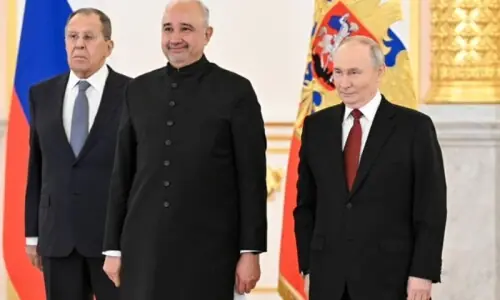
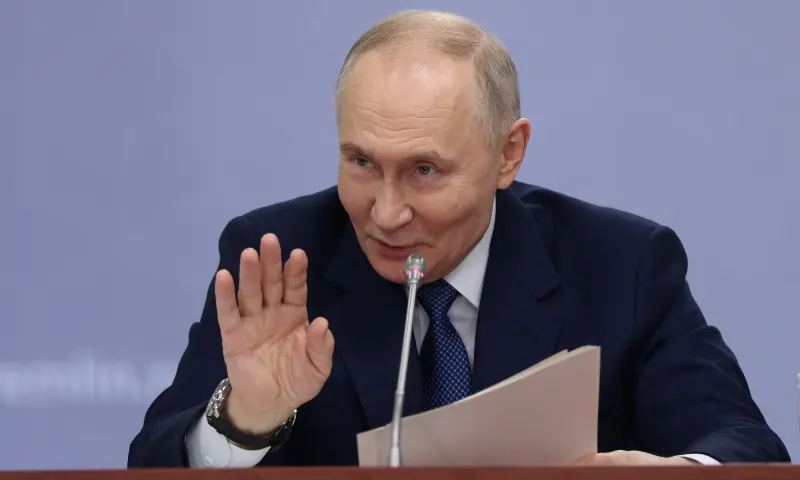
MOSCOW: Russian President Vladimir Putin on Friday moved to mediate the escalating crisis involving Iran on Friday, holding separate telephone calls with Israeli Prime Minister Benjamin Netanyahu and Iranian President Masoud Pezeshkian in an effort to “quickly de-escalate tensions”.
The Kremlin stated that Putin during both phone calls expressed Moscow’s willingness to “continue its mediation efforts and to promote constructive dialogue with the participation of all interested states”.
Pezeshkian briefed Putin on Tehran’s efforts to stabilise the situation, blaming the US and Israel for fomenting unrest.
The two men confirmed their commitment to a 20-year strategic partnership agreement signed last year, which includes joint economic projects, it added.
Meanwhile, fears of an immediate US attack have retreated slightly since President Donald Trump noted killings were easing, however, White House spokesperson Karoline Leavitt noted the president was keeping “all of his options on the table”.
The US has redirected an aircraft carrier and its strike group toward Iran. The USS Abraham Lincoln is carrying fighter jets, guided missile destroyers and at least one attack submarine. The Israeli spy chief was also expected to meet White House envoy Steve Witkoff on Friday.
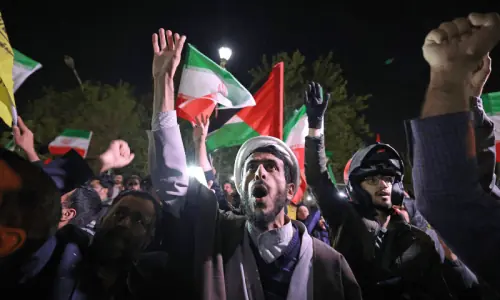
On the ground in Iran, a deadly state crackdown appears to have broadly quelled protests for now. While state media reported more arrests on Friday, residents in Tehran noted the capital had been quiet since Sunday.
Munich conference scraps invite
Amid the crackdown, the Munich Security Conference withdrew its invitation to Iranian Foreign Minister Abbas Araqchi for its upcoming forum.
“In light of current events, the Munich Security Conference will not be maintaining these invitations,” organisers said in a statement. Diplomatic reactions varied globally. The Shanghai Cooperation Organisation (SCO) condemned external interference and blamed Western economic pressure for the instability.
On the other hand, Pakistan urged the UN Security Council to uphold international law regarding non-interference. Ambassador Asim Ahmad, the permanent representative of Pakistan to the UN, warned that unilateral actions would only deepen the crisis. “We sincerely hope that the situation in Iran will soon return to calm and normalcy, free from any internal turmoil or external pressure,” Ahmad said, calling Iran a “brotherly country” and urging all parties to resolve differences through peaceful means.
Starlink behind the scenes
Elon Musk-owned SpaceX’s Starlink satellite service has emerged as a primary tool for Iranian dissidents to bypass state-imposed internet blackouts following a violent crackdown on protests, according to activists and researchers.
The network, which uses thousands of low-orbit satellites to beam internet to terminals the size of a pizza box, has become a crucial lifeline for demonstrators.
Digital rights groups estimate 50,000 terminals have been smuggled into Iran, defying a law that bans the unlicensed technology. As Iran attributes the country’s tensions to foreign involvement, the extensive scale of this Starlink network implies that it may be receiving sophisticated external support.
Given the difficulty of transporting large quantities of restricted hardware across Iran’s tightly controlled borders, the logistics mirror the capabilities of foreign intelligence services; however, no official link has been confirmed.
Published in Dawn, January 17th, 2026