• US president adopts ‘wait-and-see’ stance; expresses lack of confidence in Pahlavi
• Saudi Arabia, Qatar, Oman led ‘frantic’ midnight diplomacy to avert US military strikes
• Tehran envoy says situation ‘back to normal’; deepfake videos flood social media
• UNSC holds emergency session; G7 nations condemn crackdown
WASHINGTON / ISLAMABAD: US President Donald Trump on Thursday changed his stance on military intervention in Iran, adopting a “watch it and see” posture instead, after receiving information that killings in Iran’s crackdown on protesters were easing, and there was no current plan for mass executions.
He cited assurances from “very important sources on the other side” indicating that Tehran had ceased using lethal force against demonstrators.
“They’ve said the killing has stopped and the executions won’t take place,” Trump said. Asked by a reporter if US military action was now off the table, the president replied: “We’re going to watch it and see what the process is.”
The comments calmed markets, leading oil prices to retreat from multi-month highs. Trump noted his administration had received a “very good statement” from Iran, adding that “hopefully, it will continue.”
This diplomatic pivot coincided with reports from rights groups and Iranian state media that imminent executions had been halted. Iranian state media reported on Thursday that Erfan Soltani, a 26-year-old man arrested during protests in Karaj, would not be sentenced to death.
A rights group, which had previously reported Soltani was scheduled for execution Wednesday, confirmed the order had been postponed. In a social media post, Trump responded to the news regarding Soltani, writing: “This is good news.”
Iranian officials also moved to reinforce the de-escalation. Foreign Minister Abbas Araghchi told Fox News there would be “no hanging today or tomorrow.”
Araghchi claimed the government was “in full control” and reported an atmosphere of “calm” following what he described as three days of “terrorist operations.” He alleged the protests, which began over economic grievances, were infiltrated by external elements hoping to provoke a US war.
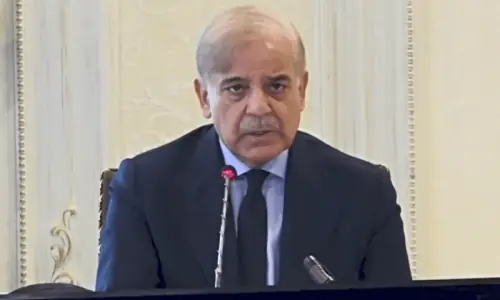
This stance was repeated by Iranian Ambassador to Pakistan Reza Amiri Moghadam, who claimed on Thursday that the situation was now fully under control and there were no protests in Iran.
Speaking during a visit to the National Rahmatul-lil-Alameen Authority, Moghadam said that he received information at around 1am on Thursday, indicating that Trump did not want war, and had also asked Iran not to attack the US interests in the region.
Speaking of the protests, the envoy maintained that the people had a legitimate right to protest and that the government had engaged in talks with the demonstrators.
However, he said that the coverage of the US and Western media incited violence, further escalating the situation.
Referring to the statements issued by Trump and Israeli Prime Minister Benjamin Netanyahu on January 7, he said that they amounted to interference in Iran’s internal affairs, further stoking the tensions.
The envoy described the events as the worst in Iran’s history.
He alleged that armed groups carried out killings, attacked mosques, imambargahs, and committed acts of arson.
Mr Moghadam held that in case of aggression from Israel or the US, Tehran had already conveyed that it remained prepared.
He added that the country remained on high alert and its airspace had been closed temporarily.
Gulf trio
Meanwhile, regional neighbors also played a critical role in defusing the crisis. Saudi Arabia, Qatar, and Oman led “frantic” diplomatic efforts to talk Trump out of an attack, fearing “grave blowbacks in the region,” a senior Saudi official said.
The Gulf trio worked to convince Trump to give Iran a chance to show good intentions.
“It was a sleepless night to defuse more bombs in the region,” the official said on condition of anonymity, adding that dialogue was continuing to consolidate the gained trust.
The Gulf efforts aimed to “avoid an uncontrollable situation in the region”, the Saudi official said.
“We told Washington that an attack on Iran would open the way for a series of grave blowbacks in the region,” the official added.
UNSC session scheduled
The international community is set to formalise its scrutiny of the unrest. The UN Security Council scheduled a briefing on the situation in Iran for Thursday, Jan 15, 2026.
“I can now confirm that the (Security Council) presidency intends to schedule a briefing... requested by the United States,” said Khadija Ahmed, spokeswoman for the Somali mission to the UN, which holds the rotating presidency.
No confidence in Pahlavi
While backing away from immediate intervention, Trump appeared tepid on regime change figures. In an interview with Reuters, Trump expressed uncertainty over whether Reza Pahlavi, the son of the late shah of Iran, could muster the support to take over.
“He seems very nice, but I don’t know how he’d play within his own country,” Trump said. “And we really aren’t up to that point yet.”
Despite the pause in US military threats, international pressure on Tehran persisted. The Group of Seven nations condemned what they described as “brutal repression”.
Rights groups report the toll has been heavy. The U.S.-based HRANA rights group verified the deaths of 2,435 protesters, while Amnesty International accused authorities of mass unlawful killings on an “unprecedented scale.”
Deepfake videos
As information flows remained hampered by an internet blackout, disinformation complicated the narrative. Researchers identified AI-generated videos depicting protests filling the void.
US watchdog NewsGuard identified seven AI-generated videos created by both pro- and anti-government actors that amassed 3.5 million views. Some deepfakes depicted protesters renaming streets after Trump, while others showed fabricated large-scale government counter-protests.
“Foreign social media users are turning to AI video generators to advance their own narratives about the unfolding chaos,” said NewsGuard analyst Ines Chomnalez.
Published in Dawn, January 16th, 2026