Rainwater harvesting systems look ‘promising’
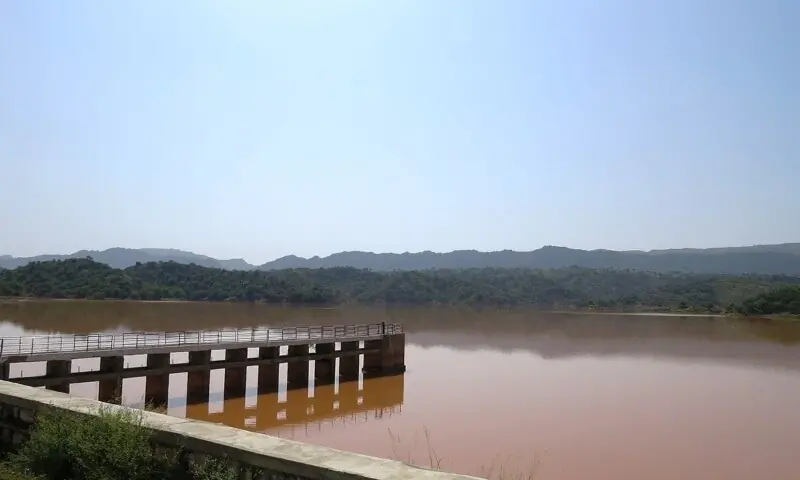
QUETTA: Rainwater harvesting and groundwater recharge systems installed at two major educational institutions in Quetta have shown promising results amid one of Balochistan’s worst droughts in recent years, officials said.
The province received nearly 52 per cent less rain than average in 2025, according to the Pakistan Meteorological Department, intensifying pressure on groundwater resources that meet most of the provincial capital’s water needs.
In response to the growing water crisis, the International Water Management Institute (IWMI), under the European Union-funded Revival of Balochistan Water Resources Programme (RBWRP), installed rainwater harvesting and recharge infrastructure at the Balochistan University of Information Technology, Engineering and Management Sciences (BUITEMS) and the Balochistan Agriculture College (BAC).
The systems were tested during rains in December 2025. On December 20, Quetta received about 5 millimetres of rain, allowing storage tanks at BUITEMS to fill close to capacity without triggering groundwater recharge.
Initiatives aim to capture rainwater for institutional, horticultural use
A heavier rainfall of 13mm on Dec 30-31 fully filled the storage tanks and initiated the recharge process. Monitoring data showed that four cubic metres of water were recharged into the groundwater aquifer.
Water quality tests recorded Total Dissolved Solids (TDS) at 155 parts per million, meeting standards for safe recharge.
At the Balochistan Agriculture College, rains during the same period filled a 286,500-litre storage pond, while overflow contributed around 1.5 cubic metres to groundwater recharge, highlighting the benefits of larger storage systems.
Apart from rain water, the site at BUITEMS also utilises the overhead tank overflow for storage which is regularly used for horticultural purposes.
The IWMI’s Deputy Country Representative Dr Muhammad Arshad, project officials Shamsher Shah and Mueez Shehzad said the initiatives aim to capture rainwater for institutional and horticultural use while replenishing depleted aquifers, offering a sustainable approach to water management in arid regions.
They said that the December rains confirmed the operational effectiveness of the systems, which could be replicated across other drought-prone areas of Balochistan.
Published in Dawn, January 15th, 2026