FM Aurangzeb says some firms left Pakistan due to high taxes, energy costs
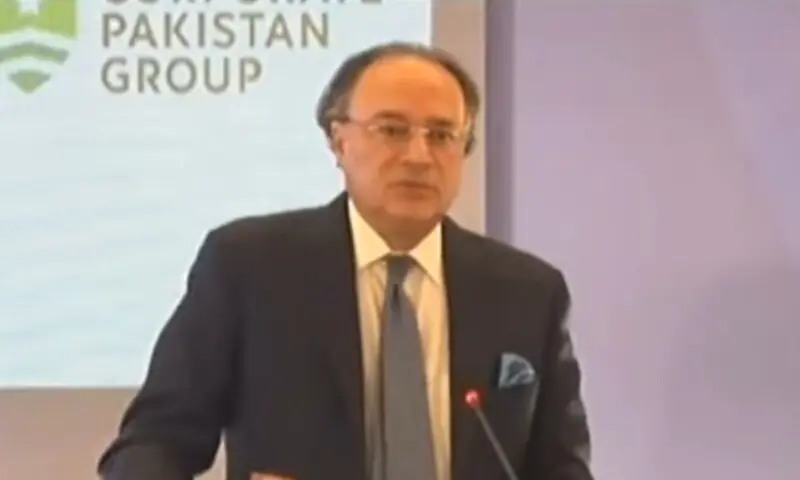


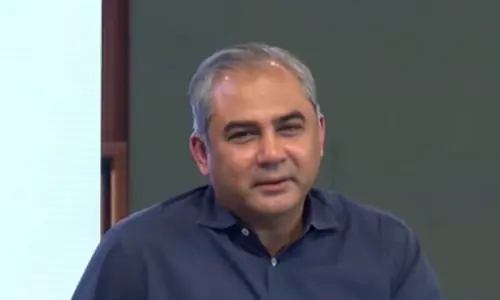
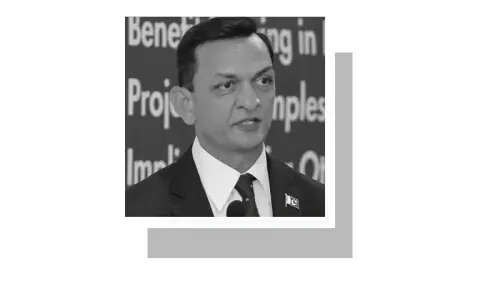
Finance Minister Muhammad Aurangzeb on Wednesday acknowledged that some multinational companies have left Pakistan due to “high taxes and energy costs”, but called on them to revise their business models, aligning them with the “modern world”.
During the past few years, multiple MNCs have shut down their operations in Pakistan, including Procter & Gamble, Eli Lilly, Shell, Microsoft, Uber and Yamaha.
He made the remarks while addressing the Pakistan Policy Dialogue, hosted by Policy Research & Advisory Council (PRAC), in Islamabad.
The minister, in his address, talked about the exodus of multinational companies from the country, stating, “There are firms that are leaving Pakistan, which is true, and we must acknowledge if the taxation is high, energy cost is high, or financing cost, those have been real issues”.
However, the minister continued: “But it takes two to tango [..] if you are wedged into your business models from the last 50 years, it is not going to work in the modern world”.
Citing Nestle and Unilever as examples of MNCs successfully operating in Pakistan, he said, “If Nestle and Unilever can do local sourcing, which keeps their margins high, they are now able to export, which is why they continue operating here.”
The minister also shared that in the last 18 months, “20 new foreign investors had entered the country”.
Talking about the government’s privatisation efforts regarding State-Owned Enterprises (SOEs), he said that 24 SOEs have been handed over to the Privatisation Commission.
He elaborated that the losses suffered due to SOEs were a “huge gap” and expressed hope that the amount saved by the national exchequer could be put to a much better use going forward.
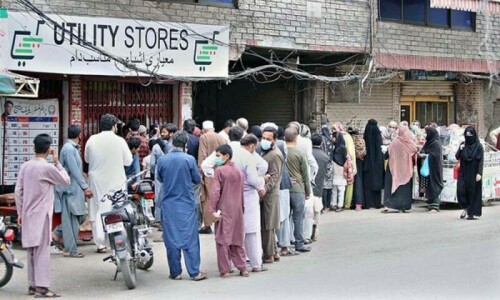
The finance czar recalled that the government had to close down the Utility Stores Corporation, Pakistan Agricultural Storage and Services Corporation (PASSCO), “not because 1,000-5,000 people were employed there, but because of the subsidies that the government was providing them”.
“More importantly, it was the corruption built into those subsidies that was the real cost to the exchequer,” the finance minister maintained.
“By June this year, all government payments are going to go through digital channels,“ said Aurangzeb while referring to the government’s digitisation efforts.
Speaking about tariff reforms, the minister said that Regulatory Duty (RD), Customs Duty (CD) and Additional Customs Duty (ACDs) will be phased out in five years.
“This is to bring our intermediary and raw material costs down so we can take it towards an export-led discussion,” Aurangzeb said.
He held that this was being done for the first time in the country‘s history, stressing that it could be Pakistan’s “East Asia moment”.
The finance minister further said that the protection given to industries had led to a decline in competition.
“If we are to take this forward [..] and move toward export orientation, we have to start from somewhere,“ he said.
The finance minister also spoke of debt servicing, and termed it the “single largest expense item” for the country.
He outlined plans to modernise the debt management office, stressing the need for “having proper investor relations, a front office, a middle office, a back office so we can take it forward professionally”.
“Past year, we saved roughly Rs850bn in terms of debt servicing,” the finance minister said, expressing hope to achieve similar results this year.
The minister further said that the government planned to issue Panda Bonds “in the next couple of weeks if all goes well”.
In his address, the minister reiterated the government’s commitment to bring crypto into the “regulatory environment”.
“We have billions of dollars in discussion of trading volumes [..] activity which is happening at this volume has to be brought into a regulatory environment.”
In October 2025, American multinational corporation Procter & Gamble announced that it was winding down its manufacturing and commercial activities in Pakistan.
The MNC said that it will rely on third-party distributors to continue to serve customers in the country.
In September last year, Yamaha Motor Pakistan Ltd (YMPL) also announced the discontinuation of its motorcycle assembly operations.
The decision came as part of a change in the company’s business strategy.
In the same year, Careem suspended its ride-hailing operations in Pakistan after nearly a decade in the industry.
Analysts suggest that the reasons for the shift are often varied, including restructuring at the company’s end, growing competition from local companies, and security conditions, among others