Islamabad, AJK, GB residents to get back health insurance from Jan 16


 1
1
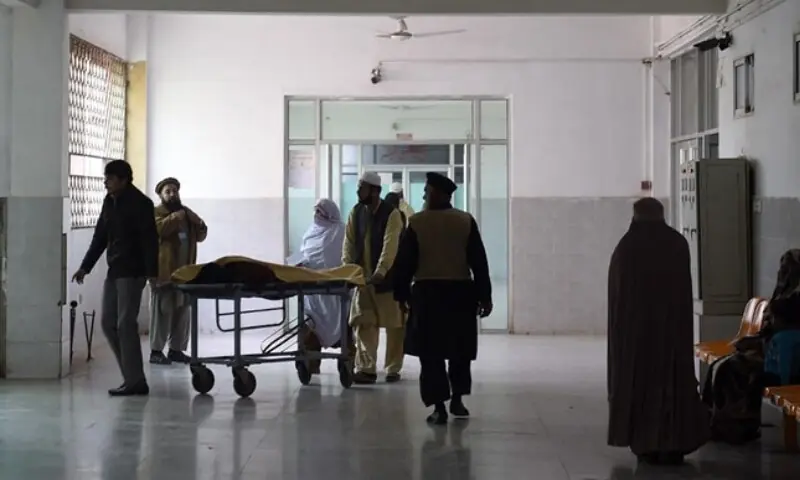

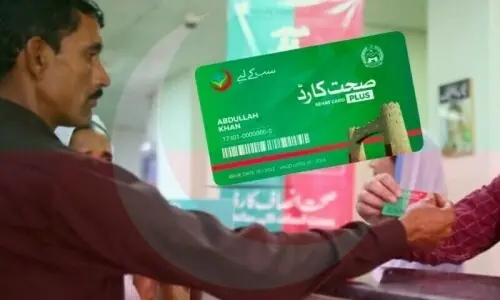
ISLAMABAD: The federal government has finally decided to resume the health card facility for over 10 million residents of Islamabad, Azad Jammu and Kashmir, and Gilgit Baltistan.
The PC-1 worth of Rs40 billion has been approved by the National Steering Committee of Sehat Sahulat Programme (SSP) chaired by Federal Health Minister Syed Mustafa Kamal. The service will be resumed from Jan 16.
The meeting of the committee was attended by health secretary Hamid Yaqoob, special secretary of health and CEO of SSP Arshad Khan, along with members of the National Steering Committee.
The committee reviewed progress on the restoration and launch of Universal Health Coverage (UHC) services to all permanent resident families of ICT, AJK, and Gilgit-Baltistan.
The CEO of Federal SSP Arshad Khan shared prime minister’s directives for immediate restoration of the services.
Rs40bn approved for the programme
“The committee approved the revised PC-I with an estimated cost of approximately Rs40 billion, extending up to 30th June 2027, to provide free hospitalisation services to all permanent resident families of ICT, Azad Jammu and Kashmir, and Gilgit-Baltistan under the UHC model of Federal Sehat Sahulat Programme.
“It was also decided to extend existing contracts with State Life Insurance Corporation and Nadra through addenda to ensure uninterrupted services, while outstanding liabilities will be cleared from the PSDP as per the prime minister’s directions,” a statement issued by the health ministry claimed.
Speaking on the occasion, Syed Mustafa Kamal said the country must adopt modern health insurance and strategic purchasing models rather than directly managing hospital services to ensure quality, efficiency, and dignity in healthcare delivery.
The minister confirmed that the prime minister will launch the restored services on Jan 16.
Over 10 million residents of Islamabad, AJK and Gilgit-Baltistan were (GB) suffering since March 2024 as the service was suspended because the federal govt had failed to clear its dues. On the other hand, residents of Khyber Pakhtunkhwa (KP) and Punjab were enjoying the facility. Residents of KP have been getting the best possible medical facility as they can get medical treatment at private and public sector hospitals whereas residents of Punjab can only get treatment at public sector hospitals.
Former prime minister Nawaz Sharif had launched the health card programme on Dec 31, 2015, for Islamabad and described the move a first step towards making the country a welfare state. He had also announced the card would be expanded to all parts of Punjab, Balochistan, AJK, Gilgit-Baltistan and then Federally Administered Tribal Areas (Fata).
People of Sindh and Khyber Pakhtunkhwa (KP) could not benefit from the initiative at that time because their governments had declined to become part of the federal government’s programme in which they also had to contribute. Later, the KP had launched its own health card namely Sehat Insaf Card.
During the tenure of Pakistan Tehreek-i-Insaf (PTI) government, the programme was expanded across the country.
In April 2022 some of the hospitals had suspended the service as they feared that the PML-N government might discontinue the programme as PTI promoted/marketed the programme as its initiative.
Later, the PML-N government limited the programme to public sector hospitals in Punjab and the service was completely suspended in Islamabad, AJK and GB.
Since the start of health card in year 2015, the State Life Insurance Corporation of Pakistan has been dealing with the card facility, and in 2021 it again won the contract of insurance of health cards for the next three years (2022 to 2025). The insurance has been further extended to June 30, 2027.
Published in Dawn, January 13th, 2026