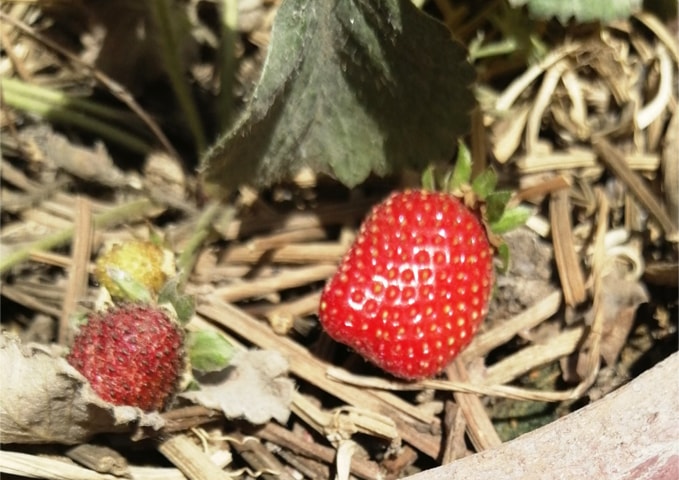
It is not only humans who are attracted to crimson, juicy and aromatic strawberries. Birds, insects, small animals and even pests are tempted to grab a mouthful of the delicious fruit.
The strawberry plant is also susceptible to changes in weather or gardening routine as well as fungal infections and plant diseases, which can hinder its growth in different phases of its life cycle. However, timely tweaks to our gardening practices can go a long way in saving the plant and ensuring a juicy harvest.
Insects, bees and butterflies act as support staff during the flowering phase, ensuring self-pollination of the white strawberry flower. However, during the fruiting phase, it is important to ensure that such pollinators don’t damage the plant, particularly during phases when the fruit is maturing and ripening. It is not advisable to kill these pollinators, as it could disturb the environmental balance. Instead, gardeners should opt for protecting their plants by using a net.
Similarly, small rodents and birds pecking at the fruits is a common nuisance for a gardener. Usually, such attacks occur due to the rodents or birds being either thirsty or hungry. Placing water and bird feed near the plant can provide them with a better alternative. Gardeners may also shoo away the birds by placing a scarecrow or installing light-deflecting mirrors or CDs near fruit-producing strawberry plants.
From flowering to fruiting, strawberry plants face threats at every stage — from birds and bugs to weather and infections. But timely interventions can ensure a successful harvest..
Generous watering is crucial for the strawberry plant, especially since strawberries are more than 90 percent water. Any reduction in watering quantity directly impacts the growth of the plant and its fruit. However, in drier areas or those with increased hours of sunlight exposure, certain adjustments can go a long way. To ensure better moisture retention, the soil surface of the strawberry plant container is mulched with hay and straws. Keep the containers under shade and check water levels by inserting a finger into the soil.
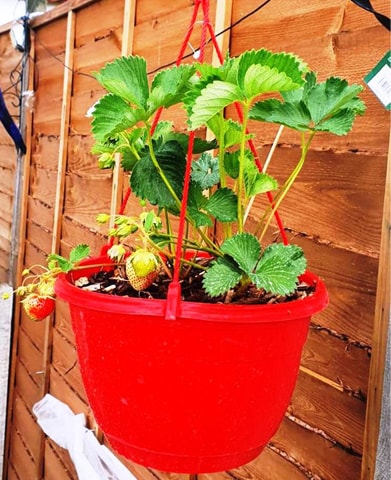
On the other hand, excess water — due to lack of drainage or overwatering — can be detrimental to the strawberry plant. It can result in root-rot, which usually manifests in the form of drooping, soft leaves that may start to turn yellow or brown, and fruit with mould on the surface. Watering in the morning after checking the level of soil moisture, mulching with straws and compost, ensuring proper soil drainage and, in some extreme cases, repotting with fresh soil, can go a long way in fighting off the issues resulting from overwatering.
During different stages of its plant life cycle, strawberry plants are susceptible to a number of pests and diseases. Aphids, fruit flies, snails, slugs, thrips, spider mites and mealy bugs are some common pests that may attack the strawberry plant.
Pest attacks are usually diagnosed through the condition of the plant’s leaves. For instance, in the case of spider mites, a web-like growth appears on the underside of the leaves and this occurs mostly in warm weather. Aphid attacks usually cause curling of leaves and weakening of the plant stem. Mealy bugs cause wilting of leaves. They are found on the stem and underside of the leaves. Flowers and fruits can also serve as identifiers of pest attacks. A damaged flower or an irregularly shaped fruit is usually caused by thrips.

Counter these pest attacks by spraying an organic pesticide solution on the plant every fortnight. Prepare this solution by mixing one spoonful of neem oil in a litre of water. If the plants are already infested, boost the solution with a few additional drops of dish-washing liquid.
Beyond root-rot, there are some common diseases that may impact the strawberry plant. Grey mould, also known as Botrytis cinerea, is a fungal infection that appears as a grey accumulation on the surface of the fruit. It usually occurs in humid, overwatered conditions. Check the watering schedule, drainage and increase spacing between plants to deter grey mould from occurring in strawberries.
Powdery mildew manifests as white powder on the leaves with deformed, stunted growth of the plant. Improved aeration, by increasing spacing between the plants, and the use of fungicidal spray reduces the risk of powdery mildew.
Please send your queries and emails to doctree101@hotmail.com. The writer is a physician and a host for the YouTube channel ‘DocTree Gardening’ promoting organic kitchen gardening
Published in Dawn, EOS, January 11th, 2026