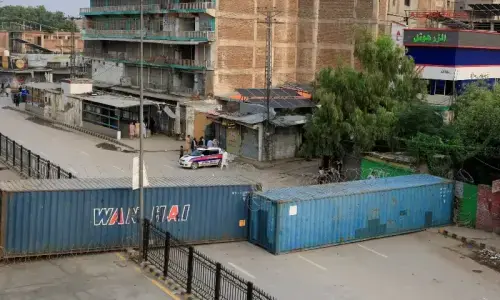
Pakistan’s direct trade with Afghanistan, as well as transit trade through it to Central Asian states, has been suspended since mid-October, when the Afghan border was closed due to security concerns. As a result, Pakistan’s exports — particularly agricultural commodities — continue to be badly affected.
Several analysts and trade experts appearing on television talk shows over the past three months have repeatedly argued that the border closure would reduce the country’s overall exports by around $1.51 billion, which constitutes barely 4.6 per cent of Pakistan’s total exports, according to 2024 data from the International Trade Centre. They further contend that this loss — or even more — could be offset by rising remittances, especially given that nearly 700,000 Pakistanis went abroad for employment during 2025 alone.
However, a narrow focus on export percentages and remittance inflows obscures the larger reality of the agriculture sector. Under the famous supply and demand framework, the short-run inelastic supply concept has come into play here. It is worth noting that the supply of perishable agricultural commodities is highly inelastic; therefore, even small disruptions in demand — just 5–10pc — can create glut-like conditions in the domestic market, which may lead to sharp price declines that cause immense losses for farmers.
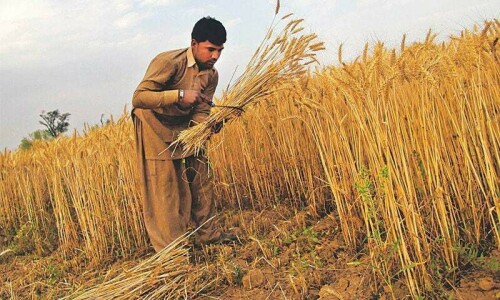
For instance, citrus exports to Afghanistan and the Central Asian states amount to around 170,000 tonnes (FY25), hardly 7.5pc of the total production of 2.3 million tonnes. Yet, the suspension of exports has slashed farm-gate citrus prices by 50–80pc. Similarly, Pakistan exports about 500,000 tonnes of potatoes (FY25) to these markets, just 5.5pc of total output — but the border closure has triggered a market crash. As a result, farmers are now receiving barely one-third of last year’s prices.
The suspension of exports has slashed farm-gate citrus prices by 50–80pc, while the inability to export potatoes is triggering a market crash
This is precisely what is happening to all fruits and vegetables that previously had significant exports to Afghanistan and the Central Asian states. If the situation persists, several other crops are likely to be impacted in the coming months. The real issue is not the decline in exports — which may be offset by remittances — but the massive losses farmers are incurring due to collapsing prices.
Take the case of potatoes alone. Pakistan’s exports to Afghanistan and Central Asian states are worth barely $90m (FY25), yet their suspension has inflicted losses of at least Rs100,000 per acre on farmers, amounting to roughly $350m for 950,000 acres of crop. Such heavy losses will cripple farmers financially and reduce their ability to invest in subsequent crops.
This low investment will, in turn, depress yields, lower overall agricultural output, and put the country’s long-term food security at risk. This concern has become even more critical as farmers of several crops have already incurred losses in 2025 due to floods, climate change-induced yield reductions, rising input costs, and depressed prices of wheat, cotton, sugarcane, sesame, and other crops.
Moreover, the adverse effects of eroded farmers’ financial capacity are not confined to the agriculture sector alone; these losses will generate negative spillover effects that impair the performance of both manufacturing (durables and consumables) and services sectors.
Rightfully, national security must remain the government’s paramount priority and must never be compromised, especially when our forces are making daily sacrifices to protect the nation. Yet, strangely, both federal and provincial governments are watching this situation passively while farmers suffer devastating losses, crop after crop. Such a hands-off approach is indefensible by any standard.
Drawing lessons from global best practices — where countries swiftly shield farmers during rare disruptions such as pandemics, super floods, or geopolitical shocks — the federal and provincial governments must act to avert a deepening agricultural crisis. Border closure may prove temporary, but its damage to farm incomes and overall economic momentum could be profound and long-lasting, which will exacerbate poverty, currently standing at 44pc.
At a minimum, three targeted and immediate interventions are essential to protect vulnerable farmers.
First, potatoes represent the largest and hardest-hit crop. The federal government should incentivise potato exporters and enterprises engaged in potato value-addition by offering interest-free loans strictly for procuring and storing potatoes in cold storage facilities during the peak harvest window (20 January–1 March) for their year-round consumption. Procuring approximately 1m tonnes — well below Pakistan’s existing storage capacity of approximately 3m tonnes — would be sufficient to stabilise the market.
Second, vegetable cultivation — particularly in Khyber Pakhtunkhwa (KP) — is largely dominated by smallholder farmers, whose exports to Afghanistan have been badly affected. For the upcoming cropping season, provincial governments should support these farmers by providing essential inputs such as fertilisers and quality seeds, similar to the assistance recently extended by the Sindh Government to wheat farmers under the Wheat Growers Support Policy.
Third, provincial governments should map the crops most vulnerable to the border closure and guide farmers, through provincial agricultural extension services and the Ministry of Commerce, to switch to alternatives that Pakistan currently imports in large quantities — such as chickpeas, oilseeds, and pulses — or to crops with strong export potential in existing non-Afghan markets.
Khalid Wattoo is a development professional and a farmer, and Dr Waqar Ahmad is a former associate professor at the University of Agriculture, Faisalabad
Published in Dawn, The Business and Finance Weekly, January 5th, 2026