Immigration debate dividing UK, says new Anglican leader
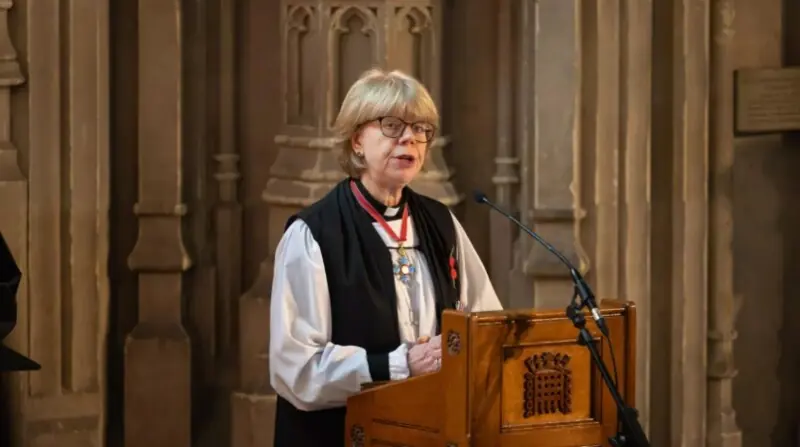
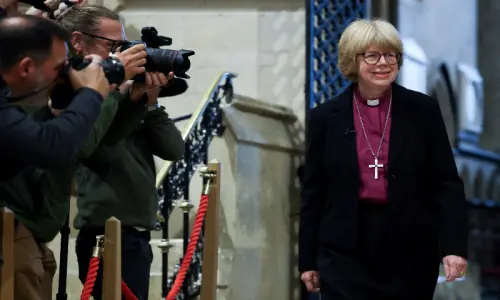
LONDON: Sarah Mullally, who becomes head of the Church of England next month, warned during a Christmas sermon on Thursday that national conversations over immigration were dividing British society.
Currently the Bishop of London, Mullally, 63, will on Jan 28 become the first woman to lead the centuries-old mother church of the world’s 85-million strong Anglican community.
In her Christmas sermon at St Paul’s Cathedral in London, the incoming Archbishop of Canterbury raised concerns about the hot-button issue of immigration.
“Our national conversations about immigration continue to divide us, when our common humanity should unite us,” she said.
She continued: “We who are Christians then hold fast to joy as an act of resistance.” This, she said, was “the kind of joy that does not minimise suffering but meets it with courage”.
Mullally is to succeed Justin Welby, who stepped down from the top post earlier this year
Immigration has become a central political issue in the United Kingdom.
In response to undocumented asylum seekers making the perilous journey across the Channel to Britain in small boats, Labour Prime Minister Keir Starmer has vowed to “smash the gangs” of people smugglers behind them.
So far he has struggled to reduce the number of migrants arriving in the country — the vast majority of them legally — but the issue is being exploited by the anti-immigration Reform party.
The rise in support for hard-right Reform mirrors advances by far-right parties across Europe.
Mullally is to succeed Justin Welby, who stepped down from the top post earlier this year over findings that the Church of England had covered up a 1970s case of serial sexual abuse against young boys and men.
The former Archbishop of Canterbury Justin Welby has told the BBC he failed to follow up abuse allegations within the Church of England because the scale of the problem was “absolutely overwhelming”.
In November he became the first Archbishop to quit as a result of a scandal in the Church in more than 1,000 years, after a damning independent review found he did not follow up rigorously enough on reports about John Smyth, a serial abuser of children and young men.
In his first interview since resigning, Welby, 68, told the BBC’s Laura Kuenssberg that the sheer scale of the problem was “a reason – not an excuse” for his failure to act after taking the job in 2013.
“Every day more cases were coming across the desk that had been in the past, hadn’t been dealt with adequately, and this was just, it was another case - and yes I knew Smyth but it was an absolutely overwhelming few weeks,” he said.
The Church of England has been struggling to shake accusation of years of sex abuse cover-ups and safeguarding failures.
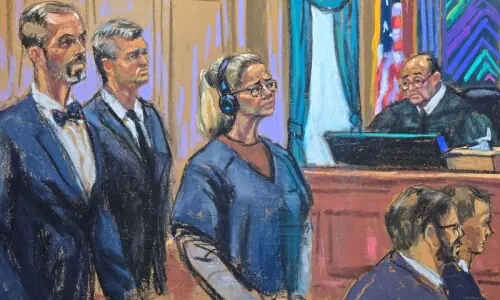
It is currently looking into a complaint from 2020 against Mullally’s handling of the allegations made by an individual known as ‘N’.
Published in Dawn, December 26th, 2025