Finance minister says Pakistan’s economy shifting toward export-led growth
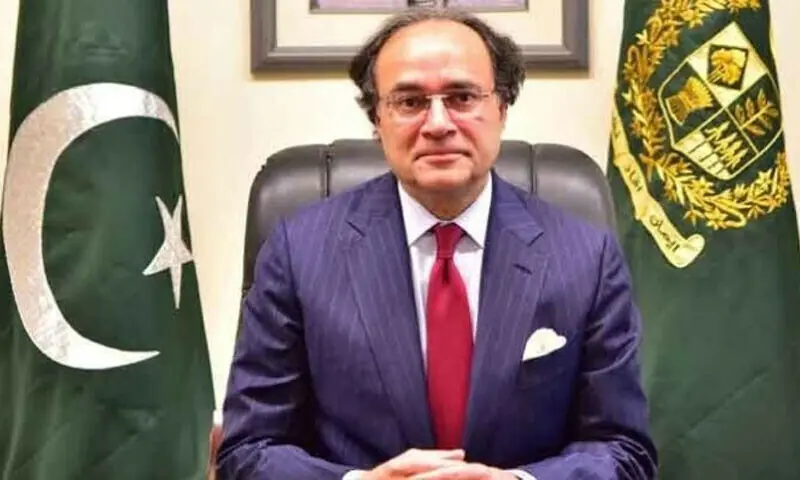


Finance Minister Muhammad Aurangzeb said on Wednesday that Pakistan had reached a critical turning point, with macroeconomic stability, sustained reforms, and policy continuity restoring confidence and steering the economy toward export-led, long-term growth.
In an interview with USA Today, the minister said this was opening new horizons for domestic and global investors, and positioning the country for sustainable, long-term economic growth.
He said this transition was enabled by macroeconomic stabilisation, easing inflation and improved external balances, with the government driving export-led, productivity-based growth through structural reforms, sustaining reform momentum despite challenges, and actively encouraging global investment in emerging opportunities across agriculture, minerals, technology and climate resilience.
He noted that, for the first time in several years, Pakistan had achieved both a primary fiscal surplus and a current account surplus, signalling a decisive shift away from the cycle of recurring deficits.
He said that strong remittance inflows had played a critical role in supporting this turnaround, while inflation had fallen sharply from a peak of 38 per cent to single-digit levels.
He also noted that foreign exchange reserves had risen to over $14.5 billion, providing import cover of approximately two-and-a-half months, while the exchange rate had remained stable, helping to restore investor confidence.
Aurangzeb emphasised that while macroeconomic stabilisation was an essential foundation, sustainable growth remained the central challenge.
He pointed out that the economic growth of 2.7pc in the previous fiscal year, though positive, was insufficient to absorb the needs of a rapidly growing population.
He underlined that Pakistan was consciously moving away from a consumption and debt-driven growth model toward an export-led strategy.
The current budget, he explained, reflected this shift through structural reforms in taxation, energy pricing, and state-owned enterprises, alongside far-reaching tariff reforms aimed at dismantling decades of protectionism and enhancing global competitiveness.
He highlighted that Pakistan was aligning its economic strategy with changing global demand patterns, identifying information technology services, textiles, and agricultural exports as key areas with strong potential.
He said efforts were also underway to simplify the tax regime for exporters and reduce bureaucratic hurdles in order to foster long-term productivity and competitiveness.
Addressing the broader reform agenda, Aurangzeb said that the privatisation of state-owned enterprises, tariff liberalisation, and restructuring of the energy sector were designed to address deep-rooted inefficiencies that had historically strained public finances.
He said that these reforms were part of a long-term vision, echoing the World Bank’s (WB) assessment of Pakistan’s potential “East Asia moment”.
He referred to the ten-year Country Partnership Framework with the WB, the first of its kind, which placed an emphasis on economic reform alongside climate resilience and population management.
The minister stressed that Pakistan’s future hinged on addressing existential challenges beyond fiscal indicators.
Population growth, climate change, child stunting, learning poverty and the exclusion of girls from education were identified as critical issues that must be tackled to safeguard the country’s long-term productive capacity, he said.
Aurangzeb stressed that increasing women’s participation in education and the workforce was both a social imperative and an economic necessity.
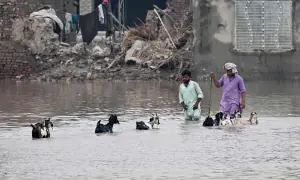
On climate resilience, he highlighted Pakistan’s engagement with multilateral partners to strengthen preparedness against frequent floods and droughts.
Acknowledging the risks that remain, he reaffirmed the government’s commitment to staying the course of reforms despite geopolitical and domestic challenges. He emphasised that discipline, consistency, and international cooperation remained central to safeguarding recent gains.
Highlighting opportunities for investors, the minister pointed to agriculture, minerals and mining, and the emerging digital economy as priority sectors.
He drew attention to Pakistan’s agricultural potential, the strategic importance of the Tethyan Copper Belt in Balochistan amid rising global demand for critical minerals, and the growing focus on data centres, artificial intelligence, and digital services.
He noted that regulatory frameworks were being updated to support innovation and encourage foreign investment, particularly from the United States, describing technological change as a major game-changer for Pakistan.
In conclusion, Aurangzeb invited global investors and partners to engage with Pakistan through trade, investment, and collaboration.
Emphasising the country’s reform momentum, economic potential, and natural beauty, he reiterated that Pakistan was transitioning from a narrative of crisis management to one of opportunity and transformation, offering promising prospects for those willing to engage with a market on the cusp of sustainable growth.