Alleged Bondi shooters conducted ‘tactical’ training in New South Wales countryside, police say
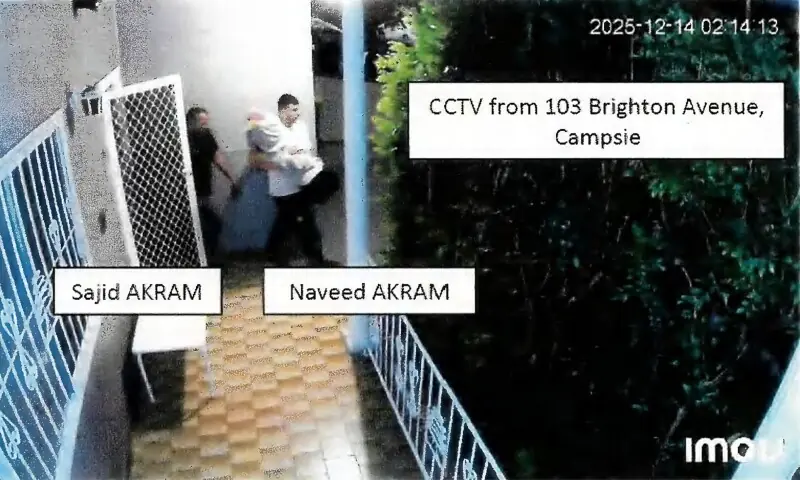


Two suspects in last week’s deadly mass shooting at Australia’s Bondi Beach trained for the attack in the countryside, police alleged in court documents on Monday, as Prime Minister Anthony Albanese vowed tougher laws against hate speech and extremism.
Father and son Sajid Akram and Naveed are accused of targeting a Hanukkah event on Bondi Beach, killing 15 people in the nation’s deadliest mass shooting in almost three decades.
Sajid, 50, was shot and killed by police during the attack. An Indian national, he entered Australia on a visa in 1998.
His 24-year-old son, Naveed, an Australian-born citizen, was moved from hospital to jail on Monday, police said.
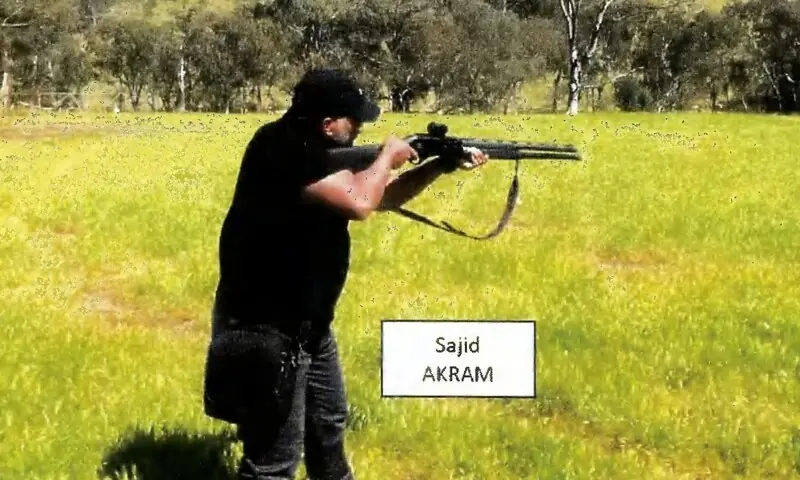
Police documents released on Monday said the two had carried out “firearms training” in what was believed to be the New South Wales countryside prior to the shooting.
Pictures were released showing the accused firing shotguns and moving in what authorities described as a “tactical manner”.
The pair also recorded a video in October railing against “Zionists” while sitting in front of a flag of the Islamic State group and detailing their motivations for the attack, police said.
And they made a nighttime “reconnaissance” trip to Bondi Beach just days before the killings, documents showed.
Australia observed a minute’s silence at 6:47pm (12:47pm PKT) on Sunday —exactly a week since the first reports of gunfire.
On Monday, Albanese said he would push for tough new laws creating “an aggravated offence for hate preaching”.
“We’re not going to let the ISIS inspired terrorists win. We won’t let them divide our society, and we’ll get through this together,” Albanese told reporters.
“As prime minister, I feel the weight of responsibility for an atrocity that happened whilst I’m prime minister, and I’m sorry for what the Jewish community and our nation as a whole has experienced,” he said.
“The government will work every day to protect Jewish Australians, to protect the fundamental right as Australians that they have to be proud of who they are, to practice their faith, to educate their children and to engage in Australian society in the fullest way possible,” he added.
Crackdown on guns, ‘terrorist symbols’
Australia’s federal government has flagged a suite of reforms to gun ownership and hate speech laws, as well as a review of police and intelligence services.
Albanese also announced last week a sweeping buyback scheme to “get guns off our streets”.
It is the largest gun buyback since 1996, when Australia cracked down on firearms in the wake of a mass shooting that killed 35 people at Port Arthur.
And the government of New South Wales — where the shooting took place — recalled its parliament for two days on Monday to introduce what it called the “toughest firearm reforms in the country”.
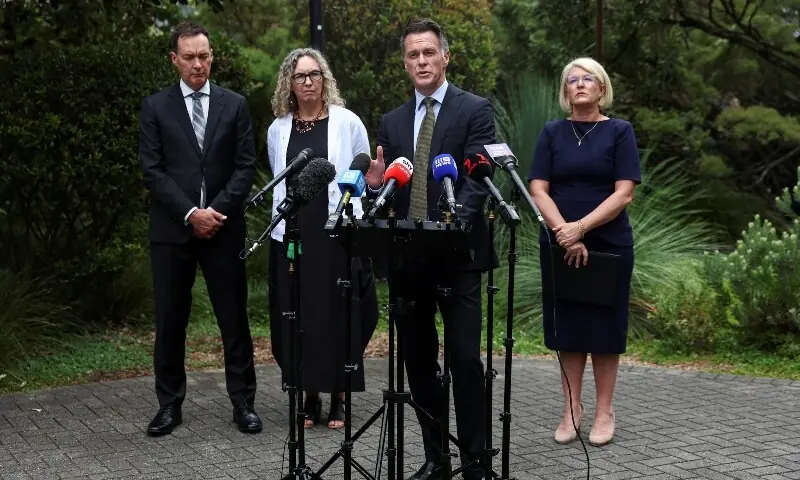
“We can’t pretend that the world is the same as it was before that terrorist incident on Sunday,” New South Wales Premier Chris Minns told reporters.
“I’d give anything to go back a week, a month, two years, to ensure that didn’t happen, but we need to make sure that we take steps so that it never happens again.”
The new rules will cap the number of guns an individual can own to four, or ten for exempted individuals like farmers.
There are more than 1.1 million firearms in the state, officials said.
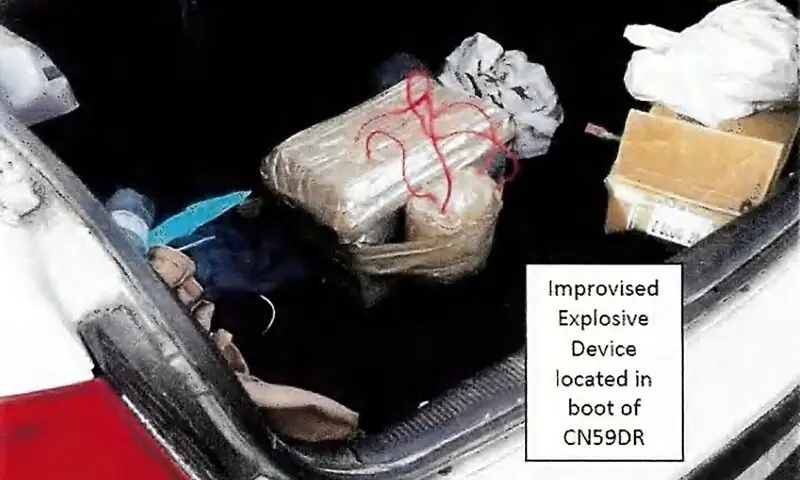
The legislation would also ban the display of “terrorist symbols”, including the flag of the Islamic State, which was found in a car linked to one of the alleged shooters.
Authorities will also be able to prohibit protests for up to three months following a terrorism incident.
Minns said on Monday he would also look into stricter hate speech legislation next year, including restrictions on the phrase “globalise the intifada”.
The phrase is a common chant at pro-Palestinian rallies and refers to past uprisings against Israeli forces in the occupied territories.