Reimagining South Asia

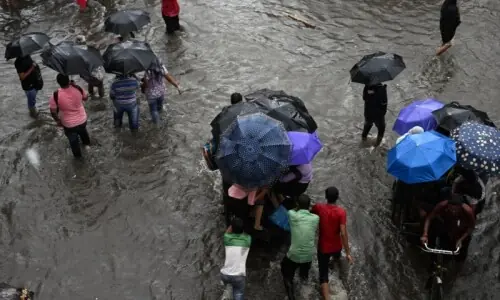
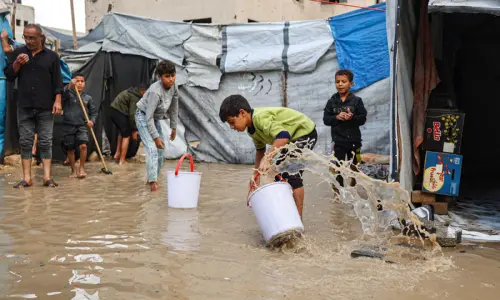
SOUTH Asia stands on the frontier of the climate crisis, and on the edge of its own undoing. Home to nearly two billion people, this region is sandwiched between geopolitical rivalry and ecological fragility. The 1.5 degrees Celsius in not a distant world here — it is the lived experience of millions. The glaciers in the Third Pole are melting rapidly, threatening the water security of both Pakistan and India. Recurrent droughts are driving migration and deepening poverty in Afghanistan. Glacial lake outburst floods threaten mountain communities in Nepal, while Bangladesh faces rising seas that could submerge one-fifth of its land.
For decades, the region’s political energy has been consumed by border disputes, identity politics, and historical grievances. Yet none of these rivalries will matter, if climate change renders our lands uninhabitable and our economies unviable.
According to scientific reports, South Asia is warming up more rapidly than the rest of the world, and therefore, logic suggests that the region cannot afford another century of hate and hostility. Its people share rivers, monsoons, mountains and deltas. All these systems are under assault by nature posing a threat far greater than cross-border conflicts.
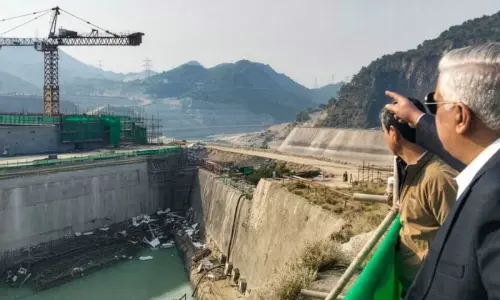
As the glaciers in the region retreat, transboundary rivers such as the Indus, Ganges, and Brahmaputra are becoming increasingly unpredictable. In this context, water is emerging not just as a resource, but as a potential fault line. As water flows become more erratic, the temptation to use dams and diversions as tools is growing. The Kabul River tensions between Pakistan and Afghanistan, or India’s upstream dam building on the Indus tributaries show how easily climate-linked resources can morph into geopolitical friction. But herein lies the paradox and irony: no country can protect its water and food security in isolation. The hydrological of the region makes every country an upper or lower riparian necessitating a shared approach to solutions for peace and stability.
The combination of climate change and conflict politics is fast turning this region into one of the world’s most dangerous flashpoints.
The World Bank estimates that South Asia could lose up to 10 per cent of its GDP by mid-century due to climate impacts. Agriculture, which employs nearly half the region’s population, is under siege from heat stress and unpredictable rainfall. Cities like Lahore, Delhi and Dhaka are choking under smog and water shortages. Health systems are collapsing under vector-borne diseases and heat-related illnesses. The consequences are clear. The climate crisis has become a social equaliser of suffering, disproportionately affecting women, informal workers and the urban poor. For them, adaptation is not a policy debate but a matter of daily survival.
The truth is that the real threat to regional stability does not lie across a frontier. It rests in its atmosphere, rivers and the Third Pole that bind the landmass. The multilateral process of climate negotiations is slow and does not meet the urgent needs of vulnerable countries. It is time for South Asia to look inward and strengthen its adaptive resilience to climate change. In a region where hunger and hope coexist uneasily, peace is not just a political stance but a survival strategy.
The combination of climate change and conflict politics is fast turning this densely populated region into one of the world’s most dangerous flashpoints. The status quo is no longer viable simply because the dynamics of climate change have altered the power equation. This existential threat is more lethal than nuclear weapons. It can kill millions and foreclose the future for the next generation.
Time has come to reframe political discourse and look at the future through the lens of nature. Thus far, Pakistan and India have built their narratives on a zero-sum game with disputed agendas as the fulcrum of their objective. This needs to change, making survival and well-being of the people as the core objective, and looking at disputes as an obstacle. This shift in perception along with a negotiating strategy that is integrative and not distributive in intent, can change the future of South Asia giving each country a higher potential for growth and development.
A pivot to Asia in the real sense can only be possible if all countries in South Asia agree to address the climate crisis collectively as a political imperative. Taking a regional approach has many advantages that can be discussed among countries if pragmatism and not passion guide thinking. The linked geographies serve as green corridors and the climate crisis makes it necessary for South Asia to develop its own ‘Regional Climate Framework Agreement’. Notwithstanding current tensions, there is still room for reason and need to reframe climate cooperation not as a peripheral environmental concern but a core security issue.
South Asia has two parallel futures; one with business as usual that will keep us mired in poverty, escalate conflicts and intensify risks. A different choice can usher in an era of peace, prosperity and stability. Our choices will shape the future. The youth should not inherit a grim future. They need to create a new future and make it a place they want to visit.
The shift in stance will require courage to challenge entrenched nationalist narratives, and clarity to see that survival depends on shared action, not competition. A shared horizon is not utopian thinking but a strategic imperative. The future of South Asia will not be decided on the battlefield but the cost of conflict will be measured in hunger, displacement and lost futures.
The writer is chief executive of the Civil Society Coalition for Climate Change.
Published in Dawn, December 15th, 2025