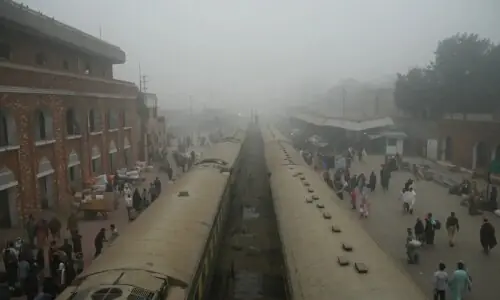
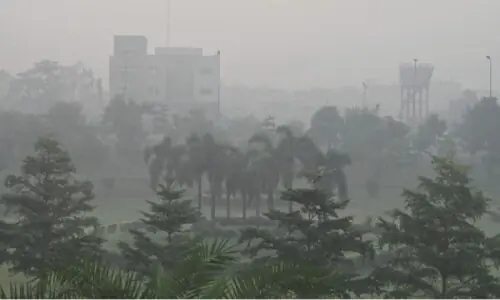
Twin cities facing severe air pollution crisis, warns report
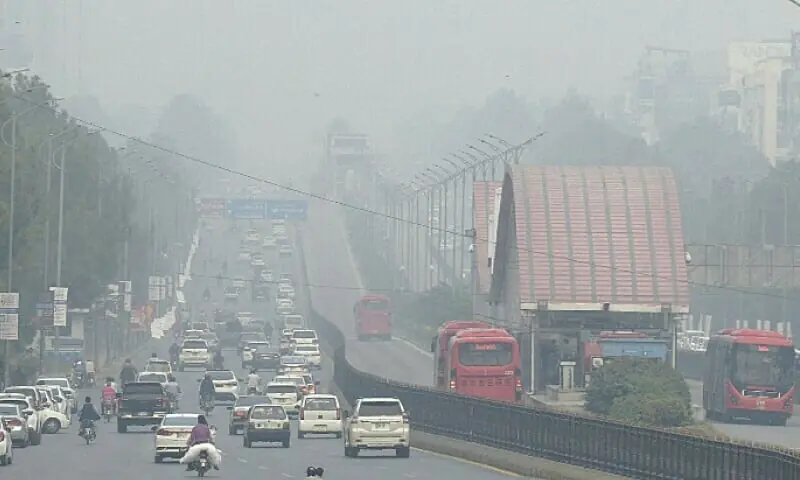

ISLAMABAD: The twin cities of Islamabad and Rawalpindi that had been envisioned as orderly, modern urban centres were now battling an air pollution crisis largely born from their own dependence on private vehicles and where its residents risked losing more than estimated four years from their life span.
“The grey haze settling over the twin cities was not industrial smog but the accumulated exhaust of daily commutes, exposing millions to dangerous air and shortening lives,” said a new report titled ‘Unveiling Pakistan’s Air Pollution: A National Landscape Report on Health Risks, Sources and Solutions’.
Compiled by the Pakistan Air Quality Initiative (PAQI), the report said combined airshed of Islamabad and Rawalpindi recorded an annual average PM2.5 concentration of 54.4 ug/meter cube, which was more than 10 times the World Health Organisation’s recommended safe limit.
Within this average lay a stark contrast. Rawalpindi recorded a hazardous 61.1 ug/meter cube, while Islamabad’s annual average stood at 52.3 ug/meter cube. The disparity underscores how transportation-driven pollution affects each city differently, despite their shared geography.
Impact of pollution on public health severe; experts say dramatic expansion of public transportation urgently needed
PAQI was an independent research and advocacy organisation committed to addressing the complex and pressing challenge of air pollution in Pakistan. Founded in 2016 by Abid Omar, PAQI was born out of a citizen-led concern for the deteriorating air quality in Pakistan’s urban centres and the lack of accessible, reliable data and informed public discourse on this critical issue.
Painting a troubling picture the data said the impact on public health was severe. Rawalpindi’s residents were estimated to lose 4.5 years of life expectancy due to chronic exposure, compared to 4.1 years for residents of the capital.
In 2024, Rawalpindi endured 199 days where pollution exceeded Pakistan’s legal limits, while Islamabad saw 168 such days. Even on the best days, the difference was clear when Islamabad recorded 22 “good air” days by WHO standards and Rawalpindi had only 11.
Winter months remained the most dangerous. During the 2023-24 winter season, pollution levels across the airshed surged to more than four times the monsoon average, driven by stagnant winds, increased vehicle use and widespread burning of waste.
An emissions inventory for the region confirmed that the problem was rooted overwhelmingly in mobility patterns. Transportation alone accounted for 53pc of PM2.5 emissions. Brick kilns contributed 18pc, waste burning 11pc, while industrial activity, which was limited in the region, added only nine per cent. The twin cities also produced an estimated 12.04 kilotons of PM2.5, 21.87 kilotons of NOx, and 90.71 kilotons of carbon monoxide annually.
The data said beyond health and environmental damage, traffic congestion brought economic losses through wasted fuel, travel delays and reduced productivity. With the region heavily reliant on imported fossil fuels, the financial burden extends to the national economy as well.
Experts argued that the most urgent need was a dramatic expansion of public transportation. A robust, widely accessible transit network alongside electrified buses and government fleets could reduce PM2.5 levels by up to 30pc. Improved infrastructure for walking and cycling was also essential to reduce the number of short motorised trips.
The report suggested that other critical interventions included strict dust control at construction sites, elimination of open waste burning and the rapid conversion of brick kilns to cleaner technologies, especially those located upwind of Rawalpindi.
The path forward, urban planners said in the report, lay in shifting from car-dependent sprawl to sustainable urban development. As the seat of the federal government, Islamabad’s success in cleaning its air could set a national example, showing that with political will and better planning, Pakistan’s cities can breathe again.
Published in Dawn, December 11th, 2025