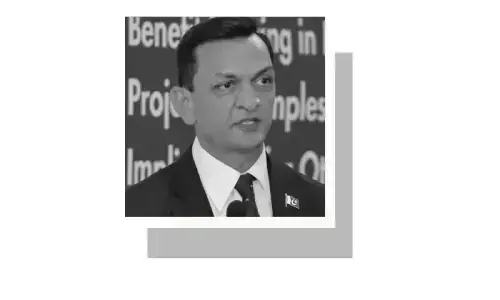
Mayor Wahab favours vertical expansion in Karachi


 3
3

• Mayor says informal settlements must be transformed through ‘out-of-the-box’ solutions
• Urban planner Arif Hasan identifies flooding and affordability as major issues; calls for land reforms
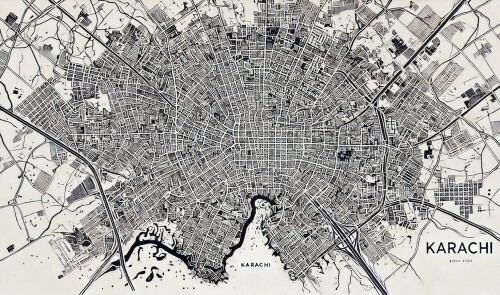
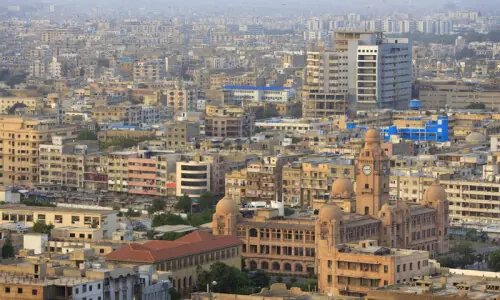
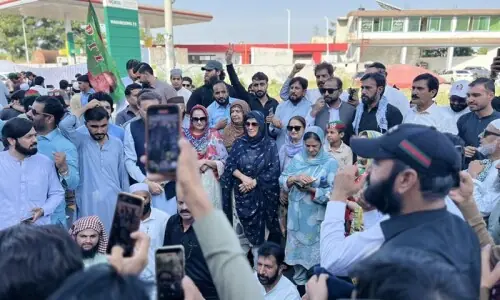
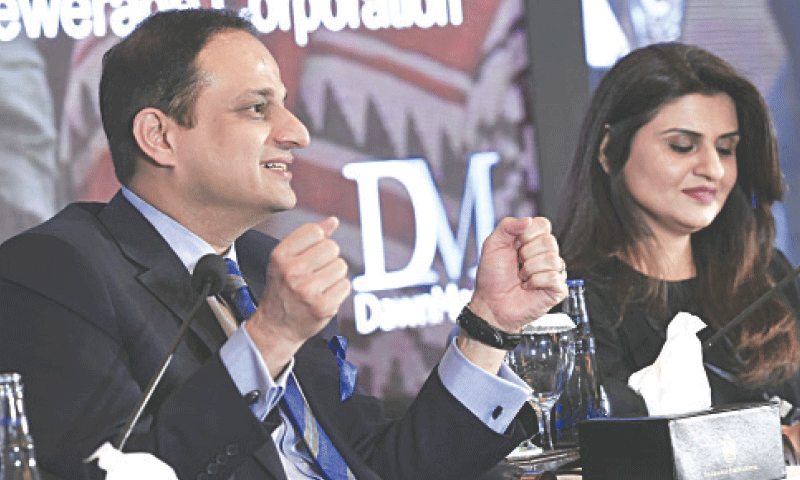
ISLAMABAD: As Karachi is expected to become one of the 10 largest cities in the world by 2030, Mayor Murtaza Wahab Siddiqui has favoured the expansion of the metropolis through vertical development, stating that ample space is available where such projects can be planned and executed.
He acknowledged that vertical development is a costly option but insisted it is the way forward, citing examples of Dubai, Singapore, Malaysia and Indonesia. He added that vertical expansion can be undertaken in newer parts of Karachi where infrastructure can be built afresh.
Murtaza Wahab was speaking at the Pakistan Population Summit, organised by Dawn Media, on Tuesday.
He said informal settlements would also need to be transformed, which would require “out-of-the-box” solutions. The conventional approach, he warned, would lead to financing and legal complications. “We need to adopt a policy that recognises vertical planning as the way forward,” he stressed.
Speaking on “Population Challenges for a Highly Urbanised Pakistan in 2050”, the Karachi mayor said: “We need to move beyond discussions and shift to action mode, which is unfortunately lacking in the country. We need coherence and cohesiveness in our approach to formulate solutions. We must start trusting people, as disliking opinions leads to inaction, and inaction is never good for society.”
Highlighting Karachi’s complex governance structure, he noted that 38 entities currently operate in the city — 26 provincial and 12 federal — which creates multiple challenges. “There must be a structure that enables all entities to respond to the city’s leader, who is accountable and answerable. This is where we are lacking,” he said.
He added that a master plan is under preparation to help the city council coordinate with all these entities. While provincial bodies are relatively easier to manage, the city faces difficulties in dealing with federal entities. “We want a meaningful solution that allows each entity to work within its domain,” he said.
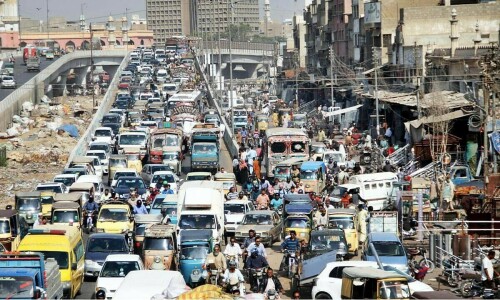
Calling Karachi the only true cosmopolitan city of Pakistan, he said it bears the burden of the country’s rapidly growing population. In 1951, Karachi’s population was one million; by 1995 it had reached 8.5 million; and according to the 2023 census, it has now surged to 20.3m.
He lamented that the state has not prioritised the issue of population growth, even though the city’s population has increased twentyfold in about seven decades. No alternative urban centres were developed, he said, forcing people from across Pakistan to move to Karachi in search of economic opportunities.
He added that if Gwadar had been developed 50 years ago, or a port at Zulfiqarabad in Sindh had materialised, population pressures would not have been concentrated solely in Karachi. He called for the development of more coastal cities.
Mr Wahab said that migration from Khyber Pakhtunkhwa, Balochistan, Punjab, Azad Jammu and Kashmir and Gilgit-Baltistan has led to unplanned urbanisation because the state failed to complement rising population inflows with affordable housing.
He said the Sindh government is working on building 2.1 million climate-resilient houses and is focusing on providing free land to people to encourage development of proper settlements and improve living conditions.
Architect and urban planner Arif Hasan highlighted major trends in urbanisation. “The major trend is social, which is, of course, a result of economic change,” he said.
Recalling past promises by governments to build housing, Mr Hasan remarked: “Nobody has produced any significant number of houses.” Referring to the PPP’s one-room housing initiative for flood-affected people, he said: “Let’s see how it works out.”
Asked about pressing challenges, he identified flooding as the biggest, stressing the need to control population density and calling for major land reforms to address these issues.
Published in Dawn, December 3rd, 2025