Credit to private sector hits three-year high
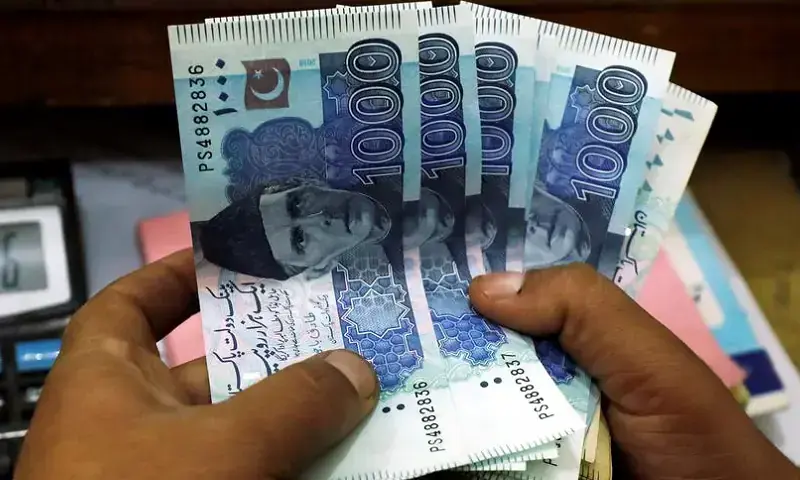


KARACHI: Credit to the private sector was at a three-year high in the first five months of the current fiscal year, but bankers said the money was not intended for investment.
The latest data from the State Bank, issued on Monday, revealed a sudden jump in private sector credit off-take, which crossed Rs1 trillion, up from just Rs41bn in the same period of the last fiscal year.
The slow growth in trade and industry has been a primary reason for the private sector’s poor creditworthiness, as data over the last two years suggested. The credit to the private sector in FY25 was Rs1,081bn, and in FY24 it was Rs513bn. During FY23, it was just Rs46bn.
The credit to the private sector during July 1-Nov 22 FY26 was Rs1.202tr, which looks suitable for higher economic activity. However, bankers said most of the money flow was for short-term working capital needs, indicating it is not an investment for expansion.
Bank advances surge to Rs1.2tr in 5MFY26 for working capital needs
The current lending is mainly for the rice crops for thrashing and other purposes, said bankers. Rice is one of the largest crops and has an international market of over Rs1tr. In FY24, rice exports were $3.692bn (Rs1.037tr), and in FY25, $2.952bn (Rs829.5bn). The rice also has a very large domestic market.
Bankers said the higher borrowing for working capital was also due to low interest rates, as it reduced risk. The borrowing was not on a large scale in FY25, despite the interest rate coming down, but has remained stuck at 11 per cent since May 2025.
Despite large flows of credit, the investment would remain awaiting liquidity, as noted over the last three years.
Pakistan’s investment-to-GDP ratio for the fiscal year FY24 was 13.1 per cent, the lowest in over 50 years. This was a significant decline from 14.13 per cent in FY23. Pakistan’s investment-to-GDP ratio for FY2025 was 13.6 per cent, an improvement from the previous year but still lower than FY23.
Both bankers and analysts believe this is the worst situation for an economy crippling by a slow pace of around 2 to 2.6 per cent. The GDP growth was later revised to 3pc from 2.6pc for FY25.
The government has been calling for investments, asking domestic investors to come forward, but at the same time, industries and business houses have been crying out against heavy taxes up to 60 per cent, including the super tax. The government has yet to announce any incentives to promote investment in the country, despite knowing the worst kind of unemployment and increasing poverty. The government has also failed to attract foreign investment, as the country appears surrounded by war-like situations in its two provinces and with two neighbouring countries, experts said.
Published in Dawn, December 2nd, 2025