Trump sends Witkoff to Moscow in hopes of finalising Ukraine deal
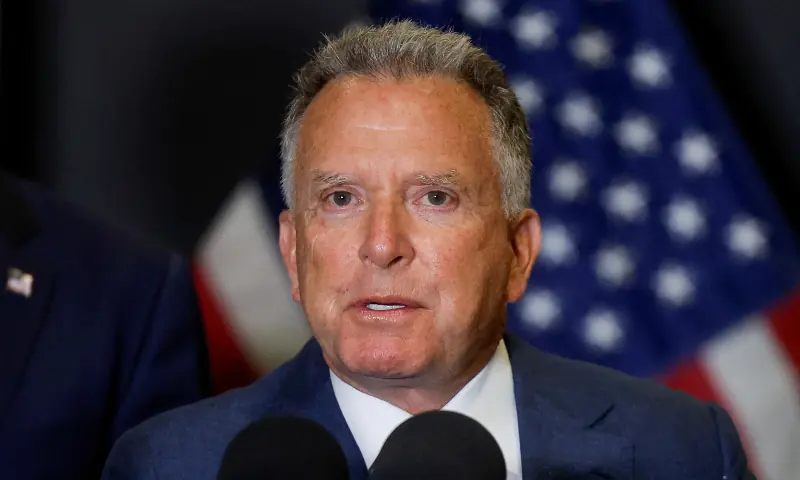

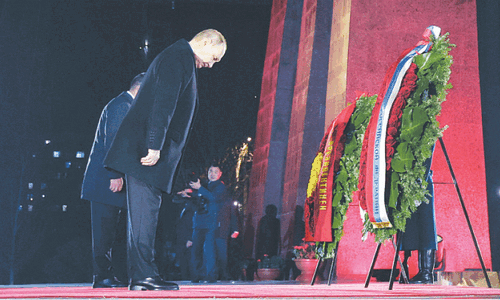
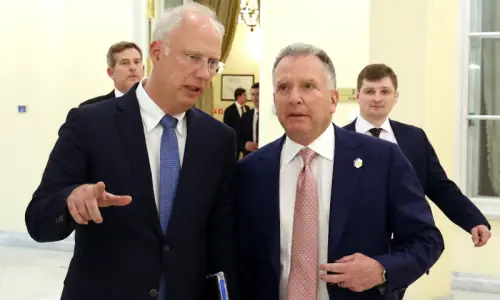
US President Donald Trump said on Tuesday he is sending his envoy Steve Witkoff to meet with Russian leader Vladimir Putin in Moscow next week as he seeks to close out a deal to end the war in Ukraine.
Trump posted on his Truth Social platform that there were “only a few remaining points of disagreement” — but European leaders were skeptical, and Russian missiles continued to rain down on Ukraine.
He also expressed hope to meet “soon” with Putin and Ukrainian President Volodymyr Zelensky, “but ONLY when the deal to end this War is FINAL or, in its final stages”.
Trump later told journalists aboard Air Force One that Witkoff may be joined in Moscow by the president’s son-in-law Jared Kushner.
An initial US plan which was heavily weighted in Russia’s favour has been replaced by one taking in more of Ukraine’s interests, and an official familiar with the new version told AFP it was “significantly better”.
However, US officials acknowledged that “delicate” issues remain.
French President Emmanuel Macron threw cold water on the idea of a rapid solution, stating there is “clearly no Russian willingness” for a ceasefire or to discuss the new, more Ukraine-friendly proposal.
Frantic discussions have been underway since the weekend when Ukrainian and US representatives huddled in Geneva to discuss Trump’s controversial, initial 28-point plan for settling the bloody conflict.
The latest talks including US and Russian delegates were taking place in Abu Dhabi, US media reported. Leaders of a group of 30 countries supporting Ukraine also met by video on Tuesday.
US negotiator Dan Driscoll emerged upbeat from meeting with Russian counterparts, with his spokesman saying: “The talks are going well and we remain optimistic.”
The White House cited “tremendous progress”, while cautioning “there are a few delicate but not insurmountable details that must be sorted out”.
But the war, which began with Russia’s full-scale invasion of Ukraine in 2022, continued unabated.
On Tuesday night, Russia launched a major attack on Zaporizhzhia that damaged at least seven high-rise buildings and caused 12 people to be hospitalised, the head of the regional military administration said.
The night before, powerful explosions rocked Kyiv beginning around 1:00am local time, as Russian drones and missiles rained down, setting fires in apartment buildings. City officials said seven people were killed.
Thick smoke, turning red and orange in the blizzard of Ukrainian air defense fire, rose over the capital as residents fled underground into metro stations, according to AFP reporters.
‘Tough road ahead’
Trump, who long boasted he could negotiate an end to the Ukraine war within 24 hours, announced last week that he wanted his proposal approved by Kyiv by this Thursday — the US Thanksgiving holiday.
But the initial plan, pushing numerous Russian war aims, sparked alarm in Ukraine and Europe. Among its points were prohibitions on Ukraine ever joining Nato and the surrender of swaths of new territory to Russia.
The updated plan clearly pleases Kyiv more. The official familiar with the text told AFP that one key improvement was raising a proposed cap on the country’s future military forces from 600,000 to 800,000 members.
Ukrainian negotiator Rustem Umerov said on Tuesday there was “common understanding on the core” of the deal between Ukraine and the United States.
However, remaining details should be hammered out in direct talks “at the earliest suitable date,” he said.
British Prime Minister Keir Starmer warned: “There’s still a long way to go and a tough road ahead.”
Russia’s military occupies around a fifth of Ukraine, much of it ravaged by fighting. Tens of thousands of civilians and military personnel have been killed and millions have fled the east of the country.
Ukrainian army Sergeant Ivan Zadontsev said negotiating was “healthy.”
“We also are getting tired of war. We need a break,” he told AFP.
But the proposals by both Washington and the European Union “do not serve Ukraine’s national interests,” he said.