Trump aides’ meeting with Russian official raises eyebrows
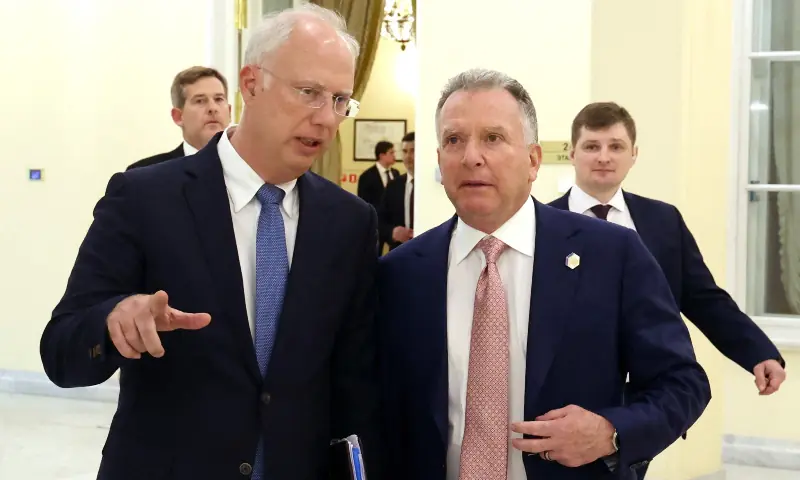

WASHINGTON: Officials and lawmakers in Washington are increasingly concerned about a meeting last month in which representatives of the Trump administration met Kirill Dmitriev, a Russian envoy who is under US sanctions, to draft a plan to end the war in Ukraine, according to sources familiar with the matter.
The meeting took place in Miami at the end of last month and included special envoy Steve Witkoff, President Donald Trump’s son-in-law Jared Kushner and Dmitriev, who leads the Direct Investment Fund (DIF), one of Russia’s largest sovereign wealth funds.
A close ally of Russian President Vladimir Putin, Dmitriev has taken a leading role in talks with the US about the war and has met Witkoff several times this year. The Trump administration has issued a special waiver to allow his entry, one senior US official said.
Dmitriev and his fund were blacklisted by the US government in 2022 following Russias full-scale invasion of Ukraine. The sanctions effectively bar American citizens and companies from dealing with them.
The meeting resulted in a 28-point plan for ending the war. The plan, which was made public earlier this week by Axios, came as a surprise to US officials in various corners of the administration and has stirred confusion at embassies throughout Washington and in European capitals.
It has also prompted criticism from the Ukrainians and their allies for appearing heavily tilted toward Russian interests, with President Volodymyr Zelensky vowing that he would not betray Ukraine’s interests.
Major concessions to Russia
The document, which calls for major concessions from Ukraine, appears to run counter to the tougher stance the Trump administration has lately taken toward Moscow, including with sanctions on its energy sector.
It’s unclear whether Dmitriev came to the meeting in Miami with certain Russian demands and whether those were incorporated into the peace plan.
Two people familiar with the meeting said Rustem Umerov, Secretary of Ukraine’s National Security and Defence Council, was also in Miami this week to discuss the plan with Witkoff.
Witkoff told Umerov about the plan during that visit and that the United States gave the plan to Ukraine via the Turkish government on Wednesday, before directly presenting it in Kyiv on Thursday.
Umerov has described his role as “technical” and denied that he discussed the plan in substance with US officials.
White House spokeswoman Karoline Leavitt said in a statement that any peace plan “must offer security guarantees and deterrence for Ukraine, Europe and Russia” and offer economic incentives to both Ukraine and Russia.
“This plan was crafted to reflect the realities of the situation, and to find the best win-win scenario, where both parties gain more than they must give,” she said.
Trump said on Friday that he expected Zelensky to sign onto the plan by the Thanksgiving holiday. The US has warned Ukraine it could curb military assistance if it does not sign.
In an evening address on Friday night, Zelensky announced talks with Ukraine’s partners on steps to end the war.
“Our representatives know how to protect Ukraine’s national interests and what exactly is needed to prevent Russia from carrying out a third invasion, another blow to Ukraine,” he said.
Caught off guard
Many senior officials inside the State Department and on the National Security Council were not briefed about the plan. Special Envoy for Ukraine Keith Kellogg, who had been working with the Ukrainians on negotiating an end to the war and plans to step down in January, also was cut out of the talks led by Witkoff and Dmitriev.
One US official said Secretary of State Marco Rubio was read in on the 28-point plan, but didn’t clarify when he was briefed.
Secretary Rubio has been closely involved throughout the entire process of developing a plan to end the war in Ukraine.
Witkoff, Kushner shun consultation
The situation has sparked worries inside the administration and on Capitol Hill that Witkoff and Kushner skirted the inter-agency process and that the discussions with Dmitriev have resulted in a plan that favours Russian interests.
It includes demands that Russia has previously made that Ukraine give up some of its territory in the eastern part of the country that it still controls, recognise Crimea as Russian and pledge not to join NATO.
“This so-called peace plan has real problems, and I am highly skeptical it will achieve peace,” said Senator Roger Wicker of Mississippi, the Republican chairman of the Senate Armed Services Committee. “Ukraine should not be forced to give up its lands to one of the world’s most flagrant war criminals in Vladimir Putin.”
Experts also criticised the proposed deal.
“Putin said today the plan he saw is a ‘basis’ for a future agreement likely a signal they plan on asking for inclusions and revisions on top of what is already a disadvantageous proposal for Kyiv, said Dara Massicot of the Russia and Eurasia Programme at the Carnegie Endowment for International Peace.
One week seems ambitious for resolution.
Published in Dawn, November 23rd, 2025