Rising food cost fuels short-term inflation

ISLAMABAD: Short-term inflation, measured by the Sensitive Price Index (SPI), increased 3.53 per cent year-on-year in the week ending Nov 20, owing to an increase in the retail price of edible oil and sugar in the domestic market.
The SPI-based inflation rate recorded an upward trend for the past 16 consecutive weeks. The increase is mainly driven by a surge in prices of perishable products, including tomatoes, onions, potatoes, wheat flour as well as LPG cylinders.
It, however, increased by 0.07pc from the previous week, official data showed on Friday.
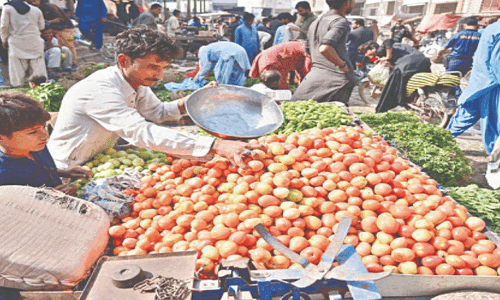
The prices of tomatoes, onions and potatoes saw an increase owing to disruption in supply due to closure of border with Afghanistan.
The extraordinary spike in the retail prices of sugar, and meat also contributed in reversing the trend. The price of meat is steadily on the rise in the past few weeks.
The weekly inflation hit a record 48.35pc year-on-year in early May 2023, but then decelerated as low as 24.4pc in late August 2023 before surging past 40pc during the week ending Nov 16, 2023.
The items whose prices increased the most over the previous week included tomatoes (57.03pc), LPG (5.16pc), garlic (2.61pc), sugar (2.23pc), diesel (2.17pc), georgette (0.80pc), bananas (0.72pc), tea prepared (0.59pc), firewood (0.26pc), vegetable ghee 1kg (0.21pc), beef (0.17pc) and mustard oil (0.13pc).
The items whose prices saw a decline week-on-week included onions (12.38pc), chicken (8.07pc), potatoes (5.69pc), salt powder (1.67pc), pulse moong (1.62pc), wheat flour (1.41pc), pulse gram (0.81pc) and eggs (0.48pc).
However, on an annual basis, the items whose prices increased the most included sugar (43.77pc), gas charges for Q1 (29.85pc), wheat flour (17.31pc), gur (16.35pc), beef (13.45pc), firewood (12.52pc), bananas (11.81pc), diesel (11.66pc), vegetable ghee 2.5kg (9.04pc), lawn printed (8.29pc), powdered milk (8.17pc) and cooking oil 5-litre (7.75pc).
In contrast, the prices of garlic dropped 36.79pc, followed by potatoes (29.56pc), pulse gram (29.26pc), electricity charges for Q1 (26.26pc), tea Lipton (17.79pc), pulse mash (15.28pc), onions (9.97pc), LPG (5.66pc), pulse masoor (5.08pc) and pulse moong (3.42pc).
The index, comprising 51 items collected from 50 markets in 17 cities, is computed weekly to assess the prices of essential commodities and services at shorter intervals. Data showed that the prices of 16 items increased, 13 decreased and those of 22 items remained stable compared to the previous week.
Published in Dawn, November 22nd, 2025