EU MPs back weakening of green business rules
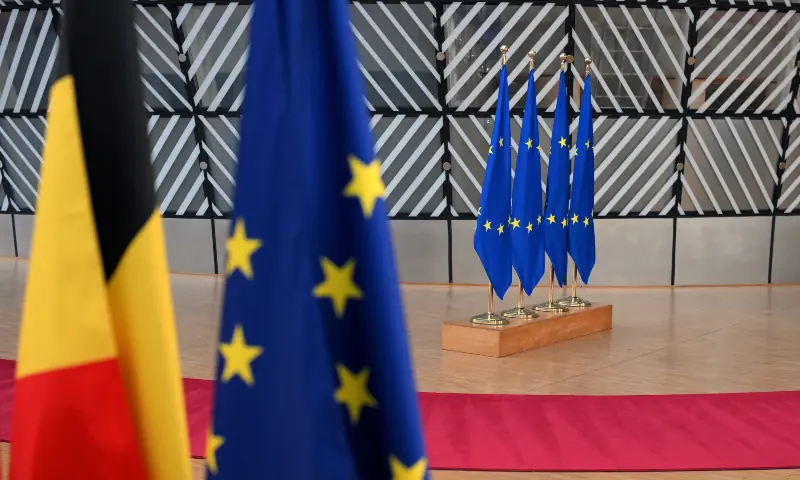
BRUSSELS: European lawmakers voted on Thursday to back the weakening of landmark EU environmental and human rights rules, as part of a business-friendly drive to slash red tape pushed through with far-right support.
Parliament’s biggest centre-right bloc joined forces with the hard right to back amending the legislation on corporate sustainability — a law approved only last year that was hailed by green and civil society groups but loathed by firms.
The outcome triggered an outcry among the traditional partners of the centre-right European People’s Party (EPP) on the left and centre, who denounced what they saw as an unholy new alliance on the right of the EU assembly.
Rene Repasi of the Socialists & Democrats (S&D) accused the EPP of having “torpedoed any middle-ground compromise”.
“The conservatives marched ahead with a red pen — striking away the firewall and redrawing their self-made majority together with the anti-democratic forces on the fringes,” he said. The changes, which aim at significantly reducing the law’s scope of application, secured support from 382 lawmakers, with 249 voting against.
The far-right Patriots group hailed the result as a “significant success” and a “victory for workers, farmers and industry”.
“Today, Patriots for Europe broke the old coalition’s deadlock and opened the path to replace the Green Deal straitjacket with a competitiveness-driven agenda,” the group wrote on X, referring to the EU’s ambitious climate policies.
Greater ‘predictability’
The text is one of the first to fall under the axe of Brussels’ new drive to make life easier for Europe’s ailing industry, which is struggling in the face of competition from the United States and China.
The Corporate Sustainability Due Diligence Directive (CSDDD) requires large companies to fix the “adverse human rights and environmental impacts” of their supply chains worldwide.
This means tracking deforestation and pollution that they, as well as their suppliers and subcontractors cause, plus other issues like forced labour – and taking steps to curtail them.
EU lawmakers on Thursday backed limiting its application to large companies, upping the threshold to qualify from 1,000 to 5,000 employees and more than 1.5 billion euros ($1.7 billion) in turnover — in line with changes endorsed by member states.
They also moved to do away with the European civil liability regime, which served to harmonise firms’ obligations in the event of breaches, referring to national legislation instead.
An ultimate round of negotiations is now to kick off with member states and the European Commission, aimed at finalising the changes by the end of the year.
Jorgen Warborn, an EPP lawmaker who sponsored the text, said ahead of the vote that the changes would bring greater “predictability” and boost competitiveness for companies while keeping “Europe’s green transition on track”.
‘New demands’
But while most groups agreed on the need for tweaks, their extent has proven contentious.
Dutch Social Democrat Lara Wolters, who had championed the original law, walked out of talks.
Swann Bommier of environmental group Bloom said the amendments would empty the law of its substance.
But Stephane Sejourne, the EU Commissioner for industry, said the text came on the back of extensive consultations and in “response to the firm and repeated demands of member states and the new parliamentary majority”.
Published in Dawn, November 14th, 2025