Pakistan joins Arab bloc to challenge US Gaza mission scope


 0
0
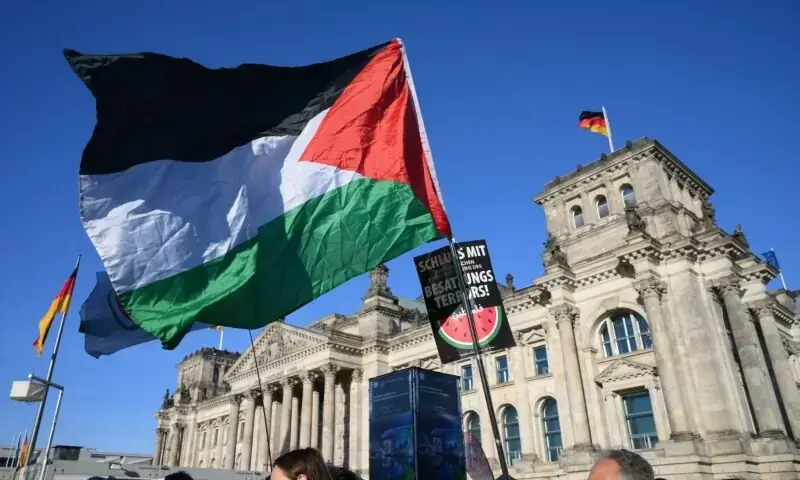

UNITED NATIONS: Pakistan has aligned itself with the Arab group at the United Nations in calling for greater clarity on the US-proposed Gaza Stabilisation Force, insisting that any Security Council resolution must also define the “political horizon,” senior UN diplomats told Dawn.
“Pakistan supports the Arab position that the resolution must reaffirm the Palestinian people’s right to self-determination, prevent further annexation, and ensure that Gaza and the West Bank remain a single entity within an independent Palestinian state,” a diplomatic source said.
Pakistan’s move came after China and Russia, both permanent veto-wielding members of the 15-member Council, broke the “silence period”, a procedural pause for reviewing the revised US draft.
They questioned the absence of a clear mandate for the proposed two-year International Stabilisation Force (ISF) and demanded that it operate under direct UN Security Council oversight. They also sought more details about the proposed Board of Peace (BOP).
Insists any such resolution must affirm ‘political horizon’ for Palestinian self-determination, statehood
“They want the Security Council to supervise the ISF and set its limits,” a UN official familiar with the discussions said. “China and Russia’s message was that no peacekeeping or stabilisation force should function outside the UN framework.”
The first draft of the US resolution, known as Revision 1, incorporates the full “20-point” Trump peace plan and envisions a Board of Peace (BOP), which President Donald Trump is expected to head, to oversee reconstruction and disarmament.
However, the proposal faces widespread resistance. The United Arab Emirates has cited unresolved legal concerns, Jordan has declined to send troops, and Azerbaijan has linked its involvement to a verified ceasefire. At Israel’s insistence, Turkey has been excluded.
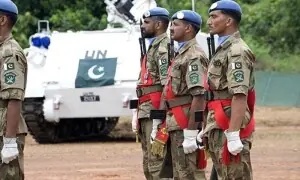
Even among nations open to participating, such as Indonesia and Pakistan, there is unease. One diplomat said these states “do not want to be seen as a joint B-team of the Israeli military focused solely on disarming Hamas”.
Israel has also expressed frustration, saying its role has been reduced to logistics and aid coordination rather than full involvement in planning the force.
The World Bank, however, has endorsed the US draft. In a letter to Washington, Bank President Ajay Banga confirmed support for the BOP’s two-year mandate and a readiness to manage reconstruction funds for Gaza, with rebuilding costs estimated at about $70 billion.
Concerns also persist within Washington. Documents obtained by Politico from a US-sponsored symposium in southern Israel last month showed that officials and experts raised doubts about the feasibility of deploying the force, citing challenges in securing troop commitments and ensuring regional buy-in.
A US defence official told Politico the materials “reflect the administration’s close-held concerns” about the plan’s viability.
But State Department spokesperson Eddie Vasquez dismissed the worries, saying, “Everyone wants to be part of President Trump’s historic Middle East peace effort.”
Diplomats in New York said Washington will now prepare a second revised draft before tabling the resolution for a vote, which is likely to happen next week.
“The US remains determined,” one diplomat noted. “But the divisions in the Council — and the deeper political questions — mean this will take longer than Washington expected.”
All the countries participating in this debate shared their positions while offering written comments on the US draft.
Published in Dawn, November 13th, 2025