What is the COP30 climate summit, and why does it matter?


 0
0
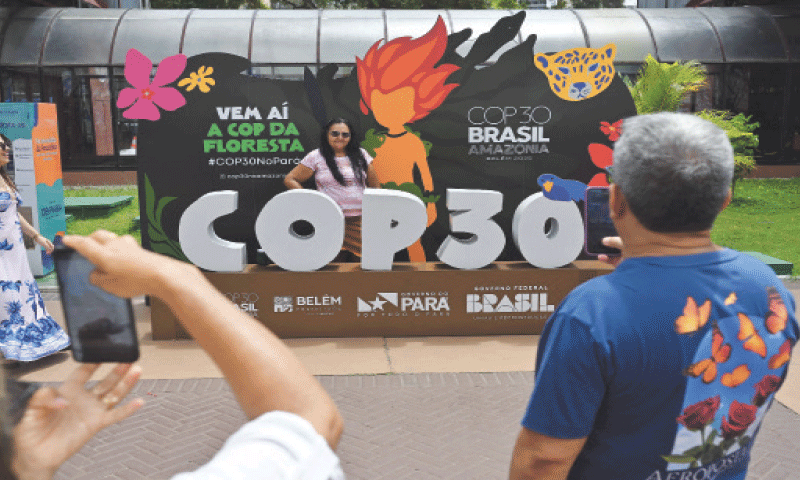

BELEM: While thousands of diplomats and climate experts are reaching Belem, in Brazil’s Amazon, for COP30, which opens on Nov 10 and runs through Nov 21, what exactly happens at these annual summits and how significant the annual conference is for people across the world remains unclear.
The annual conference is known as a COP, which stands for Conference of the Parties that signed the 1992 UN climate treaty. The treaty, called the UN Framework on Climate Change Convention (UNFCCC), committed countries to working together to fight climate change a problem they acknowledged all countries faced and was best tackled together.
The treaty also established the principle of common but differentiated responsibilities, meaning the rich countries responsible for most of the planet-warming emissions bear a greater responsibility in solving the problem.
The rotating presidency, now held by Brazil, sets the summit agenda and works through the year to rally governments toward shared action and goals. It then hosts the two-week summit, drawing global attention to the issue while giving national leaders a chance to swap ideas and hold one another accountable.
Over the years, the annual summits have become a major hub of geopolitical and financial discussion projecting the idea of a “global village” that welcomes all countries, civil society groups, businesses and financiers.
For many, this year’s 30th climate summit marks a full-circle moment.
Brazil had hosted the Rio Earth Summit where the UNFCCC treaty was signed 33 years ago. This year, the country insisted the event would return to its roots in acknowledging the world’s most vulnerable including indigenous groups, with some joining the talks. Brazil has asked countries to work on realising past promises, such as a COP28 pledges to phase out fossil fuel use, rather than making new ones.
COP30 is also the first to acknowledge failure in meeting the past goal of preventing warming above 1.5 degrees Celsius. Brazil opted to hold COP30 in the Amazon city of Belem hoping to symbolically underline the importance of world forests that remain targets for logging and industries including mining, farming and fossil fuel extraction.
Who are the main players?
Most national governments send teams to the talks. Often, countries speak together in groups with similar interests.
Some of the more prominent voices include the Alliance of Small Island States facing an existential threat from rising seas, and the G77+China bloc of developing countries.
Also influential are the Africa Group and the BASIC Group consisting of Brazil, South Africa, India and China. The US, which pledged in January to quit the Paris Treaty on climate change, has stepped away from its past leadership role. China, Brazil and others have stepped in to fill the void.
The sprawling COP campus is often a hive of activity, with campaigners trying to draw attention to their causes while corporations lobby policy change and seek business deals.
Published in Dawn, November 10th, 2025