US, Iran signal possible talks but remain at odds over nukes
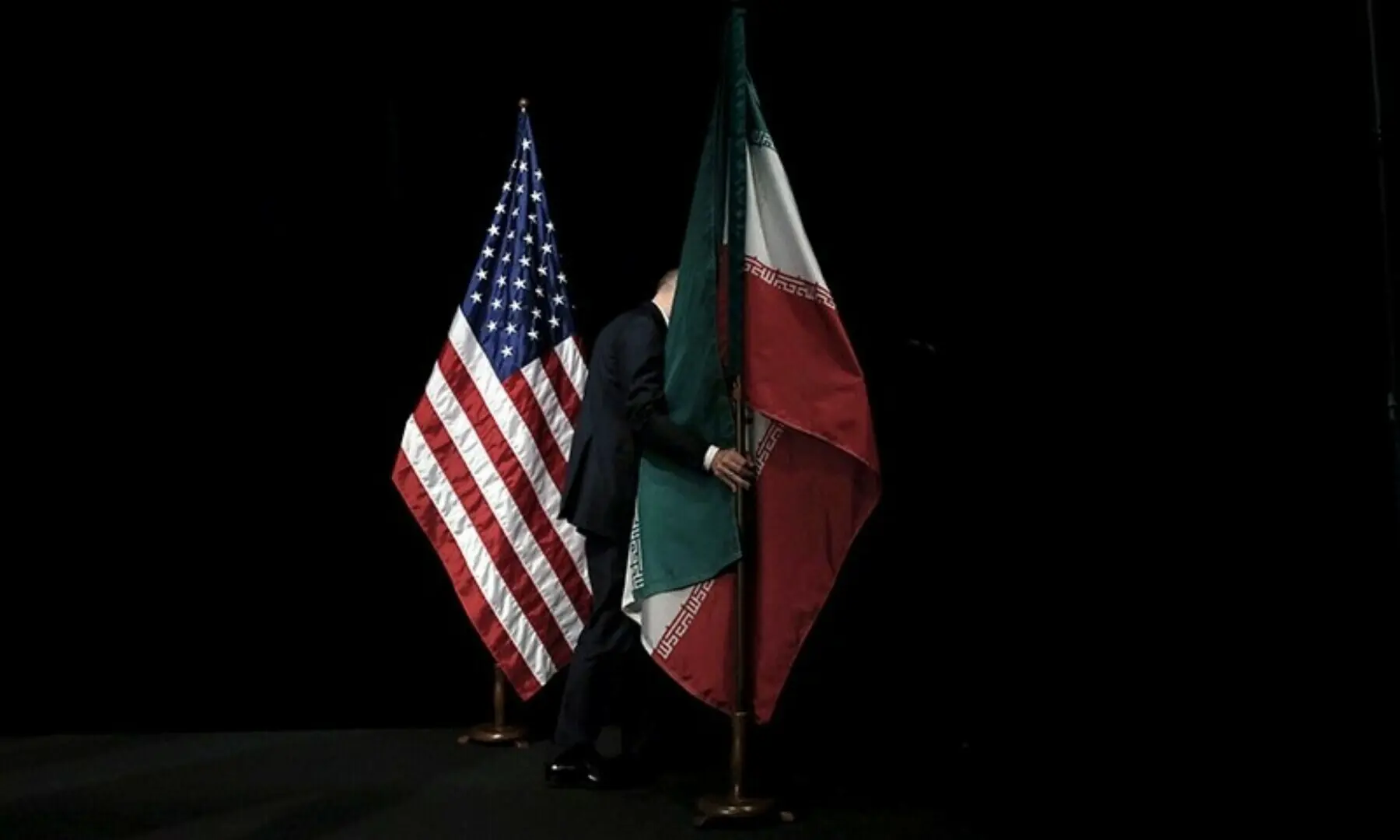
• Trump claims Tehran has requested sanctions relief and says he is ‘open’ to discussions
• Pezeshkian insists Iran seeks peace, but will not be ‘coerced’ into abandoning its nuclear and missile programmes
WASHINGTON: President Donald Trump said on Thursday that Iran has asked for heavy US sanctions to be lifted and that he is open to discussing it, drawing a reply from Iranian President Masoud Pezeshkian, who said Iran seeks peace but will not be coerced into abandoning its defence programmes.
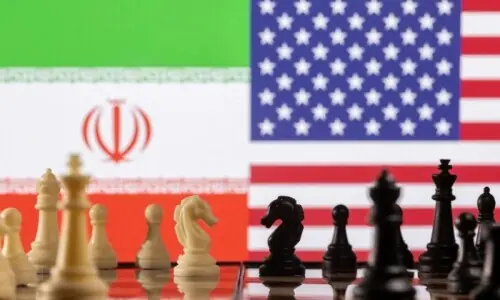
The exchange of statements signals a potential, yet deeply contentious, diplomatic path following a recent military confrontation that derailed prior nuclear negotiations between the two nations.
“Frankly, Iran has been asking if the sanctions could be lifted,” Trump said during a dinner with Central Asian leaders. “Iran has got very heavy US sanctions, and it makes it really hard.”
“I’m open to hearing that, and we’ll see what happens, but I would be open to it,” he added.
Trump’s remarks come as Tehran reels from years of international sanctions, particularly after the US unilaterally withdrew from an international nuclear accord in 2018 and reimposed tough punitive measures.
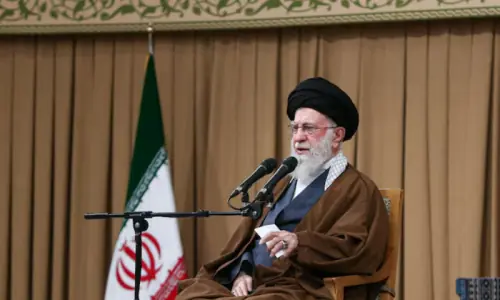
In Tehran, President Pezeshkian responded on Friday with a firm declaration of Iran’s position, according to state media. He said that while his country is willing to engage in dialogue, it will not negotiate away its fundamental rights to a nuclear progamme and a defensive missile arsenal.
“We are willing to hold talks under international frameworks, but not if they say you can’t have a [nuclear] science, or the right to defend yourself [with missiles] or else we will bomb you,” Mr Pezeshkian said. “We want to live in this world in peace and security, but not be humiliated, and it is not acceptable that they impose upon us whatever they want and we just serve them.”
These diplomatic overtures are set against the backdrop of a recent and volatile conflict.
In mid-June, Israel launched an unprecedented bombing campaign against Iran, triggering a 12-day war that briefly saw the United States join with strikes on Iranian nuclear sites.
The war, which prompted an Iranian response with missile and drone strikes, derailed nuclear talks between Tehran and Washington which had begun in April.
The Republican president, who returned to office in January, has repeatedly claimed the strikes obliterated Iran’s nuclear progamme.
“Iran had once been the bully of the Middle East,” Trump said, adding that it no longer had the “possibility of nuclear weapons.” The full extent of the damage from the strikes remains unknown.
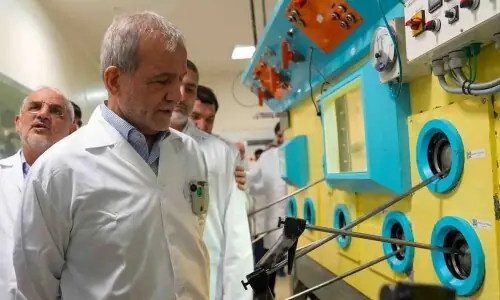
Western countries, including the United States, have long accused Iran of seeking to acquire atomic weapons. Iran insists its nuclear progamme is for peaceful energy purposes.
Adding to the economic pressure, the United Nations in September reinstated sanctions against Tehran under the “snapback” mechanism after Britain, France and Germany triggered the process. Those measures bar dealings linked to the Tehran’s nuclear and ballistic missile activities.
President Pezeshkian decried what he called a double standard, stating, “They supply arms to Israel while they tell us not to have missiles for defence, then they bomb us whenever they want.”
Iran has repeatedly dismissed the possibility of negotiations over its defensive capabilities, including its missile progamme, which it says is crucial for national security.
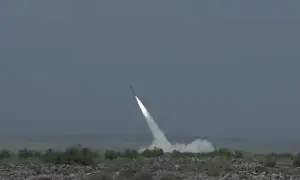
Israel sees Iran as an existential threat. But Iran says its ballistic missiles, with a range of up to 2,000 kilometres, are an important deterrent and retaliatory force in the event of any adverse situation. It denies seeking nuclear weapons.
Oman, which has hosted several rounds of US-Iran nuclear talks, has called on both sides to return to negotiations.
The talks had aimed for a new agreement that would curb Iran’s nuclear activities in return for sanctions relief. Prior to the war, Tehran and Washington held five rounds of such talks.
Published in Dawn, November 8th, 2025