Speculation about 27th Constitutional Amendment results in plea landing in Supreme Court
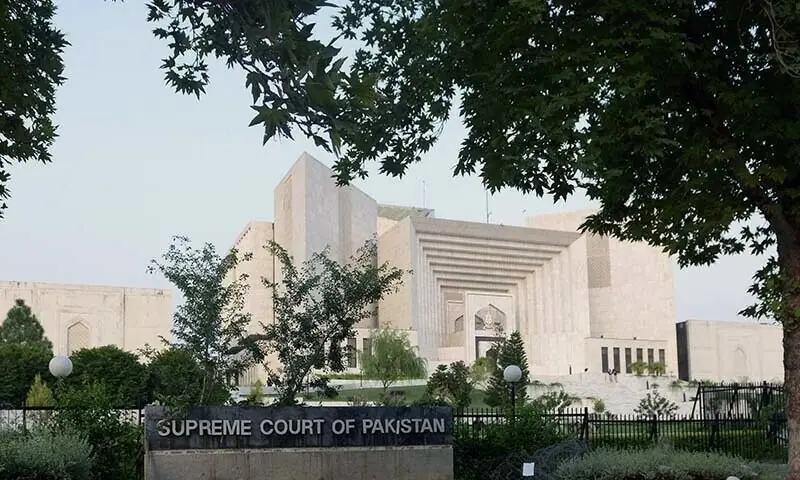


A petition was filed in the Supreme Court on Friday to challenge the “attempts to do away with the constitutional jurisdiction of the superior judiciary”, apparently by means of a 27th Constitutional Amendment.
The proposed changes to the Constitution have raised concerns that the move could roll back some powers devolved under the landmark 18th Constitution Amendment and further “fine-tune” the structure and the functioning of the superior judiciary.
“The said proposal, as publicly reported, contemplates the establishment of separate ‘Constitutional Courts’ and the curtailment or transfer of the existing jurisdiction of the Supreme Court of Pakistan and the high courts of Pakistan conferred under Articles 184(3) and 199 of the Constitution.
“Such an attempt, if permitted to proceed, would fundamentally alter the constitutional framework, destroy the independence of the judiciary, violate the doctrine of separation of powers, and extinguish the citizens’ right of access to justice and judicial review guaranteed by the Constitution of the Islamic Republic of Pakistan, 1973,” the petition, filed by Barrister Ali Tahir, read.
The Federation of Pakistan, the Senate chairperson and the National Assembly speaker have been named as respondents in the plea.
In the plea, a copy of which is available with Dawn, Barrister Tahir urged the court to declare that “any proposal, attempt, or measure, whether by way of a bill, draft, discussion, or otherwise, that seeks to curtail, transfer, suspend, or abolish the constitutional jurisdiction of the Supreme Court of Pakistan under Article 184(3) or the high courts under Article 199 of the Constitution, is unconstitutional, void, and of no legal effect, being violative of the independence of the judiciary, the separation of powers, and the basic structure of the Constitution”.
Article 199 of the Constitution deals with the jurisdiction of high courts, while Article 184(3) sets out the SC’s original jurisdiction and enables it to assume jurisdiction in matters involving a question of “public importance” with reference to the “enforcement of any of the fundamental rights” of Pakistan’s citizens.
In this connection, the petitioner urged the apex court to declare that the original jurisdiction of the SC under Article 184(3) “constitutes an essential, inviolable, and non-amendable feature of the Constitution, forming part of its basic structure and fundamental framework, and that no constitutional amendment, legislation, or executive action can lawfully diminish or extinguish the same”.
The court may also declare that “any attempt to establish a parallel or superior forum styled as a ‘Constitutional Court’, distinct from or in substitution of the Supreme Court or the high courts, would be repugnant to Articles 175 to 191 of the Constitution and hencе unconstitutional”, the petition further stated.
The said articles of the Constitution cover matters pertaining to the establishment and jurisdiction of courts.
The petitioner also asked the court to “hold and affirm that the Supreme Court and the high courts are the sole and exclusive repositories of judicial power under the Constitution, and that their jurisdiction, composition, and independence cannot be interfered with, altered, or restructured by any organ of the State”.
He sought the court’s intervention to restrain “all organs of the State, including the Federation of Pakistan, the federal government, and any parliamentary body or committee, from taking any step or initiating any process aimed at curtailing, transferring, suspending, or otherwise affecting the jurisdiction of the Supreme Court or the high courts, whether through the proposed Constitution (Twenty-Seventh Amendment) Bill, 2025, or by any other means”.
Moreover, the petitioner urged the court to declare that “any constitutional amendment which results in the subordination of the judiciary to the executive or legislature, or which undermines judicial review, is contrary to the supremacy of the Constitution and therefore void ab initio (having no legal effect)”.
The court may also direct all state institutions, authorities and functionaries to “act strictly in accordance with the Constitution, uphold judicial independence, and refrain from any measure that tends to erode or diminish the powers and jurisdiction of the superior judiciary”.
The petition sought an affirmation by the SC that it was, as the “ultimate guardian of the Constitution, empowered and obligated to preserve, protect, and defend the constitutional framework, including its own jurisdiction, against any encroachment, whether actual or imminent”.
During the pendency of this plea, the petition said, the court may restrain “the Federation of Pakistan, through the federal government, the cabinet, the Parliament, and all other organs or functionaries of the State, from taking any step, action, or measure, whether legislative, executive, or administrative, aimed at introducing, debating, processing, or passing any bill or proposal, including the proposed Constitution (Twenty-Seventh Amendment) Bill, 2025, that seeks to curtail, transfer, suspend, or otherwise affect the jurisdiction of the Supreme Court or the high courts as conferred under Articles 184(3) and 199 of the Constitution”.
The petitioner also sought the court’s intervention to bar any “discussion, approval, or voting” from being undertaken in any parliamentary forum or committee regarding “any proposal that would alter the existing constitutional jurisdiction or structure of the superior judiciary until the final adjudication” of his plea.
The court may declare that “any step taken or measure initiated in contravention of the above restraint shall be without lawful authority, having no constitutional effect, and subject to being set aside by this honourable court,” the petition said.
The petitioner also requested the court to “issue such further interim directions as may be necessary to ensure that the constitutional jurisdiction, authority, and independence of the Supreme Court and the high courts remain fully protected, preserved, and unimpaired during the pendency” of his plea.
Moreover, the court may pass any other appropriate order during the plea’s pendency that it may deem “just, expedient, and necessary to safeguard the supremacy of the Constitution, the rule of law, and the continued exercise of judicial power by the superior courts”.