Minister warns of climate threats to economy


 0
0
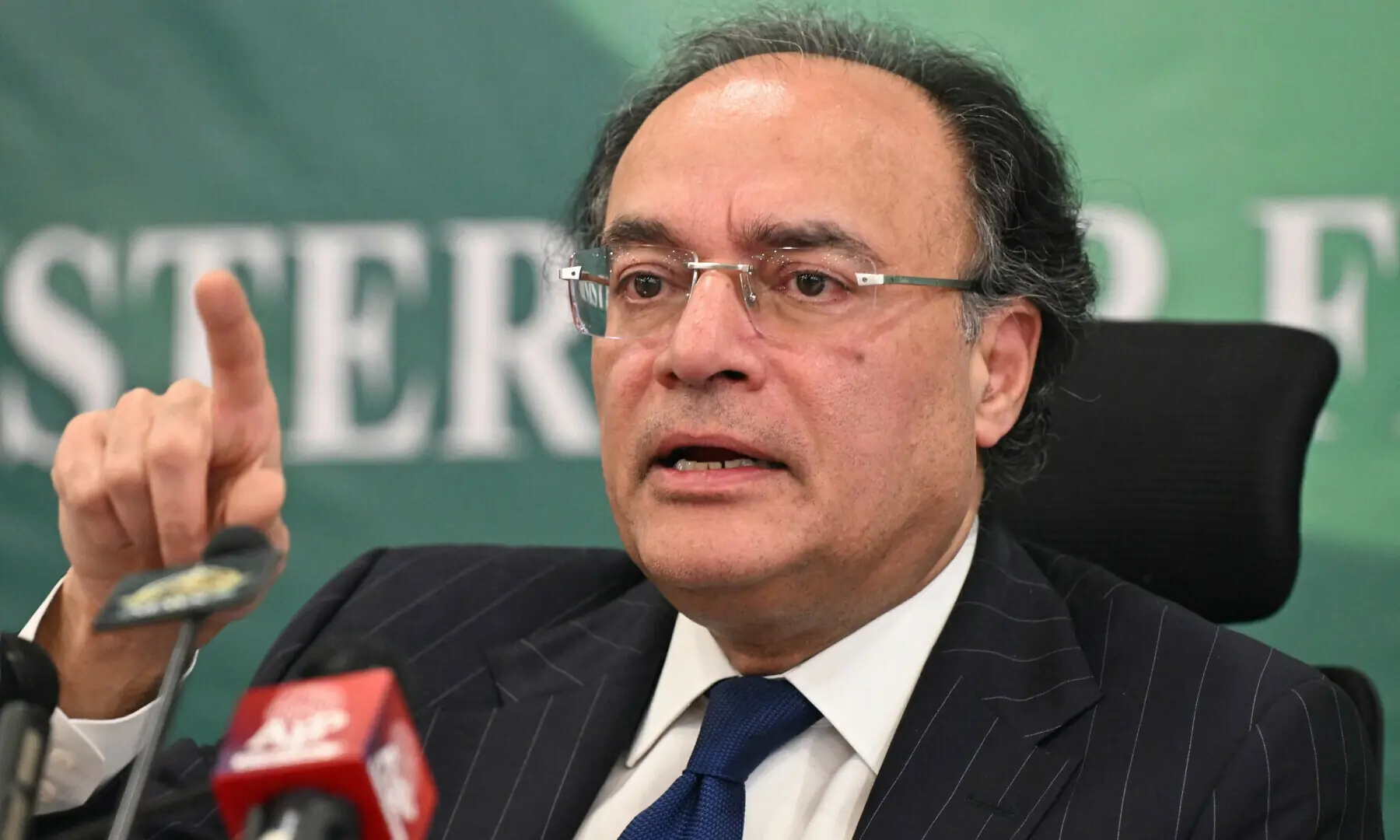
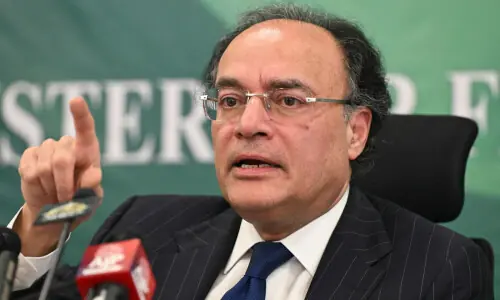
ISLAMABAD: Finance Minister Muhammad Aurangzeb on Thursday issued a stark warning about the country’s future, urging swift mobilization of climate finance to confront what he described as “existential threats to national survival” posed by climate change and rapid population growth.
Speaking at a high-level plenary titled “Mobilising Finance for a Circular, Climate-Resilient South Asia” — held during the third day of the Sustainable Development Conference organised by the Sustainable Development Policy Institute (SDPI) — the minister said Pakistan must swiftly adapt its fiscal and regulatory systems to attract sustainable investment.
“Climate finance is now a global imperative,” Mr Aurangzeb said. “With global GDP on the rise, Pakistan is pursuing structural reforms to stabilise the economy and strengthen investor confidence.”
He noted that a stronger role for the private sector and innovative financial tools could accelerate the country’s green transition. “The growing participation of the private sector is encouraging,” he said, adding that digital platforms and fintech could become key enablers of climate-related innovation.
Aurangzeb calls for digital, private capital to drive green transition
The minister announced that Pakistan had established the Virtual Asset Regulatory Authority (VARA) through an ordinance to oversee crypto and digital assets, while a Pakistan Crypto Council had been set up to guide responsible ecosystem development. Formal legislation would soon follow, he said, viewing digital finance as a catalyst for climate-linked investment and innovation.
Mr Aurangzeb highlighted several recent financing commitments, including a $1.3 billion climate financing arrangement with the IMF, a $500 million pledge from the Asian Development Bank (ADB), and the World Bank’s 10-year Country Partnership Framework expected to channel $2 billion annually. He also revealed plans to issue Panda Bonds in the Chinese capital market.
Financing the transition
SDPI Executive Director Dr Abid Qaiyum Suleri reminded participants that “financing is the backbone of all climate action”. He noted that while developed countries had promised $1 trillion under the Paris Agreement, only $300bn — mostly blended finance — was pledged.
He posed key questions: “Can the public sector absolve itself of responsibility? How much can the private sector contribute? And will blended finance really work in Pakistan?”
Chairman of the Pakistan Banking Association and CEO of Bank of Punjab, Zafar Masud, proposed establishing a Regional Climate Bank to coordinate and manage South Asia’s climate finance. He argued that the region faces shared environmental challenges and called for climate financing to be embedded under the 27th Constitutional Amendment for long-term policy continuity.
Additional Secretary and Head of Climate Finance at the Ministry of Climate Change, Zulfiqar Younas, underscored the importance of circularity for resource-scarce economies like Pakistan. “We cannot afford wastage,” he said, calling for regional collaboration to promote circular and climate-resilient development.
Chief Environmental Economist at UNEP, Dr Pushpam Kumar, said South Asian and African economies must leverage blended finance to stretch limited public funds. He urged for credible carbon pricing and “policy coherence” to create an enabling regulatory framework.
He also advocated for a shift beyond GDP as the sole measure of progress, suggesting that countries track inclusive wealth — the total of natural, human, and produced capital. “We must measure how much wealth we are gaining or losing each year,” he stressed.
$10bn pharma exports
Separately, Mr Aurangzeb said the government is targeting $3 billion in pharma exports within the next three years and $10bn over the following five.
The plan was discussed during a meeting with the Pakistan Pharmaceutical Manufacturers’ Association (PPMA).
According to an official statement, the talks focused on boosting exports, ongoing reforms, and positioning Pakistan as a key player in the global pharmaceutical industry.
The PPMA delegation reported that pharmaceutical exports have surged by a record 34 per cent year-on-year — the highest increase on record — underscoring the sector’s resilience and innovation despite persistent economic challenges
Published in Dawn, November 7th, 2025