0
0

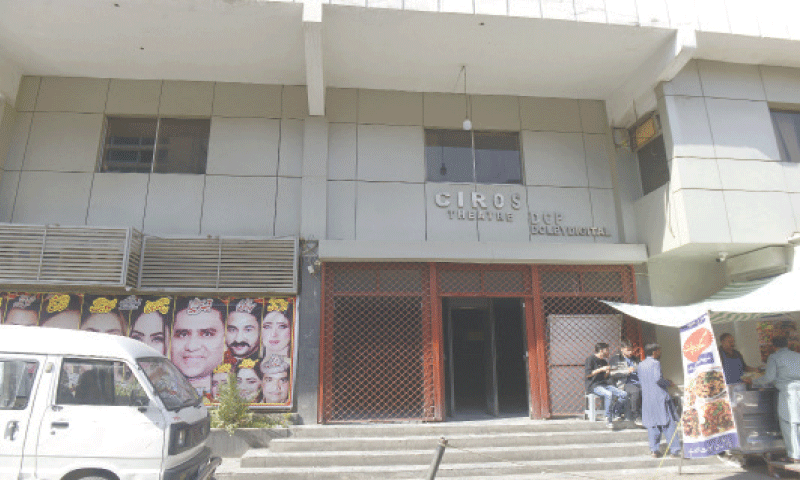
Once a beacon of cultural activity, theatres across the garrison city have fallen into obscurity. Several factors have contributed to this decline, including poor scripts that discouraged family audiences, excessive commercialisation, and, above all, the absence of monitoring mechanisms to maintain standards.
In the past, Rawalpindi was considered a hub of cultural life, from performing arts to painting. It produced stars who began their careers in theatre before moving on to television and film.
But times have changed. Like other performing artists, stage actors are also struggling to revive this art form. Over the years, many cinema houses in the city were converted into theatres, but most have now been turned into commercial plazas.
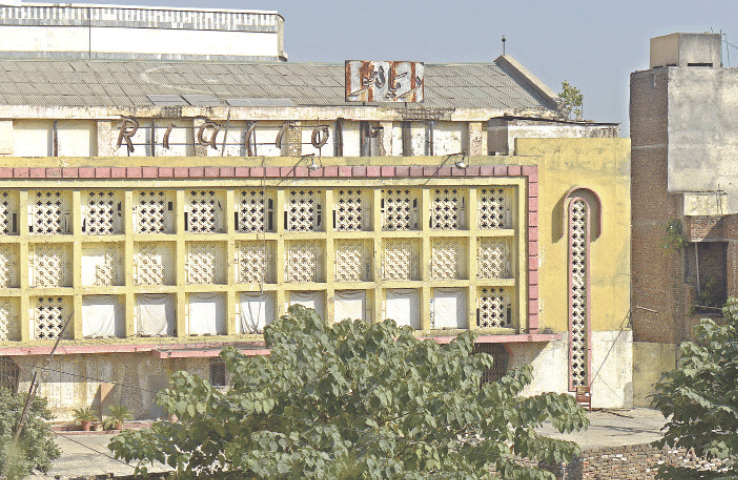
In earlier days, venues such as Gordon College Jubilee Hall, Moti Mehal, Rialto, Ciross, Nishat and Gulistan cinemas hosted theatre productions. Today, only Rialto and Ciross continue to function as theatres, while the Rawalpindi Arts Council (RAC) auditorium provides limited opportunities for actors to showcase their talent.
Liaquat Memorial Hall, once the hub of stage plays, now stands idle. It is occasionally used by educational institutions for annual functions and by NGOs for awareness dramas, but the audience remains small.
“We are hopeful that the good days of stage drama will return. However, there is a dire need to draw the attention of organizers toward improving quality,” said renowned TV and stage artist Zulqarnain Haider.
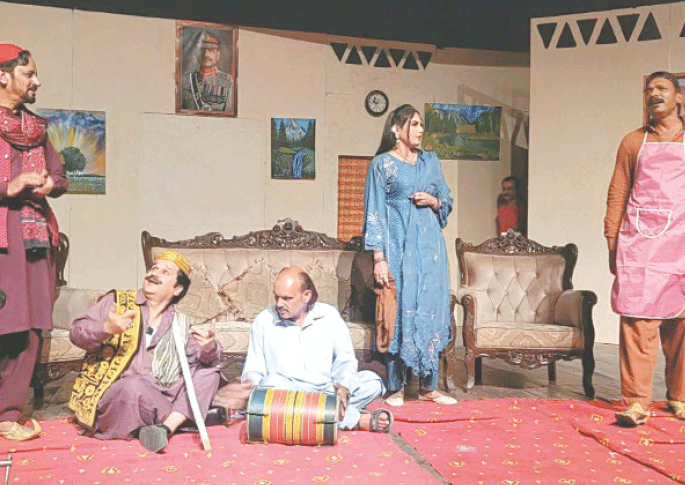
He recalled that in the past, Liaquat Hall was open for commercial dramas, but now stage performances are mostly confined to old cinema halls. “People will return to theatres once the quality of scripts and performances improves,” he said.
Haider added that the language and dialogue used in recent productions were not up to the standards set by legends such as Muhammad Qavi Khan and Firdous Jamal. “Directors and organisers now allow a mix of Punjabi and colloquial expressions in Urdu dramas just to gain cheap appreciation from a few people,” he lamented.
He said the quality of stage plays at the Pakistan National Council of the Arts (PNCA) and the Rawalpindi Arts Council was better because there was some monitoring of language and performance, and audiences preferred to attend those.
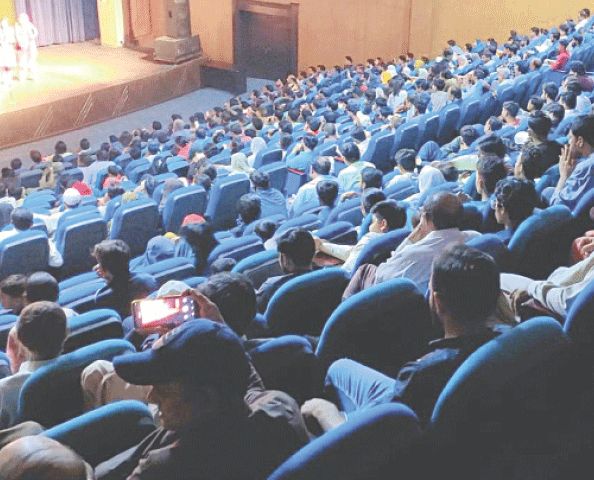
Haider disagreed with the notion that public interest in stage dramas had faded. “People still want to see live performances and are willing to pay for them, but improvement in storylines and acting is essential,” he said. “These days, audiences go to certain theatres only to watch dances. There is no need for dance in dramas; songs can be added only when required.”
Renowned actor Batin Farooqi said the downfall of stage drama began when dances and vulgarity crept into performances. “It is the authorities’ responsibility to prevent such practices. If a play is staged after obtaining a No-Objection Certificate (NOC) from the local administration, it becomes the administration’s duty to monitor and review the script and story,” he said.
Farooqi lamented the lack of checks and balances in the theatre scene. “There is no formal acting school, and theatre once provided new talent with a platform to perform. But now, people from respectable families avoid the stage because of its poor reputation,” he said.
Having performed in both stage and television for over 30 years, Farooqi said he stopped doing theatre due to growing vulgarity. “The revival of stage performances is essential, and these venues must be restored,” he added. “Drama is a reflection of life, but sadly, today’s plays are no match for what senior artists performed in their heyday.”
Former RAC Resident Director Waqar Ahmed also agreed that theatres should be revived. “Many artists are willing to perform but refuse when organisers and producers demand the use of unethical language,” he said.
He recalled that a decade ago, stage plays were much better. “During my tenure at RAC, I tried to bring big names for performances to revive interest in theatre. But after the wave of terrorism in the last decade, such activities almost disappeared. Now, stage dramas have turned into dance shows,” he said.
Ahmed said that with government support, the RAC could organise performances and events where drama students would get opportunities to showcase their talents. “Although the district administration has started monitoring dramas under Punjab government policy, there is no committee of senior citizens or artists to oversee the process,” he added.
“I didn’t even know there was a theatre in the garrison city. If there is, the government should restore it and revive cultural and social activities; otherwise, people from Pindi have to travel all the way to Islamabad,” said Shahmir Hussain, a resident.
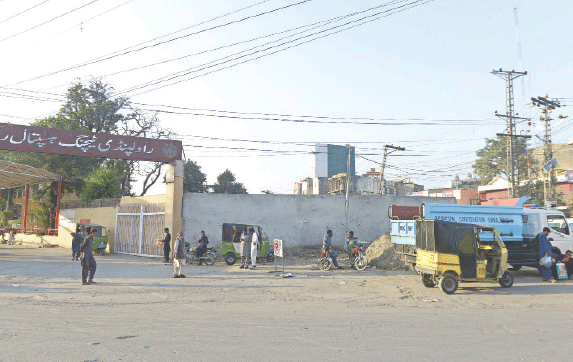
Drama enthusiasts believe that a district-level cultural committee comprising senior artists, poets and writers should be formed to monitor theatre productions.
They warn that if corrective steps are not taken soon, theatres in Rawalpindi may soon become a thing of the past.
Published in Dawn, November 3rd, 2025