Doha signs protocol to invest $3bn in Pakistan
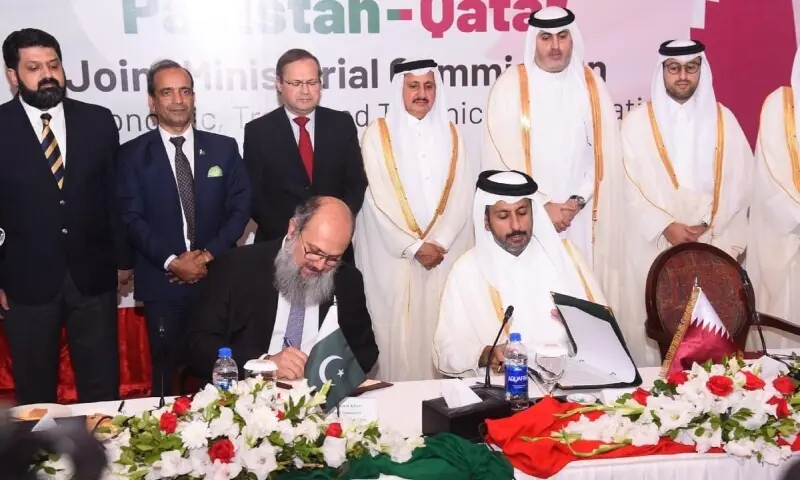
ISLAMABAD: Pakistan and Qatar have signed a protocol to formalise commitments across multiple sectors, including a pledge of $3 billion in investment in Pakistan through the Qatar Investment Authority (QIA) or other designated investment vehicles.
The agreement aims to strengthen economic cooperation and deepen bilateral relations between the two countries.
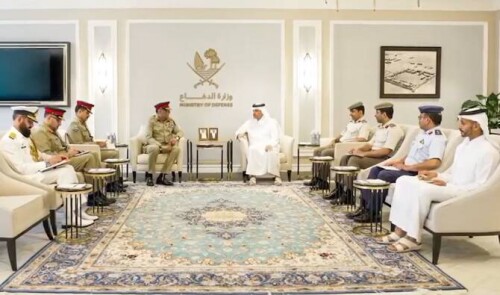
The three-day Sixth Session of the Pakistan-Qatar Joint Ministerial Commission (JMC) on Economic, Trade and Technical Cooperation concluded on Thursday. The protocol was signed by Commerce Minister Jam Kamal Khan and Qatar’s Minister of Commerce and Industry Sheikh Faisal bin Thani bin Faisal Al Thani.
According to an official statement, the protocol commits both sides to implementing the Amir of Qatar’s earlier pledge to invest $3bn in Pakistan. A key focus is strengthening direct engagement between the QIA and Pakistan’s Special Investment Facilitation Council (SIFC) to streamline investment processes and create an enabling environment for Qatari investors. The SIFC will serve as the leading platform for facilitating investment in priority sectors.
Deepens cooperation in transport, health, education, culture, solidifies bilateral relations
In the transport sector, both sides agreed to explore cooperation on public transport systems, including rail, buses, and metro networks, with a focus on adopting green technologies such as electric, autonomous, and hydrogen-fuelled vehicles. Pakistan invited Qatari investors to participate in road infrastructure projects, such as the Kharian-Rawalpindi Motorway (M-13) and the Karachi-Hyderabad Motorway, through public-private partnerships or direct financing.
The delegations also discussed the need for an MoU on land transport and port cooperation. In civil aviation, the two countries agreed to continue collaboration and hold bilateral aeronautical authorities’ consultations in the first quarter of 2026 to enhance aviation ties.
Education and health cooperation formed a major part of the talks. The two sides discussed the draft Second Executive Programme for 2025-2028 to promote collaboration in education, higher education and scientific research. They also considered a draft MoU on Technical and Vocational Education and Training between Qatar’s Ministry of Education and Pakistan’s National Vocational and Technical Training Commission to strengthen technical skills development.
In health, the protocol calls for activating an existing MoU through a joint working committee to implement joint programmes, attract Pakistani medical professionals to Qatar’s Hamad Medical Corporation and facilitate the exchange of medical expertise. It also includes exploring mutual recognition of pharmaceuticals and medical devices to improve market access.
Cultural and media cooperation was another area of focus. Both countries agreed to develop a ‘Year of Culture’ programme featuring collaborations in film, museums and heritage. The protocol also provides for fast-track visa processing and streamlined procedures for cultural and academic exchanges.
Agreements were signed between the Qatar News Agency and the Associated Press of Pakistan to promote news exchange, joint productions and media training. Cultural exchange programmes between Pakistan Broadcasting Corporation and Qatar Radio were also prioritised.
In communications and information technology, both sides agreed to strengthen cooperation in e-government, smart cities, digital economy and digital transformation. Collaboration between Qatar Science and Technology Park and Pakistan’s Special Technology Zones Authority will be pursued to support startups and promote innovation.
The protocol also emphasised the deployment of skilled Pakistani workers to meet Qatar’s labour market needs. Both sides agreed to expedite a new MoU on labour cooperation, building on the 1987 employment agreement, and to share best practices in workforce management.
In their concluding remarks, both ministers reaffirmed their commitment to expanding trade and investment ties, stressing the importance of leveraging existing relations to promote joint ventures and economic growth.
Published in Dawn, October 24th, 2025