TLP banned as govt takes hard line after unrest


• Cabinet told 2021 proscription was lifted after party pledged to renounce violence
• Talal says TLP acted like an extremist group, reneged on commitments
• Rana Sanaullah says ban aims to ‘purge anti-state, terrorist elements’, not erase party
• PM unveils three-year ‘Roshan Economy’ power tariff of Rs22.98 per unit
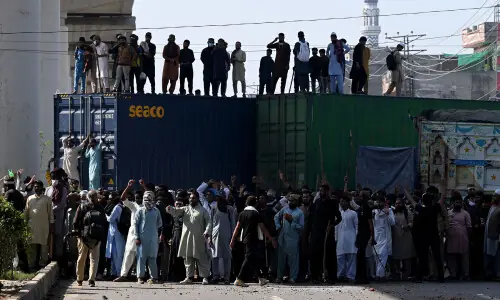
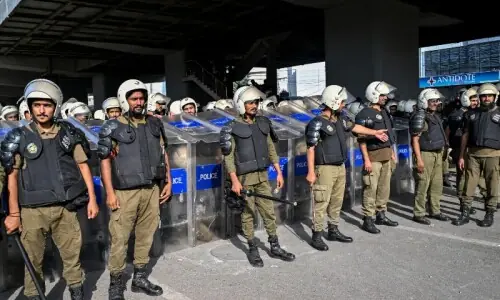
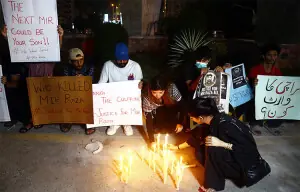
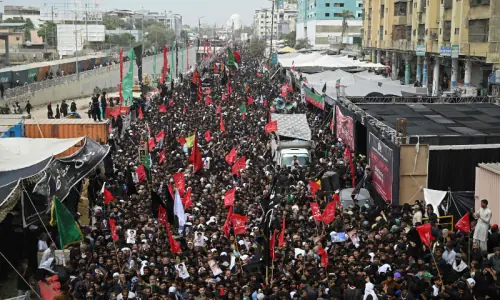
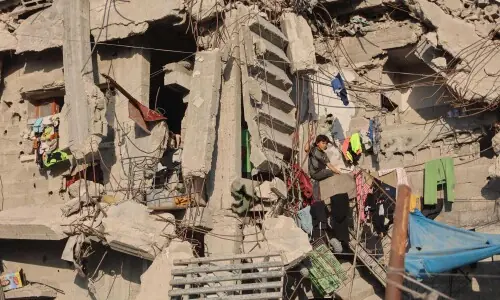
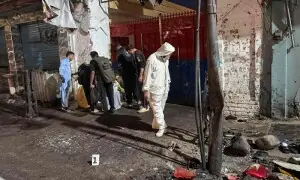
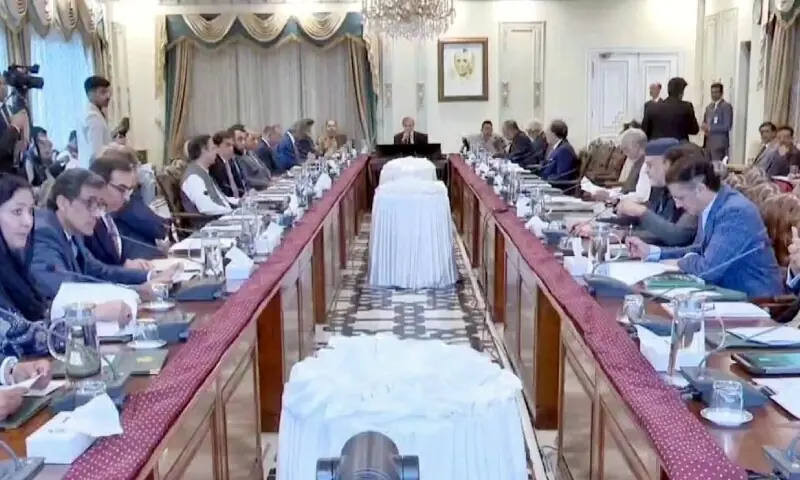
ISLAMABAD: The federal cabinet on Thursday approved a proposal to proscribe the religion-political group Tehreek-i-Labbaik Pakistan (TLP) under the Anti-Terrorism Act (ATA), days after nationwide protests over Gaza claimed the lives of several protesters and police officers and paralysed major highways and city roads from Karachi to Islamabad.
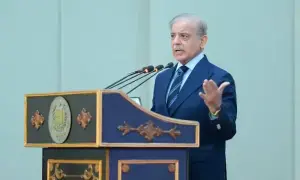
The decision was taken at a meeting chaired by Prime Minister Shehbaz Sharif on a proposal from the Punjab government. A statement issued by the Prime Minister’s Office (PMO) after the meeting said the ban was “unanimously” approved by the federal cabinet.
The interior ministry briefed the cabinet on what it called the TLP’s “violent and terrorist activities”, stressing that the organisation had repeatedly incited unrest across the country.
The group, founded in 2015 as a movement, turned into a political party in 2016. It was previously banned by the PTI government in 2021 after violent protests.
The interior ministry informed the cabinet that the 2021 ban on TLP was lifted after six months on the assurance that it would refrain from violence. It added that the current ban on TLP stemmed from its reneging on those guarantees.
“In the past, security personnel and innocent bystanders have been killed in violent protests and rallies by the TLP,” the PM Office statement said.
A source privy to the meeting told Dawn that participants were asked to share their views on TLP’s “firebrand” approach, and “almost everyone was of the view that the organisation must be barred from paralysing the country time and again”.
The cabinet meeting was held on a single-point agenda, and no other items were discussed, the source added.
Later, speaking on Geo News, Adviser to the Prime Minister on Political Affairs Rana Sanaullah said the intent behind a ban was not to eliminate a party but to purge it of “anti-state and terrorist elements”.
He said no one had any issue with the TLP’s religious views. But whenever the party staged protests in the past, it “led to violence and loss of life, such as the 2017 Faizabad demonstrations”.
In separate remarks to Geo News, Minister of State for Interior Talal Chaudhry said that the TLP had acted like an extremist group and violated its prior commitments.
Mr Chaudhry said the government had no other option in light of reports submitted by the Punjab government than to ban the party. He said the interior ministry had summoned reports from all provinces about the party’s conduct in the past decade regarding its involvement in violence, targeting of minorities, incitement of sectarianism and other such matters.
Legal framework
Under the country’s legal framework, the National Counter-Terrorism Authority (Nacta) maintains lists of proscribed persons and groups. Those designated as terrorists or associated with terrorism face severe consequences, such as travel bans and financial sanctions.
Individuals may also be placed on the Fourth Schedule of the ATA for monitoring.
Historically, proscribed entities have included the Tehreek-i-Taliban Pakistan (TTP), Hizbut Tahrir, Lashkar-i-Jhangvi, Jaish-i-Mohammad and the Baloch Liberation Army (BLA).
The provincial government can request a ban on a party, as in the case of the TLP.
In turn, the federal government has the power to refer this request to the Supreme Court by declaring that the party “has been formed or is operating in a manner prejudicial to the sovereignty or integrity of Pakistan”, according to Article 17(2) of the Constitution.
However, according to analysts, the final decision to ban a political party rests with the Supreme Court under the Constitution.
“The federal government shall, within 15 days of such declaration, refer the matter to the Supreme Court, whose decision on such reference shall be final,” the article says.
The government can also invoke Section 212 of the Elections Act 2017 to seek the dissolution of a political party.
Any declaration is subject to adjudication by the Supreme Court.
Electricity package
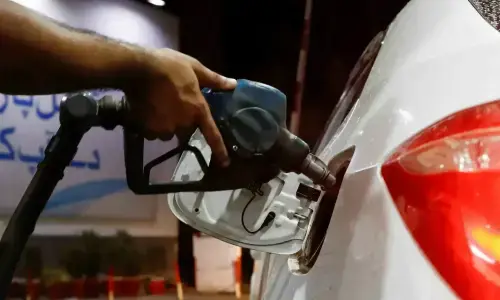
Separately, PM Shehbaz announced a three-year “Roshan Economy Electricity Package” offering additional electricity to the industrial and agriculture sectors at a subsidised rate of Rs22.98 per unit from Nov 2025 to Oct 2028. The current tariffs of around Rs34 for industry and Rs38 for agriculture will be reduced to Rs22.98 for both. During a meeting with a delegation of experts from the industry and agriculture sectors, as well as representatives of the business community, he said the fiscal impact would not be passed on to domestic consumers or other sectors.
Appreciating the efforts of Power Minister Awais Leghari and his team, he said lowering energy costs was essential to competitiveness, exports and job creation.
Published in Dawn, October 24th, 2025