World Court says Israel must ensure basic needs in Gaza are met
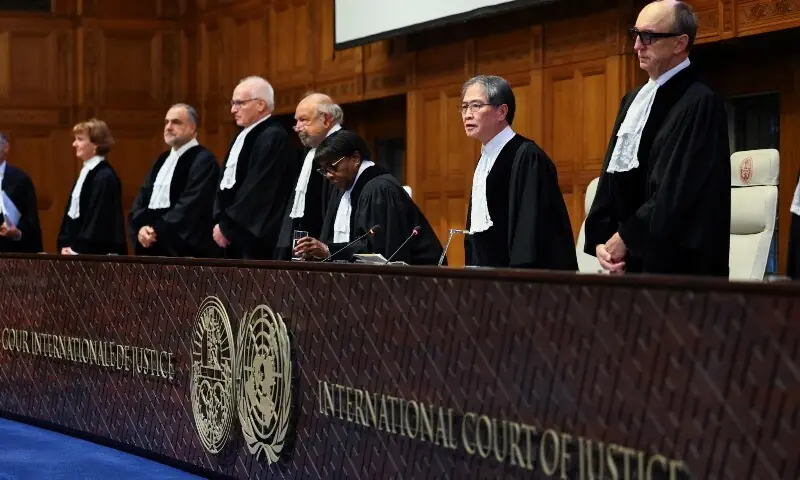


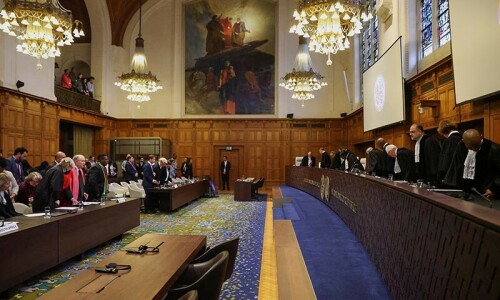
The United Nations’ top legal body, the International Court of Justice (ICJ), on Wednesday said Israel has an obligation to ensure the basic needs of the civilian population in Gaza are met.
The panel of 11 judges added that Israel is forced to support the relief efforts provided by the United Nations in the Gaza strip and its entities, including the UN Relief and Works Agency for Palestine Refugees in the Near East (UNRWA).
Israel has not substantiated its claims that a significant number of UNRWA’s employees are members of Hamas, the judges said.
The ICJ said that Israel was obliged to ease the passage of aid into Gaza, stressing it had to provide Palestinians with “basic needs” essential to survival.
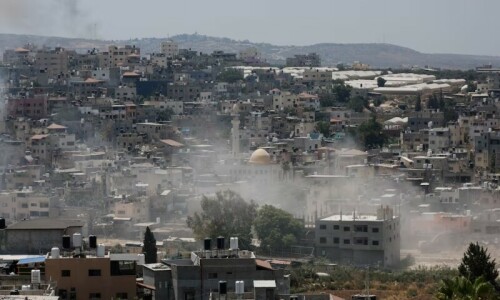
The wide-ranging ICJ ruling came as aid groups are scrambling to scale up much-needed humanitarian assistance into Gaza, seizing upon a fragile ceasefire agreed earlier this month.
The ICJ’s “Advisory Opinion” is not legally binding but the court believes it carries “great legal weight and moral authority”.
Israel did not take part in the proceedings but an official told journalists before the hearing that it was “an abuse of international law”.
The official added that Israel “cooperates with international organisations, with other UN agencies regarding Gaza. But Israel will not cooperate with UNRWA”.
ICJ President Yuji Iwasawa said the ICJ “rejects the argument that the request abuses and weaponises the international judicial process”.
On the eve of the ICJ ruling, Abeer Etefa, Middle East spokeswoman for the UN’s World Food Programme (WFP), said 530 of the organisation’s trucks had crossed into Gaza since the ceasefire.
Those trucks had delivered more than 6,700 tonnes of food, which she said was “enough for close to half a million people for two weeks”.
Etefa said around 750 tonnes a day were now coming through, which, although more than before the ceasefire, remains well below WFP’s target of around 2,000 tonnes daily.
The ICJ said that Israel, as an occupying power, was under an obligation “to ensure the basic needs of the local population, including the supplies essential for their survival”.
At the same time, Israel was “also under a negative obligation not to impede the provision of these supplies”, the court said.
The court also recalled the obligation under international law not to use starvation as a method of warfare.
‘Serious concerns’
The UN had asked the ICJ to clarify Israel’s obligations, as an occupying power, towards UN and other bodies “including to ensure and facilitate the unhindered provision of urgently needed supplies essential to the survival” of Palestinians.
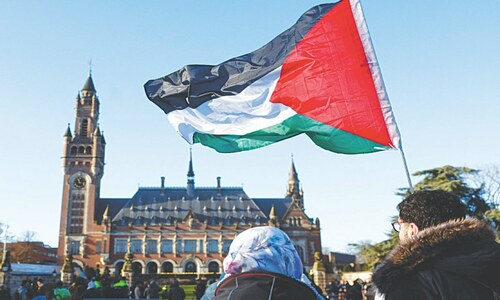
ICJ judges heard a week of evidence in April from dozens of nations and organisations, much of which revolved around the status of UNRWA.
At the ICJ hearings, a US official raised “serious concerns” about UNRWA’s impartiality, and alleged that Hamas used the agency’s facilities.
The US official, Josh Simmons, said Israel had “no obligation to permit UNRWA specifically to provide humanitarian assistance”.
Simmons added that UNRWA was not the only option for delivering aid into Gaza.
However, the ICJ noted that UNRWA “cannot be replaced on short notice without a proper transition plan”.
Palestinian official Ammar Hijazi told the ICJ judges during the April hearings that Israel was blocking aid as a “weapon of war”, sparking starvation in Gaza.
Wednesday’s case was separate from the others Israel faces under international law over its campaign in Gaza.
In July 2024, the ICJ issued another advisory opinion stating that Israel’s occupation of the Palestinian territories was “unlawful” and must end as soon as possible.
ICJ judges are also weighing accusations, brought by South Africa, that Israel has broken the 1948 UN Genocide Convention with its actions in Gaza.
Another court in The Hague, the International Criminal Court, has issued arrest warrants for Israel’s Prime Minister Benjamin Netanyahu for alleged war crimes and crimes against humanity.
It also issued a warrant for Hamas commander Mohammed Deif, who Israel says was killed in an airstrike.