Pindi declared model district for dengue control as capital reports 25 new cases
RAWALPINDI/ISLAMABAD: Punjab Minister for Specialised Healthcare and Medical Education Khawaja Imran Nazir on Tuesday claimed that the dengue situation remained significantly better this year, with Rawalpindi being declared a model district for dengue control measures.
It may be mentioned that 1,106 dengue patients have been reported in different hospitals across Rawalpindi in 2025, while 13 new patients were reported on Tuesday.
“Due to exemplary arrangements and effective planning by the district administration, the dengue situation in Rawalpindi has remained significantly better this year compared to previous years,” the minister said.
“The credit for this success goes to MNA Tahira Aurangzeb and Deputy Commissioner Dr Hasan Waqar Cheema, whose tireless efforts, close monitoring, and proactive leadership ensured effective dengue prevention and control across the district,” he added.
He was speaking at a meeting held at the Deputy Commissioner’s Office, Rawalpindi, to review the current dengue situation.
The meeting was attended by Deputy Commissioner Dr Hasan Waqar Cheema, MNA Tahira Aurangzeb, MPAs Raja Muhammad Hanif, Malik Mansoor Afzal, Malik Iftikhar, Ziaullah Shah and officials from various government departments.
The minister noted that due to Rawalpindi’s moderate climate, the city is more prone to dengue outbreaks. However, this year’s timely interventions, improved surveillance, and coordinated field operations kept the situation well under control.
He added that close coordination with the Islamabad administration had also been ensured to prevent the spread of dengue across adjoining areas.
During the meeting, the provincial minister was briefed on the comprehensive anti-dengue measures taken by the district administration.
Speaking on the occasion, MNA Tahira Aurangzeb said all departments worked together as one team to tackle the dengue challenge effectively. She added that, under the special directions of Chief Minister Punjab Maryam Nawaz Sharif, public awareness campaigns, household inspections, and a rapid response system were strengthened.
She emphasised that citizen cooperation and the dedicated efforts of the district administration played a vital role in controlling dengue in Rawalpindi.
Deputy Commissioner Dr Hasan Waqar Cheema said that all departments remain fully active in daily monitoring and surveillance activities. “Our goal,” he said, “is to make Rawalpindi a model district for dengue control so that other districts can replicate this strategy successfully.”
On the other hand, as many as 25 new dengue cases were reported in the federal capital in a single day.
According to the District Health Office (DHO), out of the 25 cases, 14 were reported from rural areas and 11 from urban areas.
Five cases were reported from Tarlai, three each from Bhara Kahu, and two each from I-14, I-9, and Sohan. Moreover, one case each was reported from B-17, F-15, G-10, G-14, G-6, G-7, I-8, Koral, Kurri, Rawat and Shah Allah Ditta.
“As many as 59 patients are admitted to hospitals, and response to all cases has been carried out in accordance with World Health Organisation (WHO) protocols,” an official of the DHO said.
The District Health Office, Islamabad, has urged the public to follow preventive measures, particularly regular cleaning of water containers, tanks, and coolers, to help stop the spread of dengue. Citizens have been encouraged to play an active role in protecting their own health and that of others.
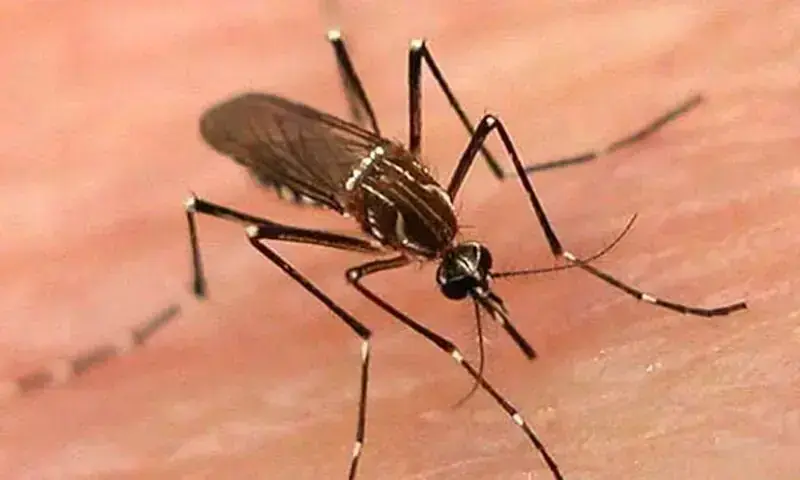
It is worth mentioning that the dengue virus is spread by the Aedes aegypti mosquito.
The most common symptoms of dengue are high-grade fever accompanied by joint and muscular pain. As vaccines are not available in most parts of the world, early detection and proper medical care can lower mortality. Otherwise, the disease may turn into a life-threatening haemorrhagic fever, which can lead to bleeding and dangerously low blood pressure.
Rapid and unplanned urbanisation, poor sanitation and climate change are all contributing to the surge in dengue infections.
Published in Dawn, October 22nd, 2025