Population surge declared national emergency
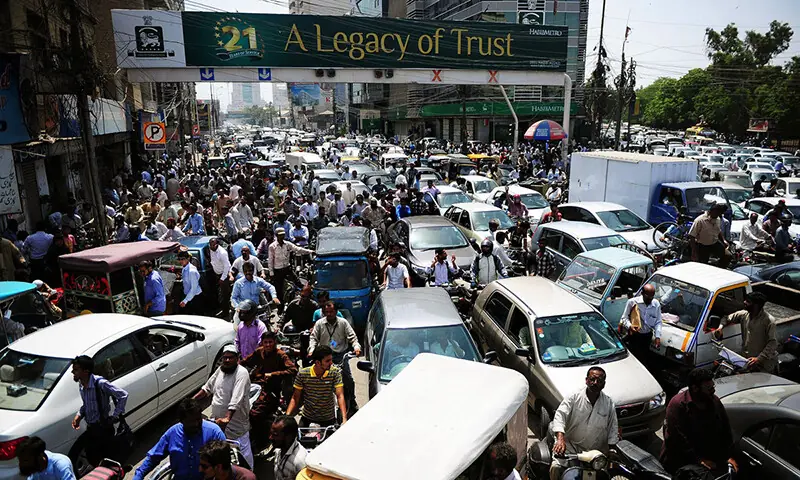

ISLAMABAD: Lawmakers from across Pakistan have called for declaring rapid unsustainable population growth a national emergency and integrating population welfare into all development and policy frameworks.
They emphasised that Pakistan’s progress depended on ensuring universal access to education, improving reproductive health services, and empowering local governments to deliver family welfare programs at the grassroots level.
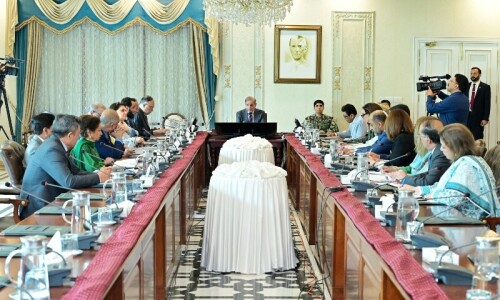
They were attending meeting of the Parliamentary Forum on Population, organised by Population Council, in collaboration with UNFPA. They urged that the National Finance Commission (NFC) Award be revised to remove incentives that favour population growth and instead reward provinces for progress in health, education, and population stabilisation.
Addressing as the chief guest, Federal Minister for Law and Justice Azam Nazeer Tarar said: “We must have an open dialogue on population, a topic that affects every home but is too often avoided. Islam promotes rational thought and responsible action, and our Constitution is rooted in the welfare of humankind. It is time to reignite the momentum for population stabilisation and declare an emergency on population, health, and education to secure Pakistan’s future.”
The parliamentarians welcomed the Council of Islamic Ideology’s endorsement of birth spacing and its recommendation to involve religious leaders more actively in disseminating messages on its permissibility.
Country Director of the Population Council Pakistan, Dr Zeba Sathar, stressed the urgency of moving from dialogue to action. “Unless population stabilisation is treated as a national emergency, our progress will remain limited,” she said. “We must ensure implementation through a national task force that coordinates across provinces and holds all actors accountable. Education, particularly for girls, remains the foundation of sustainable population management.”
Coordinator to the Chief Minister Punjab on Population Dr Saira Afzal Tarar emphasised the need for culturally sensitive communication and women-centered programming. “Population growth underpins many of Pakistan’s major challenges, from terrorism to out-of-school children,” she said.
“We must communicate within our cultural and religious context, promote women’s empowerment, and realign programs like the Lady Health Worker Programme with reproductive health objectives,” she added.
Deputy Country Representative of UNFPA Pakistan, Dr Gulnara Kadyrkulova, reaffirmed the organisation’s support for Pakistan’s population agenda. “Education is the strongest force for population stabilisation,” she noted.
“We must connect family planning, gender equality, and human development to national priorities. Engaging religious leaders, community elders, and policymakers together will ensure that population welfare becomes a shared national commitment,” she declared.
Published in Dawn, October 21st, 2025