0
0


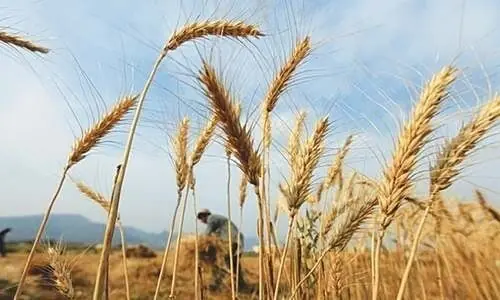
The numbers are stark, and they carry a devastating weight on Pakistan’s economy. Pakistan loses an estimated 30–40 per cent of its food production each year, largely after harvest and during transport.
According to multiple assessments, including the Asian Development Bank, the Pakistan Institute of Development Economics, and data cited by the Ministry of National Food Security and Research, this wastage is valued at roughly $4 billion annually, or about Rs700–850bn.
The Food and Agriculture Organisation similarly reports that post-harvest losses in perishable crops such as fruits and vegetables can reach 20–44pc, underscoring the scale of inefficiency across Pakistan’s agribusiness food value chain.
This is not an accounting anomaly; it is a structural leak in the national purse, one that drives food inflation, weakens export competitiveness, and drains the incomes of rural producers.
The absence of an end-to-end cold chain network has led to chronic food spoiling and wastage during transportation costing the nation billion
Food loss and waste have moved beyond humanitarian concern. They now represent one of Pakistan’s greatest economic frontiers a sector where smart investment could deliver out-sized national returns.
The cold chain deficit — cracks in the system
Pakistan’s most glaring weakness lies in its absence of an end-to-end cold chain network.
According to the Pakistan Horticulture Development & Export Company, fewer than 6pc of perishable goods move through temperature-controlled logistics. Beyond the main urban centres, cold storage is almost non-existent.
The result: rapid spoilage of high-value perishables, such as mangoes, dairy, meat, and tomatoes, often occurs within hours of harvest.
“The mango that leaves Multan is a different product when it reaches the port,” noted one Karachi-based exporter, “Without data or refrigeration, the farmer always pays the price.”
To close this gap, Pakistan must invest in solar-powered, modular cold storage units placed at farm gates and collection centres. These small, off-grid systems are more cost-effective to operate and less susceptible to power outages.
Such investments should be structured through public–private partnerships and farmer cooperatives, ensuring shared ownership and long-term sustainability.
The logistics sector also demands modernisation. Reliance on open trucks and poor farm-to-market roads causes massive wastage. The World Bank estimates that inefficient post-harvest transport alone adds up to 20pc more losses to the value chain.
The solution lies in refrigerated trucks, equipped with temperature and humidity sensors for monitoring in transit. For grains, hermetic silos must replace the traditional mud-and-brick storage that welcomes rodents, moisture, and decay.
Innovation and the circular economy
Even with an improved cold chain, a fraction of produce will never make it to market shelves — too bruised, overripe, or oddly shaped. Today, most of it is simply discarded.
Yet this “imperfect produce” can be turned into economic gold. Overripe mangoes can be made into pulp and puree for export; tomatoes into paste and sauces; apples and citrus into vinegar and jams.
These products are in high demand across the Middle East, Central Asia, and markets within the Association of Southeast Asian Nations, where Pakistan already has trade channels.
Meanwhile, waste from urban mandis (wholesale markets) can power biogas and bio-fertiliser plants. A 2023 United Nations Industrial Development Organisation pilot project in Lahore found that using organic market waste for biogas saved up to 15pc in fertiliser costs while generating renewable energy for cold storage operations.
This shift toward upcycling and energy recovery can transform the food sector from a linear economy — grow, sell, discard — to a circular one that recycles and reinvests value.
Policy and finance — making it bankable
Rebuilding Pakistan’s post-harvest ecosystem will require capital and policy muscle. The State Bank of Pakistan should direct commercial banks to provide low-interest, long-tenure credit lines for cold chain and food processing infrastructure, much like existing Green Banking initiatives.
The government can further ease the burden by waiving import duties and taxes on cold storage and food processing machinery.
On the human capital front, agricultural extension programmes must be revitalised. Farmers need practical training in grading, packing, temperature control, and storage, as well as digital literacy to access market information.
A national commodity grading and certification system, aligned with Codex and ISO standards, would help Pakistani exporters meet the stringent requirements of European Union and US buyers, rewarding quality and consistency over volume.
A national priority, not an afterthought
Food loss reduction is not charity; it’s a sound economic strategy. Curbing waste could save billions in lost revenue, stabilise prices, and boost farmer incomes. It could also help Pakistan conserve precious water and energy, since nearly one-third of agricultural water goes into growing food that never gets eaten.
Pakistan has the know-how, the sunlight, and the market. What it needs now is coordination and the political will to prioritize efficiency over expansion.
Manan Aslam is affiliated with the School of Management, Jiangsu University, Zhenjiang, Jiangsu, P.R. China, and the Department of Agribusiness and Entrepreneurship Development, MNS-University of Agriculture, Multan, Pakistan.
Published in Dawn, The Business and Finance Weekly, October 20th, 2025