Pakistan, Kazakhstan engage in joint counterterrorism training to strengthen military ties: ISPR


 0
0
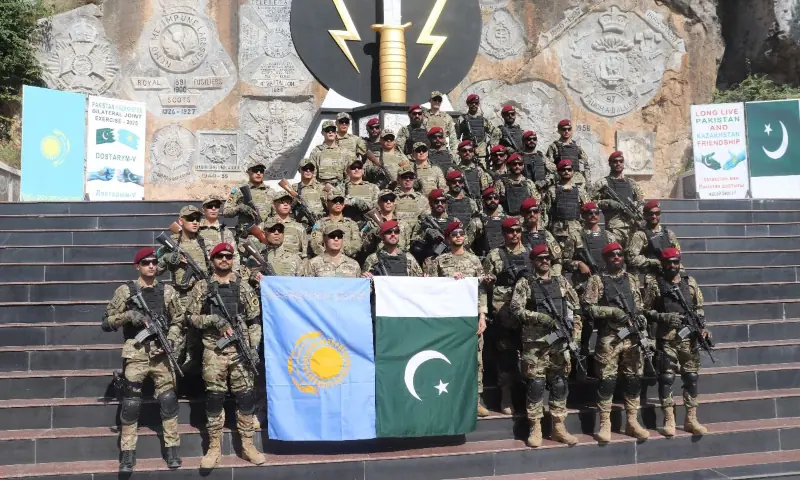

Pakistan and Kazakhstan have begun a joint counterterrorism training exercise lasting two weeks to improve military-to-military relations, the Inter Services Public Relations (ISPR) said on Thursday.
Pakistan regularly holds joint military exercises with countries across Asia, the Middle East, and beyond to boost operational readiness, deepen defence cooperation, and improve interoperability. These engagements enable Pakistan to share counterterrorism expertise, reinforce alliances, and project itself as a balanced and responsible regional actor.
“Pakistan-Kazakhstan Joint Exercise Dostarym-V is being conducted between the armies of Pakistan and Kazakhstan in [the] counter terrorism domain from 13-24 October 2025 at the Special Operations School, Cherat, Pakistan,” a statement from the ISPR said.
“Special Services Group of [the] Pak Army and Special Forces of [the] Kazakhstan Army are participating in the exercise,” it added.
According to the statement, the opening ceremony of the exercise was conducted on Tuesday in Cherat.
The exercise is aimed at “refining professional skills through joint training and harnessing historic military-to-military relations among the friendly countries”, the statement said. “Participating troops are looking forward to [benefiting] from mutual expertise [and] experience.”
In April, Chief of Army Staff Field Marshal Asim Munir made an official trip to Kazakhstan and held a meeting with the Defence Minister of Kazakhstan, Colonel General Ruslan.
The two leaders engaged in comprehensive discussions focusing on the dynamic regional security landscape, shared strategic objectives, and opportunities for enhancing bilateral defence cooperation.
They highlighted the significance of deepening military-to-military ties and reaffirmed their commitment to working together for the promotion of peace, stability, and security in the region.