PAKISTAN remains caught between cautious economic optimism and persistent challenges. This is the central message of the IMF’s latest assessment of the country’s outlook for the current fiscal year and its medium-term growth trajectory.
The Fund’s new World Economic Outlook report projects Pakistan’s GDP to grow by a modest 3.6pc, with average headline inflation rising slightly to 6pc from 4.5pc last year, and the current account balance shifting from a 0.5pc surplus to a manageable 0.4pc deficit — twice the finance ministry’s estimate of 0.2pc of GDP.
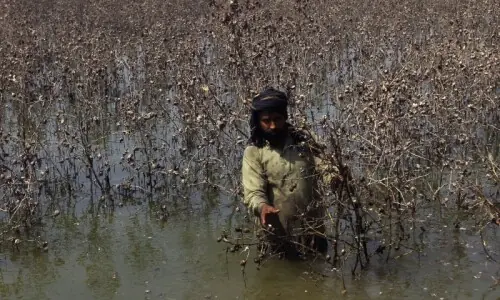
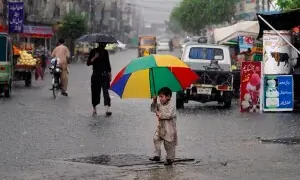
These projections, issued days after the IMF completed its two-week review of the economy this month, appear fairly optimistic, given that they do not account for the economic impact of the recent devastating floods. A revision of the Fund’s outlook, therefore, cannot be ruled out once flood loss estimates are finalised. The government has already scaled down its own growth target for the year from 4.2pc to 3.5pc, while the World Bank expects growth to slow to around 2.6pc in view of the flood damage.
Should we be worried about ‘worsening’ economic fundamentals? Fortunately, even the new projections do not suggest a reversal of our hard-won economic stability, at least for now. What they highlight, however, is that recovery remains fragile, constrained by the economy’s limited capacity to absorb internal and external shocks, and that Pakistan is unlikely to break out of its low-growth trap in the near to medium term without risking more economic distress.
Meanwhile, the 33pc year-on-year surge in trade deficit to $9.4bn during the first quarter of the current fiscal, from $7bn a year ago, is a troubling sign for economic stability, especially when the flood impact is yet to show up in the balance of trade. To some analysts, this sharp widening of the trade gap, driven by a spike in imports and a decline in exports, signals potential economic overheating, raising concerns about the sustainability of the current growth pattern.
If the trend holds, we could end up with an annual trade deficit exceeding $36bn — nearly $10bn higher than last year’s — putting renewed pressures on the recently accumulated foreign exchange reserves. Previously, high trade deficits have repeatedly undermined economic stability, stifled growth, fuelled inflation and constrained investment by triggering balance-of-payments crises every few years. That is what Pakistan has experienced in recent years.
The economy will remain vulnerable to internal and external shocks, including extreme weather events, until it creates conditions conducive to attracting investment in productive sectors to expand and diversify exports. The stakes could not have been higher for a country desperately seeking sustainable, inclusive economic growth in the face of low productivity, stagnant private investment, a high trade deficit and elevated debt. The floods may not have caused these challenges, but they will exacerbate them.
Published in Dawn, October 16th, 2025