India to reopen its embassy in Kabul after 4 years

India will reopen its embassy in the Afghan capital Kabul that was shut four years ago, Indian Foreign Minister Subrahmanyam Jaishankar said on Friday.
India had closed its embassy in Kabul after the Taliban seized power following the withdrawal of US-led Nato forces in 2021, but opened a small mission a year later to facilitate trade, medical support, and humanitarian aid.
About a dozen countries including China, Russia, Iran, Pakistan and Turkiye have embassies operating in Kabul, although Russia is the only country to have formally recognised the Taliban administration.
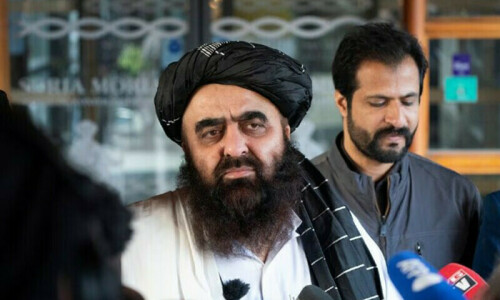
New Delhi’s announcement came as Afghan Taliban Foreign Minister Amir Khan Muttaqi began talks with Jaishankar on what is the first visit to India by a Taliban leader since 2021.
“India is fully committed to the sovereignty, territorial integrity and independence of Afghanistan,” Jaishankar told Muttaqi in his opening remarks.
“Closer cooperation between us contributes to your national development, as well as regional stability and resilience,” he said, adding that India’s “technical mission” in Kabul was being upgraded to an embassy.
According to Hindustan Times, Jaishankar also said that closer cooperation between the two countries would contribute to “regional stability and resilience“.
“As a contiguous neighbour and a well-wisher of the Afghan people, India has a deep interest in your development and progress,” Jaishankar said, according to the report.
Meanwhile, Muttaqi was quoted as saying that India was the first country to respond to “the recent earthquake in Afghanistan”.
“Afghanistan looks at India as a close friend. Afghanistan wants relations based on mutual respect, trade and people-to-people relations,” the Afghan minister was quoted as saying.
New Delhi does not officially recognise the Taliban government but has taken tentative steps to thaw ties with meetings and talks between senior officials in their respective foreign ministries.
The visit comes after Muttaqi attended a regional meeting in Moscow where Afghanistan’s neighbours including Pakistan, Iran, China and several Central Asian countries issued a joint statement opposing the deployment of foreign military infrastructure in the region. The statement was regarded as a signal of opposition to US President Donald Trump’s stated objective to retake control of the Bagram military base near Kabul.