Justice Jahangiri moves apex court against SHC’s decision in degree case
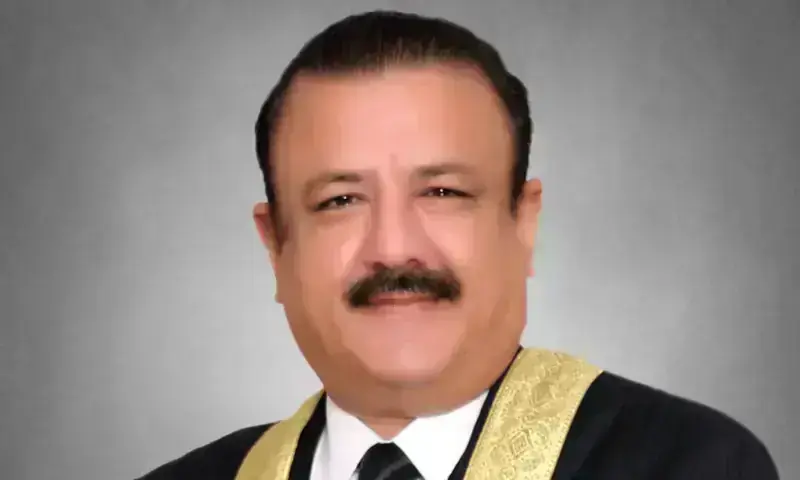
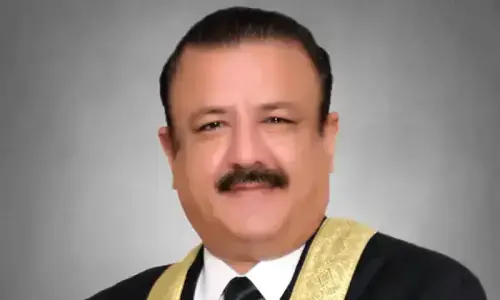
Islamabad High Court (IHC) judge Justice Tariq Mehmood Jahangiri on Thursday moved the Supreme Court, challenging the Sindh High Court’s ruling on his degree and seeking to have the verdict declared “null and void”.
In his petition, a copy of which is available with Dawn.com, Justice Jahangiri contended that the SHC “dismissed my application to become a party to the case”, adding that passing a “one-sided order without hearing the affected party is contrary to law”.
On September 16, the IHC had restrained Justice Jahangiri from exercising his judicial powers as a two-judge bench issued the interim order while hearing a writ petition filed under Article 199 of the Constitution. Justice Jahangiri then challenged the decision in the SC, pleading for the restraining order to be set aside.
The judge further argued that the SHC “ignored the question of maintainability of the petition”.
According to the petition, the IHC judge urged the apex court that his appeal “may graciously be granted and after granting leave to appeal, this Honourable Court, may graciously set aside the Impugned Order”.
The petition, filed under Article 185(3) of the Constitution, names the province of Sindh and others as respondents. Dr Mohammad Usman Mirza has been appointed as defence counsel by the petitioner.
Fake degree controversy
The controversy began with a letter that was circulated on social media last year, purportedly from the KU’s examinations, regarding the validity of Justice Jahangiri’s law degree, leading to the subsequent filing of a reference with the SJC.
The letter was reportedly a response from KU to an application seeking information under the Sindh Transparency Right to Information Act, 2016.
It stated that candidate Tariq Mehmood obtained his LLB degree in 1991 under enrolment number 5968. However, Imtiaz Ahmed enrolled in 1987 under the same enrolment number, while the transcript for LLB Part I was issued under the name Tariq Jahangiri.
Moreover, Tariq Mehmood enrolled for LLB Part I under enrolment number 7124. The letter did not declare the degree bogus but termed it invalid, explaining that the university issues one enrolment number for the entire degree programme, making it impossible for a student to have two enrolment numbers for one programme.
On July 10, 2024, IHC ruled that the “scurrilous campaign” aimed to malign the judge amounted to an attempt to bring the “Court into hatred, ridicule and disrespect and, prima facie, qualifies as contempt of Court.”
As the degree accusations came to light, Daud filed a writ petition, requesting the court to stop Justice Jahangiri from exercising judicial powers till the verification of his LLB degree. The then-IHC CJ Aamer Farooq heard the petition filed by the lawyer.
At the time, the SC registrar’s office also had raised objections to the petition on grounds that Daud was not an aggrieved person and the matter was already pending before the SJC.
On September 1, 2024, the syndicate of KU cancelled Justice Jahangiri’s degree and enrollment, on the recommendation of its UFM Committee, varsity officials said.
The decision came a few hours after the detention of academic and syndicate member Riaz Ahmed, who was picked up by police in what appeared to be an attempt to stop him from attending the key meeting. He was released in the evening only after the syndicate decided to cancel the degree.
Then, on Sept 5 2024, the SHC suspended KU’s decision to revoke the law degree of Justice Jahangiri, after a petition against KU’s cancellation was filed. The court found that the university’s syndicate had taken the action in Justice Jahangiri’s absence, depriving him of the opportunity to defend himself.
To this, KU responded that the unfair means committee and the syndicate were of the opinion that there was enough evidence against the judge, and deemed it appropriate not to hear him in person.
On Sept 16, the IHC took up the matter and a two-member bench led by IHC CJ Dogar and comprising Justice Mohammad Azam Khan, barred Justice Jahangiri from carrying out judicial work until the SJC decision on the matter of his allegedly fake degree, which Justice Jahangiri appealed against in the SC.
Separately, on Sept 25, a two-judge SHC bench declined to entertain the plea of Justice Jahangiri to become a party in proceedings on petitions, challenging the cancellation of his law degree.