Despite debt cut, risks to linger with Chinese IPPs


ISLAMABAD: Despite securing Rs1.225 trillion in new financing from commercial banks to reduce circular debt, the power sector will remain vulnerable to exchange rate fluctuations for up to eight years due to dollar-indexed investments, particularly those linked to Chinese power projects.
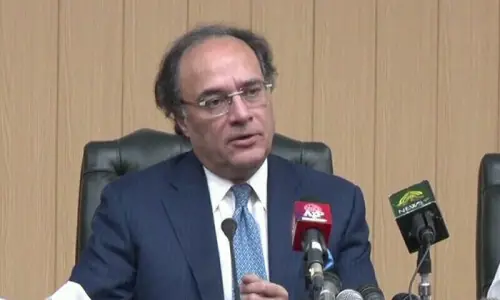
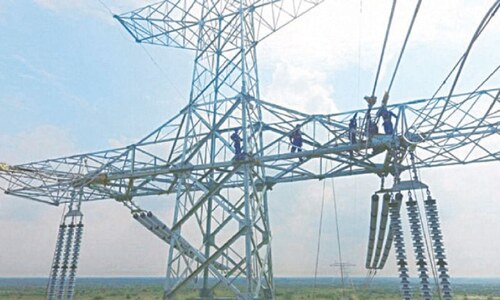
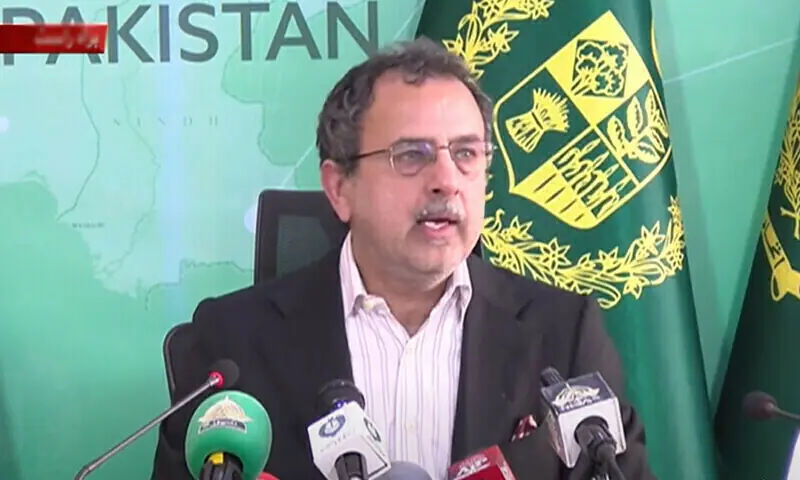
Speaking at a news conference on Friday, Power Minister Sardar Awais Leghari said power projects commissioned after 2015 — largely under the China-Pakistan Economic Corridor (CPEC) — were financed in US dollars and remain exposed to currency depreciation. These projects, with a generation capacity exceeding 11,000 megawatts, have locked-in dollar-based tariffs and debt servicing, placing ongoing pressure on power sector finances.
“The dollar-linked debt will remain sensitive to exchange rate fluctuations for the next 7–8 years,” Mr Leghari said. He noted that when the contracts were signed during the PML-N government, the exchange rate stood at Rs100 to a dollar. “The Rs18 per unit capacity charge today would have been Rs8-9 lower if the exchange rate had remained unchanged.”
Mr Leghari did not comment on whether the government was pursuing revisions to post-2015 contracts, as was done with pre-2015 independent power producers (IPPs) and state-owned plants. Islamabad has repeatedly sought concessions from Beijing on CPEC power terms, but with little success so far.
Minister says forex-linked contracts will remain volatile for eight years
The minister confirmed that the newly secured Rs1.225tr syndicated financing was finalised with 18 commercial banks at Kibor minus 0.9pc, and had been discussed with the International Monetary Fund (IMF), which raised no objections. The facility replaces earlier high-cost debt of Rs660bn borrowed at Kibor plus 2.5-4pc through the Power Holding Company.
The refinancing, backed by sovereign guarantees, is expected to enhance cash flows, eliminate government guarantees, and alleviate the financial burden on the sector. The minister claimed the new terms were favourable, despite Finance Minister Muhammad Aurangzeb’s recent statement that some corporates were borrowing at Kibor minus 2-3pc amid easing interest rates.
With this injection, the minister projected that the remaining circular debt — estimated at Rs390bn — could be brought down to zero well before the earlier six-year target. He said the circular debt had already fallen from Rs2.4tr in March 2024, when the coalition government took office, to around Rs400bn now, without increasing the burden on consumers.
Mr Leghari attributed the Rs800bn reduction to three key areas: Rs242bn through improved power company performance, Rs175bn from macroeconomic stability and falling interest rates, and Rs363bn through renegotiated contracts with older IPPs — all achieved without coercion.
He criticised the PTI government, claiming that the PML-N had left a circular debt of Rs1.1tr in 2018, which grew to Rs2.28tr by 2022 due to inefficiencies, mismanagement, and alleged fraud. By the time the current administration took over, the debt had reached Rs2.4tr.
The minister also claimed that tariff reforms had brought down power rates for industrial users by 38pc, and for various domestic and commercial categories by 11-18pc, despite falling consumption and growing solarisation. He said over six million consumers had reduced their usage below 200 units per month by installing solar panels, increasing the protected consumer base from 12m to 18m.
He noted that, for the first time, circular debt was being reduced through structured planning rather than temporary measures. He said the government had committed to internal fiscal constraints to prevent further debt accumulation and improve investor confidence.
The Rs3.23 per unit debt servicing surcharge, he added, would be gradually phased out over the next five to six years.
Published in Dawn, September 27th, 2025