NEW DELHI: India signed a $7 billion order on Thursday for 97 domestically designed and built Tejas fighter jets as its air force retires its Russian MiG-21 fleet after decades of use.
One of the world’s largest arms importers, India has made the modernisation of its forces a top priority and has made repeated pushes to boost domestic production.
The order for the Tejas fighters is one of the largest in terms of the number of fighter jets ordered by India in a single shot. The first of the jets — Tejas means “brilliance” in Hindi — were commissioned into the air force in 2016, with the latest order for an upgraded version of the fighter, Mk-1A.
India’s Ministry of Defence said it had “signed a contract with Hindustan Aeronautics Limited (HAL) for procurement of 97 Light Combat Aircraft (LCA) Mk1A, including 68 fighters and 29 twin seaters”.
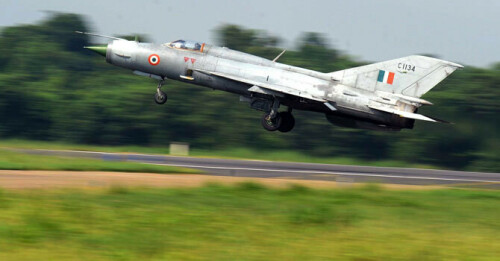
Air force to hold retirement ceremony of Soviet-era MiG-21s, which have killed 200 pilots in 400 crashes
HAL is a government defence company and more than 100 Indian companies were involved in the manufacturing process, the aircraft having “an indigenous content of over 64 per cent”, it said.
“The delivery of these aircraft would commence during 2027-28 and be completed over a period of six years,” the ministry said.
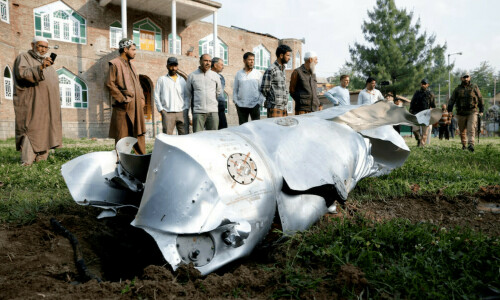
New Delhi is eyeing threats from multiple nations, especially neighbouring Pakistan. India fought a four-day conflict in May, their worst clash since 1999. Both sides claimed victory, each boasting of downing the other’s fighter jets.
‘Mainstay’
Defence Minister Rajnath Singh said in a statement the aircraft would “strengthen defence preparedness”.
“This contract reflects the trust and confidence of the Government and the Armed Forces in the indigenously developed aircraft Tejas, which will be the mainstay of the IAF (Indian Air Force) in the years to come,” he said.
India will hold a flypast ceremony at a major air force base in Chandigarh on Friday, the final flight of their Soviet-era MiG-21s that have been in use since the 1960s.
An estimated final 36 MiGs will end their service. India inducted 874 MiG-21s overall, serving in multiple conflicts. However, they also recorded around 400 crashes that killed about 200 Indian pilots over the decades, earning the planes the “the flying coffin” moniker.
Angad Singh, co-author of a book on the MiGs, said New Delhi had “originally planned” to retire the jets by the mid-1990s. However, those efforts stalled and there was “no choice” but to upgrade them to “squeeze more life out of it”, he said.
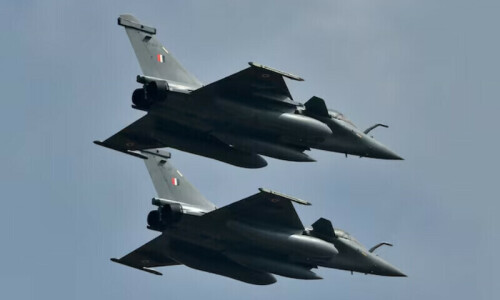
India also signed a multi-billion-dollar deal in April to purchase 26 Rafale fighter jets from France’s Dassault Aviation. They will join 36 Rafale fighters already acquired. Singh said in August India was working with a French company to develop and manufacture fighter jet engines at home.
That followed the announcement in May that New Delhi had approved the prototype of an upgraded Advanced Medium Combat Aircraft (AMCA). This decade India has opened an expansive helicopter factory, launched its first domestically made aircraft carrier, warships and submarines, and conducted a successful long-range hypersonic missile test.
Published in Dawn, September 26th, 2025