ISLAMABAD: Japan’s ambassador to Pakistan on Tuesday urged people of Pakistan in particular and the world at large to fully recognise the catastrophic consequences of nuclear weapons, warning that the devastation of Hiroshima and Nagasaki must never be repeated.
Amb. Akamatsu made the remarks after inaugurating Remains of Ruins, an anti-nuclear weapons exhibition by Pakistani sculptor and miniature painter Bashir Ahmad at the Sir Syed Art Gallery in Islamabad. The exhibition coincided with the 80th anniversary of the first and only use of nuclear weapons in war in Japan by the United States.
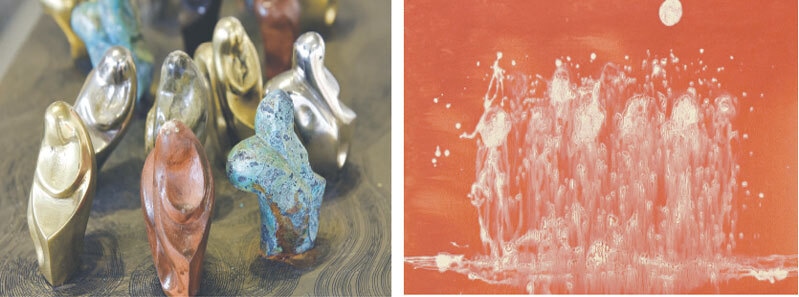
The exhibition features paintings and small brass figures with scarred surfaces, evoking the destruction of human life and nature under fire. Ahmad, now in his seventies, conceived the project after the 9/11 attacks in New York and spent seven years creating the sculptures between 2001 and 2008.
“I used metals because wars are fought with metal,” Ahmad said. “War causes poverty, hunger, climate change. People should be aware of the consequences of war.”
The Japanese envoy praised Ahmad’s work as uniquely positioned to connect with local audiences. “If Japanese art on this subject were displayed here, it might be difficult for people to relate,” he said. “But since Ahmad is Pakistani, his message resonates more clearly.”
Pakistan, a declared nuclear power since 1998, has fought several wars and recurring skirmishes with nuclear-armed India.
Their latest confrontation came in May, when cross-border strikes raised fears of escalation. US President Donald Trump later claimed that his “phone calls and trade” incentives helped avert a potential nuclear clash.
Against that backdrop, Ahmad’s sculptures, depicting birds in mid-fall, distorted human faces, and leaves scorched as if by invisible heat waves, acquire an added resonance.
“My miniature sculptures are my imagination reflecting my thinking about the impact of nuclear attack on people, birds, animals, and plants,” Ahmad said.
Remarkably, Ahmed says he has never faced censorship. “Countries go to war for political, self-serving goals of some, no one bothers about the public,” he said.
“Probably they don’t understand my stuff,” he explaining the reason why no one has objected to his work.
Asked if his work had any impact on the country’s strategists, the artist, who wants an end to nuclear weapons, said, “My job is to convey a message and I can’t force my views on anyone. People should be aware of the consequences of war.”
Ahmad, who calls himself “a peace person,” hopes to one day take his work to Hiroshima. “I want to show my art to the descendants of those who directly suffered from the nuclear bombing,” he said.
Published in Dawn, September 24th, 2025