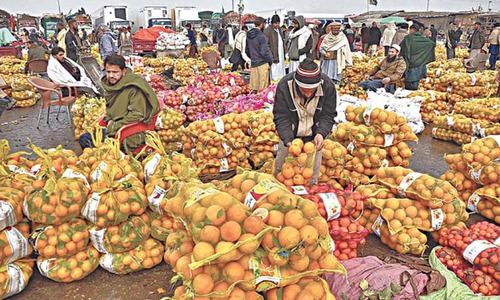
ISLAMABAD: The government has announced a set of measures aimed at enhancing the global recognition of Pakistani kinno, a variety of citrus fruit, with a focus on improving its export potential and value-added products.
National Food Security and Research Minister Rana Tanveer Hussain, in a statement on Saturday, highlighted that the Department of Plant Protection (DPP) has accredited the Citrus Research Institute’s post-entry quarantine facilities. This accreditation paves the way for the introduction of new, disease-resistant, and seedless kinno varieties that offer higher yields and greater consumer appeal.
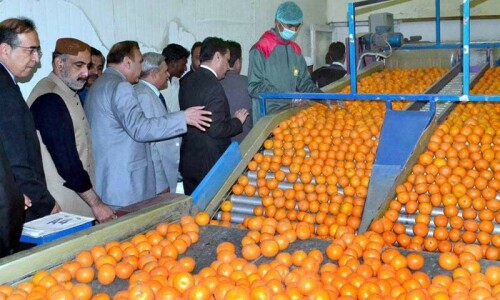
Mr Tanveer emphasised that citrus, especially kinno, is a symbol of Pakistan’s agricultural strength. He noted that the government’s efforts are not limited to expanding fresh fruit exports; equal emphasis is also being placed on promoting seedless kinno and value-added citrus products such as juices, concentrates, and essential oils, which have higher market value internationally.
The government is also focusing on capacity building for growers and exporters through training programmes and workshops.
These initiatives aim to equip stakeholders with modern agricultural techniques and ensure compliance with international export requirements.
Introduces measures to boost global recognition of citrus
Furthering its international engagement, the minister pointed to Pakistan’s recent meeting with a Russian delegation in Islamabad as an example of expanding cooperation to strengthen citrus exports. In addition, more laboratories have been accredited across the country to speed up the testing and certification processes for agricultural products.
In a bid to facilitate farmers and exporters, the government has established a temporary outpost in Sargodha, Pakistan’s primary citrus-producing region. This facility will provide on-the-spot support and ensure the timely processing of export consignments.
The minister reiterated the government’s commitment to boosting citrus exports, particularly kinno, and ensuring that Pakistani citrus products maintain their presence in traditional markets while also reaching new destinations. These markets include Central Asia, Russia, the Middle East, Africa, and the European Union.
He also commended the DPP’s efforts in streamlining export procedures, such as reducing unnecessary testing for pesticide residues in kinno shipments.
Furthermore, the registration of new exporters for markets like Uzbekistan and other Central Asian countries is expected to broaden market access and create new trade opportunities for local farmers and exporters.
Published in Dawn, September 21st, 2025