DEVELOPMENT: TAPPING PAKISTAN’S BLUE ECONOMY


 0
0
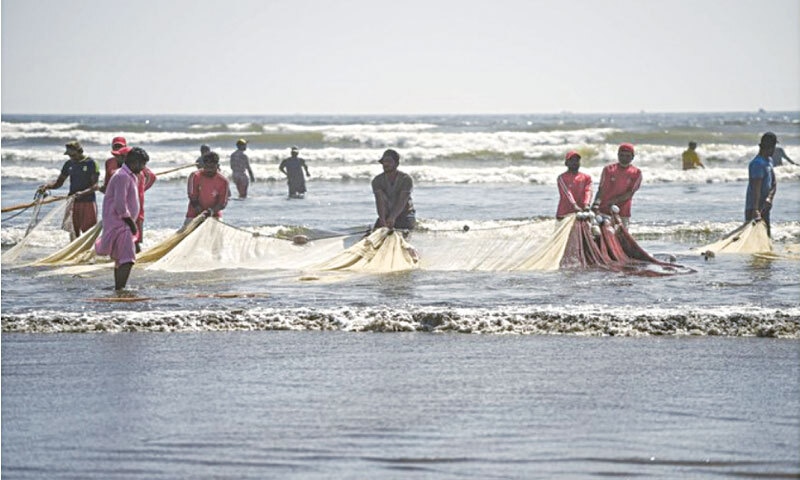

Pakistan has a 990-kilometre (km) coastline shared by its two coastal provinces, with 270 kms in Sindh and 720 kms in Balochistan. Situated between the Indian coast to the east and the Iranian coast to the west, the Pakistani coast comprises four primary zones, each with distinct features, sets of challenges and opportunities.
The country’s coastline is complemented by a large exclusive maritime economic zone, which is exceptionally rich in a variety of marine resources. While many nations have developed their ‘blue economies’, a term that covers all economic activities related to oceans, seas, coasts and maritime resources, Pakistan remains at almost the bottom in this sector.
This piece aims to understand Pakistan’s coast, the challenges faced by various zones, and the opportunities presented by the country’s marine resources for national development.
THE RANN OF KUTCH
The Pakistani coast in the east begins at the southeastern tip of the province of Sindh, in the area known as the ‘Rann of Kutch.’ Although most of the Rann of Kutch is in India, an area of about 780 square kms lies in Pakistan. At the edge of that area lies Sir Creek, a tidal estuary in the Indus Delta, which marks the Pakistan-India border, although with differing interpretations, leading to significant costs in human suffering for the ultra-poor fishers of both countries.
With a coastline running almost 1,000 kilometres and a maritime zone larger than three of its provinces, Pakistan possesses a ‘blue economy’ capable of generating immense wealth and energy. Yet, plagued by disputes, pollution and mismanagement, its coast remains a story of neglected potential…
It may be of interest to readers to know that the roots of the Sir Creek border dispute date back to the colonial period when, in 1908, Sindh and the state of Kutch disputed their respective borders. Since both contending parties came under the suzerainty of the British Indian Empire, the issue was seemingly resolved through a joint declaration in 1914, but with two contradictory paragraphs. While paragraph nine gave the entire creek to Sindh, paragraph 10, in effect, fixed the boundary midstream.
The issue became an international conflict between India and Pakistan when, upon Partition, the Kutch region joined India, while Sindh became part of Pakistan. Since then, the dispute has led to armed clashes between the two countries. The two nations have been unable to resolve the issue over the last 78 years, because marking the border midstream or at the eastern edge of Sir Creek has significant implications for the demarcation of the two countries’ exclusive economic zones in the Arabian Sea.
However, the victims of this dispute have been poor fishermen, who are often arrested and have their boats seized by rival countries, because they unintentionally cross into their defined borders. These innocent fishermen then spend years in the prisons of the rival countries before being exchanged at the Wagah border near Lahore, never regaining their source of livelihood — their boats.
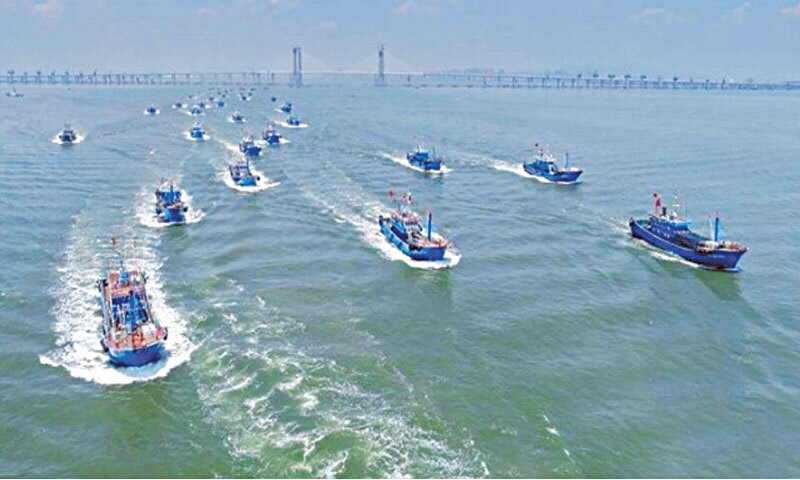
THE INDUS RIVER DELTA
Westward from Sir Creek is the fan-shaped Indus River delta region, consisting of 17 major and several minor creeks, formed by the river before it flows into the Arabian Sea. The delta covers about 600,000 hectares and is the sixth-largest river delta in the world.
It encompasses mangrove habitats, dunes, mudflats and estuaries, and is home to a diverse array of flora and fauna, including some rare species such as the Indus fishing cat and blind dolphin. Although the region has great potential for eco-tourism, it lacks basic infrastructure and facilities.
One of the most critical issues in this region is the sharp decline of fresh Indus water, except during floods, caused by increased water use upstream. This has led to seawater intrusion, higher salinity levels and waterlogging, resulting in environmental damage and the loss of essential mangrove ecosystems which, in turn, have reduced livelihoods and displaced coastal communities.
KARACHI COAST
The Indus delta extends into about a 100-km-long stretch of Karachi’s coast, which features several popular beaches, including Hawke’s Bay, Sandspit, Manora, Clifton and Seaview. It contains two ports (Karachi port and Port Qasim), three nuclear power plants (K-1, K- 2, and K-3 of the Karachi Nuclear Power Plant (Kanupp)), with K-1 permanently closed), two fish harbours, two industrial estates, most of the automobile manufacturing industry and the now-dormant Pakistan Steel Mills.
This part of the coast also has three major islands. The first is the Bundal (and nearby smaller Buddo) Island, near the city’s beaches. It is the largest of the three, spanning about eight kms in length, while its width varies, from four kms in the north to one km in the south. It features shifting dunes, some of which reach heights of up to three metres. The island also serves as a mid-station for local fishermen, before they go out to the open sea.
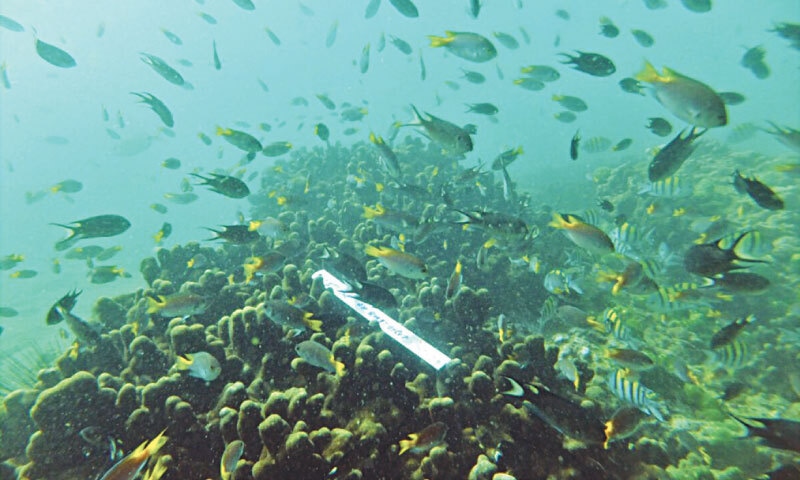
Another significant island in this zone is Churna Island. It measures approximately 1.2 kms in length and 0.5 kms in width. The area surrounding the island is renowned for its rich biodiversity, featuring a diverse array of coral species, extensive mudflats and oyster reefs. It serves as a resting and feeding habitat for marine megafauna, including baleen whales, whale sharks, mobulids and sunfish. Other notable islands in this region, mostly inhabited, include Manora, Shams Pir, Baba and Bhit.
Some significant issues facing this zone include severe marine pollution, caused by industrial and municipal waste, as untreated industrial effluents and municipal sewage from the city are directly released into the Arabian Sea. The situation worsens due to poor governance and a lack of industrial compliance with environmental regulations. Additionally, unregulated construction has led to the decline of coastal ecosystems and the loss of mangroves, causing harmful effects on marine life.
LASBELA AND MAKRAN COAST
Starting from the mouth of the Hub River in the west of Karachi, the Lasbela and Makran coast extends to about 700 kms, ending in the middle of Gwatar (not Gwadar) Bay at the Pakistan-Iran border. This bay, shared by Pakistan and Iran, serves as a habitat for various aquatic species and fisheries, including whales, dolphins, sea turtles, migratory birds and mangroves.
This part of the Pakistan coast also features several other bays, including Sonmiani, Pasni and Gwadar, as well as a series of pristine beaches that stretch along its entire length. It also contains two major lagoons, Miani Hor and Khor Kalmat, which provide rich habitats for a diverse range of flora and fauna.
The highlight of this coastal region is Gwadar Port, which has been recently developed with Chinese assistance as part of the China-Pakistan Economic Corridor. As Pakistan’s third deep-water marine port, situated near the Middle East and Africa, it has significant economic potential that remains untapped, mainly due to security concerns and government policies.
The zone also includes the small, uninhabited Astola Island, locally known as ‘Haft Talar’ and ‘Sata Dip’, meaning the island of seven hills. A historical account related to this island states that the sailors in the fleet of Nearchus (Alexander’s admiral) in 325 BC were “frightened at the weird tales” told about this uninhabited island.
This island is situated approximately 20-25 nautical miles (NM) offshore from the Pasni fishing port. It measures four kms in length and 1.5 kms in width at its widest point. It is an ecologically significant site, as it is home to colonies of corals surrounding the island. Its sandy beach offers nesting grounds for the endangered species of green and hawksbill turtles. The island attracts eco-tourists interested in camping, fishing, scuba diving and observing turtle breeding.
Among the challenges, perhaps the most significant is the menace of terrorism in the region. Then, like other coastal zones, this area is experiencing a rise in sea levels due to climate change, resulting in increased coastal erosion and flooding. Additionally, there is a severe shortage of fresh water, making life difficult.
Besides these natural factors, human activities such as marine pollution emanating from Gadani’s ship recycling industry and other unsustainable coastal development practices are worsening the ecological situation.
THE EXCLUSIVE ECONOMIC ZONE
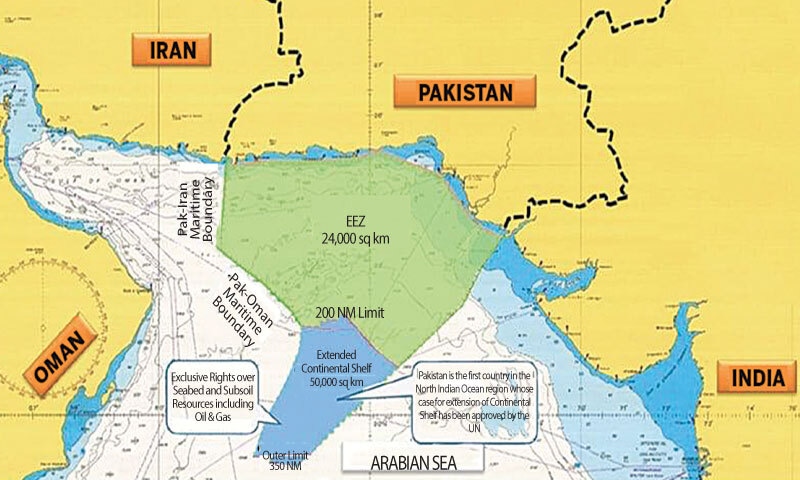
Moving seaward from the coastline up to a distance of 200 NM constitutes Pakistan’s Exclusive Economic Zone (EEZ). Of this, the first 12 NM fall under the provincial jurisdiction of Sindh and Balochistan. From 12 to 20 NM is considered a ‘contiguous’ or buffer zone, and beyond that, up to 200 NM comes under the federal government. In terms of area, this entire zone measures approximately 240,000 square kms.
About a decade ago, the UN Conference on the Laws of the Seas (UNCLOS) approved Pakistan’s claim under Article 76 to extend its continental shelf to 350 NM, resulting in an additional area of 50,000 square kms, bringing the total area to 290,000 square kilometers. It is pertinent to note that Pakistan’s maritime zone is larger in size than each of its three provinces — Punjab, Sindh and Khyber Pakhtunkhwa — and smaller than only Balochistan. In this context, Pakistan’s maritime zone is sometimes referred to as Pakistan’s ‘fifth province.’
OPPORTUNITIES AND WAY FORWARD
The abundance of blue economy resources defines Pakistan’s coastal and offshore regions. In 2007, the United States’ National Renewable Energy Laboratory conducted a wind resource study of Pakistan with assistance from the United States Agency of International Development (USAID). Their findings indicated that the coastal belt of Sindh alone has an exploitable wind power potential of up to 50,000 megawatts (MW) of electricity.
With the addition of the offshore wind potential and that of Balochistan’s coastal belts, the country’s potential for wind-powered electricity generation may multiply. To put this into context, Pakistan’s total electricity generation capacity, primarily sourced from thermal means, remained at 46,605 MW for the period 2024-2025. In this, the part of wind energy was minuscule. This represents a severe underutilisation of a great source of clean energy for national development and economic growth, which needs immediate attention.
The situation in the fisheries sector is also unsatisfactory. The sector faces challenges such as overfishing, a lack of modern infrastructure, pollution, climate change, weak compliance with international standards, and poor post-harvest handling and processing. These issues limit the sector’s contribution to the national economy, accounting for only 0.31 percent of the country’s gross domestic product (GDP).
Last month, the sector received positive news, when the United States lifted its ban on seafood imports from Pakistan, after a four-year hiatus. The ban, on the one hand, excluded Pakistan from a lucrative market and, on the other hand, resulted in the devaluation of Pakistani fish in different markets due to quality concerns. However, this new development has opened up opportunities for the sector internationally, provided Pakistan can take advantage of it.
Another sector with great potential but poor performance is the management and operations of Pakistan’s maritime ports. Despite being located on the world’s busiest maritime trade routes, Pakistan has been unable to fully capitalise on this opportunity, because of years of mismanagement, poor governance, rampant corruption, sudden policy changes and higher port service rates compared to many regional countries.
The same unfortunate story of under-utilised resources repeats across all sectors of the blue economy, from seabed mining to maritime tourism. This neglect has led Pakistan to miss out on multi-billion-dollar opportunities that could have brought prosperity to its people, especially the coastal communities, who are currently facing the highest levels of poverty, under-employment and environmental dangers.
The primary reasons for this state of affairs, in addition to a lack of political will and vision, are that Pakistan lacks the necessary technical expertise and financial resources to realise the potential of the blue economy fully. In this context, Pakistan has much to learn from its ‘iron-clad’ brother, China, which is leading the world in maritime economy.
Recently, at a seminar organised by the Karachi Council of Foreign Relations (KCFR), China’s Consul General in Karachi for Sindh and Balochistan, Mr Yang Yundong, told the audience that, in 2024, the marine economy contributed $1.4 trillion to China’s GDP. He stated that his country was ready to provide all the cooperation Pakistan needs to explore and utilise its marine resources in a sustainable manner for the country’s economic growth.
Let me conclude with the words of Ms Nadra Panjwani, a philanthropist and chairperson of KCFR, who stated during her speech at the seminar that enough had already been said about the ‘potential’ of the blue economy, and that it is now time to turn that potential into real action for Pakistan’s development.
The writer is a development professional and a former university vice chancellor.
He has also served as director-general of Sindh’s Coastal Development Authority and the Environmental Protection Agency.
He can be reached at drshaikhma@gmail.com
Published in Dawn, EOS, September 21st, 2025