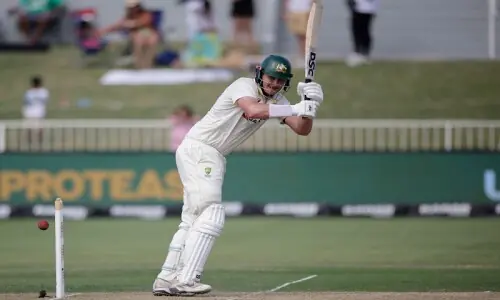
NEW DELHI: Indian sport is battling to shake off its reputation for being one of the world’s worst doping offenders as the country pushes an ambitious bid to host the 2036 Olympics.
The International Olympic Committee (IOC) has raised concerns about the number of Indian competitors taking performance-enhancing drugs and so too has the country’s best-known athlete.
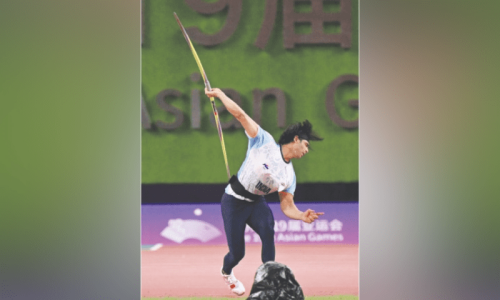
The 2021 Olympic javelin champion Neeraj Chopra made a blunt admission earlier this year.
“Doping is a big problem in India among our athletes,” he told local media, saying they instead should “eat well, rest well and work hard”.
The Indian Olympic Association (IOA) last month formed a new anti-doping panel after the IOC flagged India’s poor record.
The government has passed a new national anti-doping bill aiming to tighten enforcement, expand testing facilities and “ensure the highest standards of integrity” in sports.
“Obviously the IOC would want to make sure that in awarding the Games to a country, the host has a robust doping policy and governance,” Michael Payne, former IOC marketing director, told AFP.
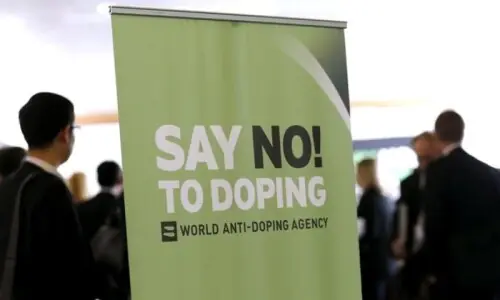
The World Anti-Doping Agency (WADA) lists India among the worst offenders among nations submitting more than 1,000 samples.
India’s national anti-doping agency, NADA, insists the figures reflect more aggressive testing in the nation of 1.4 billion people.
From 5,606 samples collected in 2023, 213 came back positive.
The synthetic steroid stanozolol is the most widely used banned substance taken by Indian athletes, experts say.
Despite its vast population India has won only 10 Olympic golds in its history.
Experts say desperation to add to that and escape poverty is one reason why some Indian athletes are prepared to risk doping.
Success in sports can be a ticket to coveted government jobs, often with the police or armed forces.
That provides life-long financial security after their sporting careers end.
“Athletes know that they can be punished but still put their careers at stake,” lawyer Saurabh Mishra, who has defended athletes in doping scandals, said.
“[They know that] getting a medal will help them clinch a government job.”
Athletics leads India’s doping violations, followed by wrestling, where 19 athletes were recently banned.
In July, under-23 wrestling champion and Paris Olympics quarter-finalist Reetika Hooda tested positive and was provisionally suspended.
Mishra said some athletes are victims of ignorance, consuming banned substances through supplements or medicines, but others take risks knowingly.
Sometimes they are encouraged by their coaches to dope.
Sports medicine expert Saranjeet Singh, who has written extensively on doping in India, said a recent surge in violations was only partly due to stricter testing.
“They cannot achieve the level of performance that they want at international level and use banned drugs for a short cut,” Singh told AFP.
India now faces a race to prove its credibility, as it competes with the likes of Indonesia, Turkey, Chile and Qatar for the 2036 Games.
The former IOC marketing director Payne noted that many past Olympic hosts had chequered doping histories.
While doping is an issue, India’s greater obstacle to staging an Olympics lies elsewhere, he said.
“The bigger issue is confidence in the overall operational delivery capabilities of the host, and there India has a lot of work to do,” Payne said.
He was referring to the corruption-riddled 2010 Commonwealth Games in New Delhi, memories of which still linger.
“That is the biggest hurdle facing India’s bid,” Payne said.
Published in Dawn, September 17th, 2025