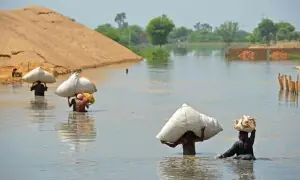
THE spectacle of Afghan families trudging back across the border from Pakistan has become sadly familiar. Since April, more than half a million have returned, many under duress. In the first week of September alone, nearly 100,000 crossed — just as earthquakes flattened parts of the country they were entering. UNHCR, the UN refugee agency, warns of a “crisis within a crisis”: forced returns clashing with a natural disaster in a state already in danger of collapse. Pakistan has carried much of the burden of Afghan displacement for decades, often without adequate foreign assistance. It cannot be expected to shoulder this responsibility indefinitely. Yet the plight of vulnerable groups, such as women, children, the elderly and those with no ties to the country they are being sent back to, must be addressed with care.
The immediate obstacle lies not only in Pakistan’s repatriation plan, but in Kabul’s own policies. The Taliban have tied the hands of the very agencies meant to ease the transition. By barring Afghan women from working with the UN, they have forced the suspension of cash and support centres that served thousands daily. Humanitarian relief depends on access to women — for interviews, biometrics and basic services. No amount of foreign funding will help if aid workers are blocked from doing their jobs. Kabul’s rulers, obsessed with enforcing social curbs, are worsening the suffering of their own people. Pakistan, for its part, must ensure that all returns are voluntary, safe and dignified. Rigid enforcement of the ‘Illegal Foreigners Repatriation Plan’ will only aggravate suffering, risk undermining the country’s reputation for hospitality and invite diplomatic censure. Practical mechanisms to identify those at heightened risk, as suggested by UNHCR, should be developed without delay. This is where better coordination between Pakistan, the UN system and Afghanistan’s de facto rulers becomes critical. A little effort from both sides — Islamabad offering some flexibility in timelines, and Kabul lifting restrictions on aid workers — could go a long way in easing this fraught process. Such cooperation might even open space for dialogue on longer-term integration, resettlement and development aid — issues that have for too long been treated as afterthoughts. Instead, Pakistan, the Taliban and the UN are pulling in different directions. For ordinary Afghans caught between earthquake rubble and official pronouncements, the result is misery layered upon misery.
Published in Dawn, September 15th, 2025