The five-year action plan (2025–2029) agreed between China and Pakistan aims to broaden their “all-weather partnership” beyond economic corridors, extending it into politics, defence and security, counterterrorism, climate change, science & technology, and culture.
The blueprint seeking to build “an even closer China-Pakistan community with a shared future in the new era” comes against the backdrop of a shifting regional and global security and economic landscape, with Beijing — in the words of a Chinese foreign ministry official — “envisioning an even greater role for Islamabad in international and regional affairs”.
China has pledged its support to help Islamabad achieve that goal, the official stated recently speaking to a delegation of Pakistani journalists visiting Beijing.
The new roadmap draws mainly on earlier milestones, including the launch of the China Pakistan Economic Corridor (CPEC) initiative in 2015, and subsequent documents and pledges like the long-term CPEC plan and the Framework Agreement on Industrial Cooperation.
In spite of a lot of optimism around the new China-Pakistan roadmap, many remain cautious as ‘an element of uncertainty still hangs’ over CPEC cooperation
It looks to expanding security ties, including stronger military cooperation and enhanced counter-terrorism coordination. Both sides described their strategic defence partnership as “irreplaceable” for regional stability, reiterating “zero tolerance” on terrorism. More importantly, while security ties remain central, both sides are consolidating economic cooperation.
The plan in question reaffirms CPEC as the “flagship” of their economic partnership and a pioneering project of the Belt and Road Initiative (BRI), aligning its five corridors — growth, livelihoods, innovation, green and openness — with the growth goals of Islamabad’s Uraan initiative, with a focus on tighter security for Chinese nationals and projects in Pakistan amid targeted terrorist attacks against Chinese interests.
The roadmap for bilateral cooperation under what Pakistani officials often refer to as CPEC 2.0 follows Pakistan’s efforts to secure Beijing’s renewed support for its industrialisation through investment in the country’s manufacturing sector to accelerate export-led growth.
So far, energy and transport projects worth $25.2 billion have been completed under the first phase of CPEC, while schemes amounting to $26.8bn are in the pipeline.
The new five-year plan prioritises fast-tracked industrialisation in Pakistan through special economic zones, strengthening of mining and agricultural cooperation, and expansion of “small and beautiful” livelihood projects in health, education, agriculture and disaster prevention.
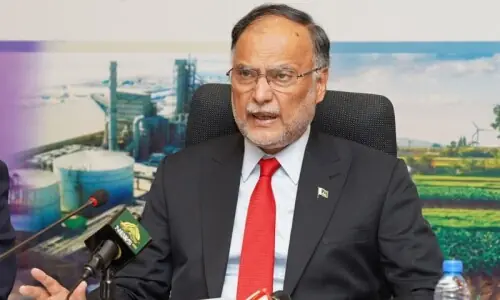
Planning Minister Ahsan Iqbal recently told a media briefing that Pakistan and China had agreed to form a consortium of bilateral and multilateral partners, including the Asian Development Bank and the Asian Infrastructure Investment Bank, to finance the $7bn Karachi-Peshawar railway line.
Trade and connectivity will be bolstered through expanded use of the Khunjerab Pass for both bilateral and Afghan transit trade, while pushing forward trade liberalisation under Phase-II of their Free Trade Agreement. Besides, Beijing will encourage Chinese enterprises to invest in Pakistan while committing to providing “financial support (to Islamabad) within its capacity”.
In an interview with Associate Press of Pakistan, Professor Cheng Xizhong, a senior research fellow at Beijing’s Charhar Institute noted that the plan carries extraordinary economic significance as it will strengthen bilateral trade, investment and industrial cooperation.
With CPEC already delivering substantial outcomes, he maintained, the next phase will see greater investment, helping Pakistan boost its development capacity through industrial up-gradation and enhanced position in the global industrial chain.
In spite of a lot of optimism around the new roadmap redefining bilateral ties, many remain cautious. Speaking with Dawn, economist Adil Nakhuda noted that despite the optimism surrounding the action plan, “an element of uncertainty still hangs” over CPEC cooperation. “Security remains the foremost challenge while Pakistan’s fragile economic conditions are discouraging for Chinese investors.”
He points out that the first phase of CPEC, largely focused on energy and transport infrastructure, successfully addressed critical connectivity and growth bottlenecks. “The second phase, however, is supposed to drive industrialisation, FDI inflows and export growth. If exports don’t grow, the second phase will not be any different from the first one,” he cautioned.
For Pakistan to attract meaningful foreign investment, Mr Nakhuda said, it must first tackle security concerns, complete Special Economic Zones and carry out governance reforms. “You have to do this for foreign investors; don’t expect them to bring their capital here and also clean up your policy and governance mess for you,” he underlined, pointing to the need for ease of doing business, tariff rationalisation, factory law reforms, and a broader enabling policy framework. “We need a total policy overhaul for the success of CPEC 2.0.”
Others like Dr Safdar Ali Sohail, Executive Director at the Social Protection Resource Centre and a former civil servant, argued that “CPEC is now just one of several pillars of bilateral China-Pakistan cooperation, with military, security, political and diplomatic ties appearing to take precedence.”
Dr Sohail pointed out that linking economic cooperation with Pakistan’s Uraan programme reflects Chinese sensitivity to Islamabad’s growth priorities. For it to succeed, the plan must be backed in the next six months by targeted and definitive policies, strategies and funding commitments.
Published in Dawn, The Business and Finance Weekly, September 15th, 2025