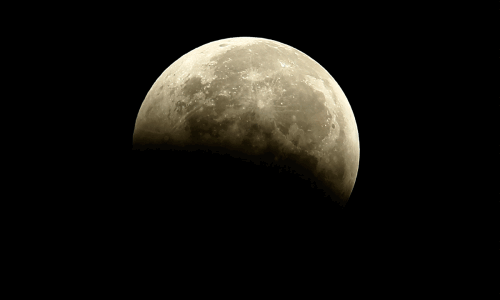
‘Blood moon’ visible over Pakistan, expected to conclude at 1:55am
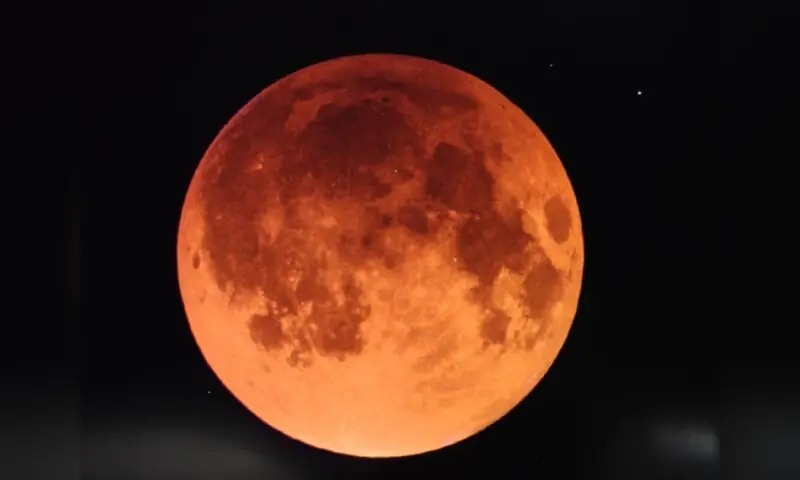
A lunar eclipse is visible over Pakistan on Sunday night with the celestial event expected to conclude at 1:55am.
According to the Met Office, the eclipse began at 9:27pm. The total eclipse phase started at 10:31pm.
The eclipse will reach its peak at 11:12pm, offering a striking celestial view for skywatchers across the country. The total eclipse phase is expected to end at 11:53pm.
The partial eclipse will continue until 12:57am, while the entire eclipse event will conclude by 1:55am.
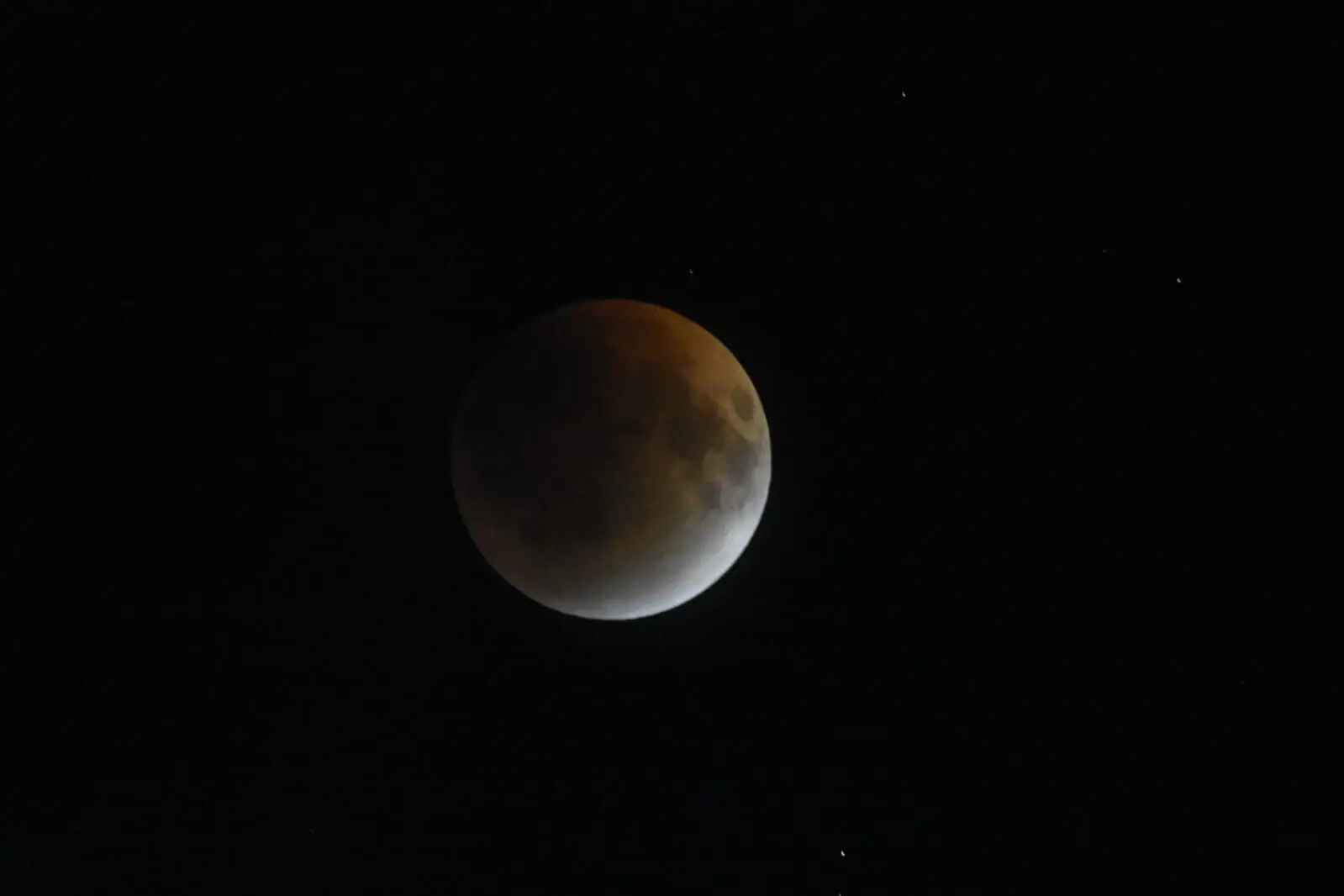
According to Suparco, a lunar eclipse occurs when the Earth comes directly between the Sun and the Moon, casting its shadow across the lunar surface. Unlike solar eclipses, lunar eclipses are completely safe to observe with the naked eye, binoculars or telescopes.
In a press release on Saturday, the space agency had said that the eclipse will be visible in Asia, Africa and parts of Europe, with clear visibility expected in most regions of Pakistan if the weather permits.
“The event will start at 8:30pm and reach its maximum at 11:57pm,” the press release read, stating that the eclipse will conclude at 1:55am.
Sunday’s eclipse is also known as a “blood moon”, due to its red hue during the event. When the Sun, Earth and Moon line up, the shadow cast by the planet on its satellite makes it appear an eerie, deep red colour that has astounded humans for millennia.
The Moon appears red during lunar eclipses because the only sunlight reaching it is “reflected and scattered through the Earth’s atmosphere”, said Ryan Milligan, an astrophysicist at Northern Ireland’s Queen’s University Belfast.
The last total lunar eclipse was in March this year, while the one before that was in 2022. A rare total solar eclipse, when the Moon blocks out the light from the Sun, will be visible in a sliver of Europe on August 12, 2026.