KARACHI: No new bank borrowings were recorded during the first 45 days of the current financial year, despite a drastic fall in interest rates, signalling trade and industry’s reluctance and their demand for further rate cuts.
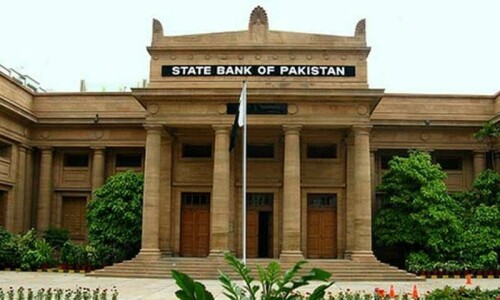
The State Bank of Pakistan’s (SBP) data from July 1 to Aug 15 released on Tuesday, showed that borrowers retired debts amounting to Rs232 billion, compared to Rs317bn in the same period last year. This reduction in borrowings is notable considering that interest rates have halved from around 22pc last year to 11pc this year.
Despite the sharp decline in borrowing costs, trade and industry remain cautious amid inflationary concerns voiced by the SBP’s monetary policy committee, which has expressed fears that inflation could rise in the current fiscal year. Consequently, businesses are demanding further cuts in interest rates to spur investment.
Bankers say the absence of new loans from the industrial and trade sectors has created surplus liquidity in the banking system, which they are increasingly channeling towards government borrowing. In the latest treasury bills auction, government borrowing exceeded targets, with bids amounting to Rs1.4 trillion, reflecting this excess liquidity.
Low interest rate fails to attract trade, industry, signalling unease over economic outlook
Financial experts note that banks depend heavily on government debt for profits, with some estimating that up to 80pc of banks’ earnings come from government securities. The government’s mounting domestic and external debts, and rising interest payments — estimated at about Rs9tr in FY25 — have deepened the fiscal burden.
“Economic policy is not functioning as intended. Trade and industry are reluctant to take new loans and rely instead on their own funds to sustain operations. This trend will hinder efforts to achieve even a modest economic growth rate of 3.5pc,” said one analyst.
Banks’ holdings of government securities have risen steadily, reaching Rs35.44tr by May 31, 2025.
These investments generate substantial returns for banks, particularly through long-term instruments such as Pakistan Investment Bonds.
The analyst added, “Banks play a critical role in economic development, as seen in Europe and the US. However, in Pakistan, they are primarily profiting from government debt, financed by taxpayers’ hard-earned money.”
Experts suggest the government will continue to rely heavily on bank financing this fiscal year as revenues, although rising, still fall short of targets. The current trend underscores the challenges facing Pakistan’s economy — surplus liquidity in banks and hesitant businesses — highlighting the urgent need for policies that encourage productive investment and sustainable growth.
Published in Dawn, August 27th, 2025