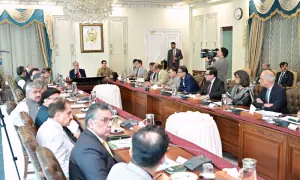
TRANSPARENCY and financial propriety of public servants and lawmakers are essential for a healthy democracy. These requirements are all the more necessary in a developing democracy such as ours, where government servants and elected representatives have in the past been linked to financial impropriety. Therefore, attempts to amend the Elections Act to make full disclosure more difficult need to be reconsidered. The proposed amendments to Section 138 of the Act recently came under discussion in the National Assembly’s Standing Committee on Parliamentary Affairs. The changes to the law have been proposed by two PPP members, while MNAs belonging to the PML-N and PTI have argued that the law should not be tinkered with. Currently, members of the NA, Senate and provincial assemblies must file yearly statements of their assets and liabilities, while as per Section 138 these details are to be published by the ECP. The PPP’s proposed changes call for a “balance between public interest for good governance and an individual’s privacy and security”, and the extent of the details to be made public will be determined by the Speaker of the respective assembly, or the Senate chairman.
Experts say that if the proposed amendments were to become law, it would have negative implications for Pakistan’s democratic evolution, and would reverse the gains made to ensure open governance. Those who join public service and electoral politics must be ready to face scrutiny of their financial dealings. Those uncomfortable with attention to their financial details are welcome to remain private citizens. Transparent disclosure of assets and liabilities is essential to prevent conflict of interest, financial corruption and other unethical practices. The current law is sufficient, and the proposed amendments are not required. After all, our chequered political history contains many incidents where public servants have been involved in financial irregularities. To promote a culture of financial propriety and ethical leadership, all public servants, including members of the civilian and military bureaucracies, must be transparent about their assets. Elected representatives should be leading by example, instead of trying to keep their financial dealings secret. The examples of how established democracies have promoted greater transparency and ethical behaviour in public service need to be studied by our institutions. Public office is a trust, and officials need to be answerable to the taxpayer and voter.
Published in Dawn, August 24th, 2025